
In Mourning Becomes the Law, the late Gillian Rose makes a trenchant case against the “despairing rationalism without reason” of postmodernism. Mourning is not despair, and the purpose of challenging injustices within the social structure must not lead to a perpetual suspicion of all authority and institution, but rather to a remaking that is more just. In her small, but remarkably powerful book, the dying philosopher planted seeds in my mind that would continue to germinate for years to come. Seeds with ancient heritage, but whose germination and flowering feels particularly timely.
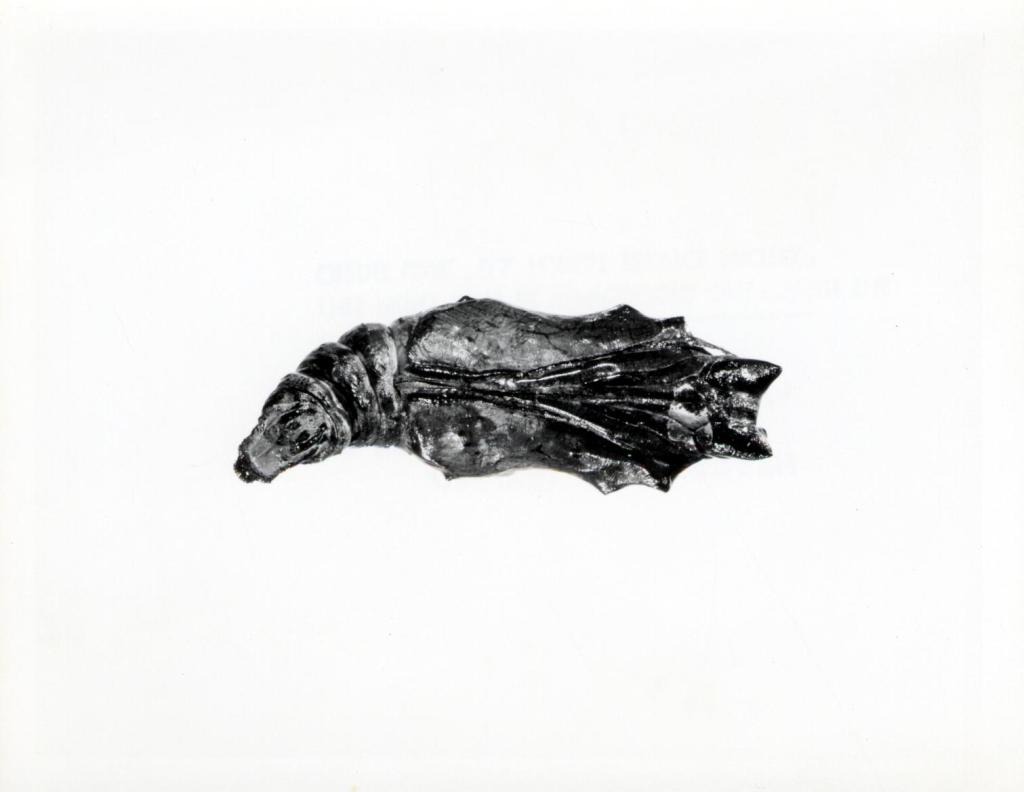
Switching metaphors, I would like to consider the chrysalis. The governing image of this website is the mourning cloak butterfly, nymphalis antiopia, and the chrysalis is that stage in the life of the caterpillar-butterfly in which, from the outside, nothing much seems to be happening, whereas in fact a monumental transformation – a metamorphosis – is taking place inside, and what emerges will be something completely unrecognizable vis-a-vis what entered that stage of life.
The purpose of this series will, in an analogous fashion, be to draw out ideas which, while not necessarily in the mainstream of discussions on justice, law, or politics, are nonetheless operative in various places, undergoing a slow germination, a process of transformation and metamorphosis. In his Epistemologies of the South: Justice Against Epistemicide, Boaventure de Sousa Santos distinguishes between kite-ideas and aircraft-carrier ideas, making the provocative announcement that in certain situations it is possible to fight an aircraft-carrier idea with a kite-idea. Perry Zurn picks up this notion in his forward to the collection of essays on Building Abolition: Decarceration and Social Justice.
Abolition will be one of the key themes in the Chrysalis of Justice series of reviews, and so a forthcoming review of Building Abolition: Decarceration and Social Justice, together with a review of Abolition Geography: Essays Towards Liberation by Ruth Wilson Gilmore are some of the titles to which readers of this series may look forward. Abolition, argues Zurn, is a kite-idea. It is colourful, childish, imaginative, cheap,and easy to build at home. The prison-industrial complex, by contrast, is an aircraft-carrier idea. Heavy, expensive, sluggish.
Abolition requires unlearning. So, another title to which readers may look forward is Ariella Aïsha Azoulay’s Potential History: Unlearning Imperialism. Azoulay’s fascinating blend of political theory and the history of photography offers powerful resources for a political critique which does not simply criticize the past in the name of something “new” but rather asks us to disengage from ways of knowing which actively perpetuate harm. Recognizing the harm of imperial violence and its structures is a moment in undoing them, in breaking free of the hold which they have upon our minds and hearts.
In Institution, Roberto Esposito offers resources to rethink institutions as generative practices, rather than merely as dead husks which ignore vital processes. Beginning with a meditation on the Latin phrase vitam intituere, Esposito asks for a reconsideration of how we think of institutions and their role not merely in conserving, preserving, or repressing, but as aspects of the creative formation of life and life together. As with Azoulay, Esposito seems critical of the “musuem-ification” of cultural processes in the current dispensation. Institutional sclerosis is a problem, but the solution to that problem is not mere anti-establishment rhetoric.
One of the challenges for butterflies is the threat of parasitic wasps; those creatures lay eggs inside the egg, caterpillar, or pupa, eating it from the inside out. They function as a sort of body-snatcher. Analogously, we might think of the dangers posed to ideas about justice and freedom. The language of freedom, from which one expects the emergence of beautiful, creative expressions of life, can easily be parasitized. Think of how valid criticisms of journalism gave fodder to right-wing mobilizations against “fake news”, not in order to secure a more genuine and transparent news media, but in order to push for greater social control by the right-wing political apparatus. Or, again, we could look at how the language of “freedom of speech” is weaponized by billionaire activists in order to promote their personal control over media platforms and to instill a dialogue that is infected with hatred and ill will.
These are forms of parasitizing in the conceptual realm. So, we need to be vigilant, and also practice some forms of protection around these ideas. Historically the university has done some of that work, but there are some pretty significant challenges right now, given the environment of hostility towards higher education in the United States and elsewhere, as well as some of the missteps of the university. Laboratory style thinking is often insufficiently comprehensive.
In Canada the lack of comprehensive ways of thinking about justice, not only in our universities but in various institutions in society, has led to some pretty harmful outcomes. I intend to look at Reconciliation and Indigenous Justice: A Search for Ways Forward by David Milward. This is a recovering of pathways of justice that have been forgotten, cast aside, and a movement towards healings of communities that have been parasitized and colonized.
Following this I intend to also take a look at Fred Moten’s wonderful trilogy consent not to be a single being. This is a work of poetry, performance, and power, in which not only the ideas but the syntax itself performs a creative struggle in and for, not just freedom, but what Edouard Glissant calls a poetics of relation.
At the end of the day, these kite-ideas have to be about that, about the poetics of relation, about really getting each other, in a way that is not about controlling somebody else, but is about having a good time on this planet, and, maybe we could say, with this planet where we live, and move, and have our being. A being which is not so determinate as we often make it out to be, but in which we exist in a multiplicity of different ways.
So to crown it off, for now, I intend to look at the future of difference: beyond the toxic entanglement of racism, sexism, and feminism by Sabine Hark and Paula-Irene Villa.
A number of the titles mentioned above where written in the aftermath of the Covid-19 pandemic, and there is a sort of hopefulness in them that, I think was not unwarranted at the time, but that has also maybe not materialized in the way that many of us had hoped. The idea that the cracks were so visible now that it was impossible to go back to the way things were, and that society would therefore become more just, more equitable, and generally more peaceful. In the aftermath, with the rise of nativisim, nationalism, and even some really disturbing blends of techno-fascist and techno-feudalism, it is hard not to be a bit cynical. What happened? Why did we fail so badly? Why did we miss a lot of those opportunities? Or, to say it differently. What defeated those kite-ideas, and how can we get them back up in the air.
I want to say that, maybe the defeat has not been as total as it sometimes seems, that maybe there is still something germinating, or hibernating, or just getting ready to emerge… but it is taking a really long time. Anyways, despair is not an option that we have.
To give the last word, for now, to Gillian Rose:
“This is the counsel of despair which would keep the mind out of hell. The tradition is far kinder in its understanding that to live, to love, is to be failed; to forgive, to have failed, to be forgiven, for ever and ever. Keep your mind in hell, and despair not.”
And maybe that was exactly the problem. The post-pandemic optimism wanted to keep our minds out of hell, with many a false promise and a kind of eerie positivity which admitted neither failure, nor forgiveness, nor love.
Keep your mind in hell! And despair not!