Remember, remember the 5th of November, gunpowder, treason, and plot.
On November 5, 2024 the people of the United States of America went to the polls. Representative democracy offers, perhaps, the illusion of choice more than actual empowerment, but in this particular election there seemed to be a very clear right and wrong answer to the question of who should be permitted to take the reins of the most powerful country on earth. To the world’s dismay, the people of the United States of America chose carelessness and cruelty, vulgarity and viciousness, arrogance and aggression. These were to be the defining values and the hallmark principles of the American administration for the next four years.
So far, they have not disappointed. On the campaign trail they had given fairly clear fascist signals, along with the requisite but lacklustre denials of being officially associated with the blueprint for fascist rule that was the infamous Project 2025, and once in power the administration began to govern precisely as one would have expected. The world’s richest man was allowed to take a chainsaw to government aid spending, funding for universities was frozen, universities were sued, resources for national parks were gutted. Under the catch-all phrase “anti-wokeness” – a weasel word if ever there was one – a campaign of whitewashing and historical revisionism was launched that extended not only to schools and universities but to museums as well, including the Smithsonian. Politicians, rather than historians were to be the arbiters of knowledge. And, of course, the budget for Immigration Customs and Enforcement, which has become a de facto Secret State Police, has swelled to gargantuan proportions.
Cruelty, as several commentators have observed over the last year, was the point. This should surprise no one. The individual who holds the highest political office in that country was known, long before his foray into the political fray, as someone who took delight in humiliating and demeaning others. This is also, perhaps, why the relentless campaign by some of Trump’s opponents to mock his voice and his mannerisms has proven so ineffective. The sphere of mockery and belittlement is one in which he excels, and the overall effect is one in which human life and human dignity are more generally eroded. One could hardly imagine, today, what it would take for a repeat of the scene in which Joseph Welch faced off against Joseph McCarthy. “Have you, at long last sir, no sense of decency?”
Decency, indeed, is what is missing. Assassinations and executions are turned, without any intervening time for grief, into political litmus tests. The devaluing of individual life is repeated, on the global stage, with brutal invasions of sovereignty. The old game of pretending that there was some kind of international law, or rules of warfare, has long since been abandoned. Greed and cruelty rule the roost, although the antiquated language of moral pretense does make an appearance every now and again; when it is convenient. The crimes of Maduro or Khameini, for example, may be mentioned in passing, as an afterthought justification for invasions whose motives almost certainly lie elsewhere.
The latest bombing of which I am aware, as this post is being written, is that of Iran, in relation to which the film Wag the Dog sprang almost instantly to mind. “A political term for the act of creating a diversion from a damaging issue through military force.” Connecting the bombing of Iran with the Epstein files does not really seem to be an outrageous leap. Now, there does have to be some sort of plausibility for a story to sell, and Ali Khameini does make a compelling figure as the face of evil. There are Iranians in the diaspora who are celebrating his death, which is understandable, but also seems somewhat premature. The death of a despot does not entail a necessary change in regime, nor does it automatically guarantee that things will improve for Iranian people. Particularly when the ongoing strikes against Iran include hospitals, schools, and residential areas.
I was in high school during the Iraq war, and among my classmates there were those who rather gleefully asserted that the Americans should just “turn Iraq into a parking lot.” I assumed that this was because they were dullards whose sense of decency had been eroded by too many hours of Call of Duty or some other nonsensical product of the military-entertainment complex. They were also not speaking entirely in earnest, and, if pressed, would certainly not admit that they were okay with the slaughtering of civilians, of women and children. The problem however, is that nobody is being pressed. We need to have our feet held to the coals of moral fire, and in the world where entertainment and news are blended together, that simply is not being done and has not been done for a very long time.
We needed to have a serious, society led conversation about journalistic integrity; especially in the wake of the betrayals effected by journalists during the Iraq war. Instead we were treated to the carnival barking about fake news by right-wing pundits who had no interest in the truth, but simply wanted to secure a position for their own propaganda in the media landscape. The opportunity for that more fundamental conversation slipped away, as the political sideshow became more and more shrill and peppered with the frequent use of overblown and sensationalist rhetoric. Instead of elevating the discourse, it was dragged into the mud. I have lost count now of how many articles I have seen in the past few years with a headline in which “X figure SLAMS Y figure.” Politics is treated with all the gravitas of World Wrestling Entertainment or late 90s reality television. And, yes, we are living in that timeline where a reality television star known principally for firing people is the President of the United States of America, and one of the founders of World Wrestling Entertainment is now in charge of that country’s education system.
What this says about the state of the world is quite alarming. Do we have the necessary attention span to even begin to deal with some of the unfolding crises? There are people who legitimately need help and aid; people who are being starved, bombed, and brutalized, but our attention is drawn to the battles of the behemoths. This, of course, is not new, and the fault does not entirely lie with the current American administration. I still remember being troubled by Bush’s language of the “war on terror,” and Obama’s promise to “degrade and destroy ISIS.” Obviously terrorist attacks are bad. Obviously the Islamic State was and remains an incredibly cruel organization. But it has never seemed sensible to me that more truth and beauty can be brought into the world by increasing the amount of death and destruction. Or, to put it differently, winning the war does not guarantee winning the peace. There is vital work of building trust, empowering people, and working towards justice that simply cannot be achieved with weapons. A descent into cruelty will not make the world a better place.
I am not saying that I am opposed to all forms of dialectical movement or paradox. I think often of the scene in which Unamuno was confronted by fascists clamouring with the slogan “Long Live Death” and “Death to the Intellectuals.” Unamuno’s response was “You will win, because you possess enough brute force, but you will never convince.”
This is where I am at. Unconvinced in the world of brute force, the world of cruelty and indecency. Unconvinced by the carnival show of power, the weak storylines of brutal bodies slamming into one another on the basis of a paper thin justification. Unconvinced that a world in which people do not mourn is a real world at all.
Works Reviewed. Tang Wenming Secret Subversion I: Mou Zongsan, Kant, and Early Confucianism. Routledge Studies in Contemporary Philosophy. Routledge, 2022.
Mou Zongsan (牟宗三 12 June 1909 – 12 April 1995) was a Chinese philosopher and translator who sought both to synthesize Kantian philosophy with the Neo-Daoist, Confucian, and Buddhist traditions of China, but also to demonstrate the limits of Kantian morality and indicate the ways in which Chinese thought might surpass those limits.1 Tang Wenming ( 唐文明 B. 1970- ) is a professor at Tsinghua University in the Department of Philosophy. His book Secret Subversion: Mou Zongsan, Kant, and Early Confucianism is a two volume critical analysis of Mou’s thought, in which Tang takes the earlier thinker to task for simplifying the Confucian ethos in order to make them fit into modern ethics. Tang argues that Immanuel Kant’s concept of moral autonomy distorts Confucian thought and subverts the ethical structures of the classical period.
Mou, for Tang, is emblematic of the entire Neo-Confucian movement and, more generally, of all modern approaches to Confucian thought in identifiying morality as a central element of Confucianism. The problem, for Tang, is that morality is viewed as “nothing but rational autonomy, especially compared with obedience-oriented religious belief.” (Secret Subversion I, 3)This sharp cleavage between morality and religion is derived from Kantian philosophy, and Tang is not persuaded that it is applicable to Confucian thought. Drawing on the work of Friedrich Nietzsche he argues that modern moralism masks a secretly subversive nihilism.
Tang’s use of Nietzsche appears more as an appeal to authority than a genuine philosophical argument. It is clear from the outset that he believes that Nietzsche is correct and Kant is wrong, but it is not evident why his reader should do the same. The fact that Nietzsche, or Tang, assert that “moralism is a sign of decadent life” or that “insane striving for morality is merely used to conceal the poverty of life” does not prove that this is in fact true. It may be that Nietzsche held this viewpoint, or that Tang has this opinion, but they still must convince me, the reader, why I should share it.
Tang’s use of Nietzsche also exemplifies a more general weakness in this work. Throughout my reading I had the impression that Tang assumed his reader would share his worldview, and so certain positions or perspectives were simply assumed. For example: “Besides, in Mou Zongsan’s system of though focused on ‘moral metaphysics,” Kant’s autonomy has great importance and we are also very familiar with Mou’s view.” (Secret SubversionI, 5). This sentence tells me that Tang is familiar with Mou’s system of thought, but it does not show me how Kant’s view of moral autonomy shapes Mou’s thought. It assumes that I am also familiar with Mou’s thought, and, moreover, it tacitly assumes that I share Tang’s interpretation of Mou’s work. Curiously, in a work purporting to be about Mou Zongsan and Kant, in the opening chapter there are quotes from Friedrich Nietzsche and Liang Shuming, but none from either Immanuel Kant or Mou Zongsan.
As the argument unfolds, it does become more clear. Essentially, Tang Wenming is making the case that Confucian ethics is better understood as a species of virtue ethics, rather than a form of deontological ethics. Mou Zongsan’s central mistake, for Tang, lies in identifying abstract moral autonomy as the central feature of Confucianism, whereas the cultivation and practice of virtuous relationships within a community should instead be highlighted as the main focus. Confucian benevolence, he argues, is a form of differentiated love which actively involves one’s own authenticity, an authenticity which originates “from the principle of Heaven’s mandate.” Heaven’s Mandate here refers to the idea that the human being is essentially an ethical animal.
Where I found the argument to flow most freely and naturally was in Tang’s chapters on Mencius. Although still somewhat marred by the overuse of phrases such as “As we all know,” “clearly’” and “undoubtedly” a more descriptive and engaging exchange begins to take place. By the time he gets to chapter 6 -“Mencius on the internality of benevolence and righteousness” those sorts of phrases, which tacitly assume the agreement and understanding of the reader, have largely dropped out in favour of conceptual description. In parsing the nuances of traditional Confucian thought, Tang is in his element. The exchanges between Mencius and Gongduzi are quite delightful to read, and they culminate in a strong buttressing of Tang’s contention that self-affirmation and virtuous practice can, and even should, be understood to be in harmony with one another. “From the standpoint of Confucianism, when human beings affirm themselves, accepting favor within the religious perspective, then the goodness of human nature is not harmed and human dignity is not insulted.” (Secret Subversion I, 61)
One of the areas in which Tang does seem to be in agreement with Mou is in his effort to show that Confucian ethics is superior to Western ethics, or at least that Confucian thought addresses some serious lacunae in Western thought. For Mou this meant demonstrating the idea of moral autonomy in Confucian thought as prior to its discovery in the West, whereas for Tang it means arguing that the concept of virtue is more clearly inherent in Confucian thought than in Judeo-Christian thought and its Western descendants. Attributing the ideological origin of Kantian moralism to the “Divine Command Theory” of Judeo-Christian thought, Tang maintains that the Confucian idea of “Heaven’s Mandate” does not fall into the same trap because the surrounding thought distinguishes more clearly between obligation and virtue, and is centred around an idea of virtuous responsibility rather than legal obligation.
Legalism, or divine command theory, are possible interpretations of the Judeo-Christian legacy, although Tang is arguably doing the same thing here with the Hebrew Bible and the New Testament that he accuses Mou of doing with Confucius and Mencius; that is, reading a Kantian interpretation back into texts which are doing very different things and have very different sets of concerns. The Hebrew torah can be translated teaching just as well as law, and both Judaism and Christianity include prominent voices of virtue ethics.
It is, perhaps, unsurprising given Tang’s reliance on Nietzsche that Christianity would catch a stray or two, and, to reiterate, I found Tang’s use of Nietzsche as a voice of authority to be one of the weakest parts of his argument. One particularly revealing sentence in this regard: “Nietzsche revealed that in the spiritual world of Christianity, the relationship between man and God is a relationship between debtor and creditor” (Secret Subversion I, 53) This is Nietzsche’s interpretation of Christianity, but to say that he “revealed” this suggests and oracular and dogmatic finality that does not seem appropriate. The breadth of Christian theological anthropology is not exhausted by what Nietzsche had to say on the matter, and I think that Tang would be better served by a more sustained engagement with someone like St. Thomas Aquinas or St. Augustine.
Overall, an interesting read, and an important contribution to the field of comparative philosophy and Confucian studies. It would benefit from some editing; at times the syntax left me perplexed as to the author’s intention.
Works Reviewed. Cate I. Reilly Psychic Empire: Literary Modernism and the Clinical State. Columbia University Press, 2024, 331 pages.
“What does a scientific picture of the head show?”
Or, again, what remains of the mind when the brain’s territory has been painstakingly and assiduously mapped; neuron by neuron, dendrite by dendrite? The map, Korzybski has reminded us, is not the territory; and yet memory is feeble and this tendency to semantic confusion persists. Enlightenment rationality is not guiltless here, enthralled by the mysticism of numbers it embarked on a cartographic adventure of delirious proportions. Max Horkheimer and Theodor Adorno maintain that the Enlightenment consigns all that cannot be resolved into numbers, and ultimately into one, to the illusory shadow realm of poetry; philosophy’s nemesis since Plato. Subtly, this is a declaration of war on poetry, which, consigned to the dimension of irreality fights back from its marginal position. Meret Oppenheim’s X-Ray of My Skull, which graces the cover of Cate I. Reilly’s Psychic Empire: Literary Modernism and the Clinical State, is a work of art which utilizes the technology of modern medicine to frame an existential and epistemological question; what manner of knowing is this, what insight is the viewer granted into the being that is Meret Oppenheim?
Reilly begins with a barrage of epitaphs. A diagnostic schema for schizophrenia from the DSM-5-TR, the aforementioned Horkheimer and Adorno quote, and additional quotes from Michel Foucault and Mieke Bal. I have recently been reading several works on the subject of literary modernism, and in each one there appears to be a sort of defensive posture; literary ways of knowing are threatened by budget cuts, the increasing commodification and entertainment style delivery of knowledge, and the rising tide of AI slop. “Globalization” wrote Gayatri Spivak, in 2012, “takes place only in capital and data. Everything else is damage control. Information command has ruined knowing and reading.” (Spivak, An Aesthetic Education in the Era of Globalization, 1)
It is hard to believe that An Aesthetic Education was published 14 years ago; in the ensuing decade and half, the concerns with which it deals have intensified. Spivak’s observation that ways of knowledge management other than those of the humanities have proven more amenable to the axiomatics of electronic capitalism has proven, if anything, a quaint understatement. No wonder that the humanists are feeling under seige, especially when the survival of humanities departments and programs often depend on their ability to justify their work in precisely the sort of narrowly quantifiable terms which they hope to resist.
Reilly positions her own work within the framework established by Spivak, echoing the importance of an aesthetic education as a repellent to the ‘siren song of habitualized knowledge and preprogrammed learning.” (Psychic Empire, 260) She believes, however, that it merits an important addition, as the mind sciences depend on the mathematical anatomization of the mind as a founding premise. “Psychopower shows that globalization does take place on the level of ‘the sensory equipment of experiencing being.” (Psychic Empire, 261) In a sense this is precisely the territory which Psychic Empire stakes out, but in a way which challenges the interpretive supremacy of the clinical state. Spivak, following Antonio Gramsci, encourages an instrumentalization of the intellectual; a more context specific adaption and use, or ab-use, of the principles of Enlightenment rationality. Reilly’s opening quote from Mieke Bal makes much the same point, reminding the literary scholar that classification is not a self-serving aim, but something to be used as an instrument to achieving insight. The map, once again, is not the territory.
The standardized lexicon of mental disorders, therefore, can obscure as much as it clarifies, particularly when the classification of a particular way in which the brain functions is mistaken for an authentic engagement with a human subject. To use one common example, think of the difference between “an autistic person” and a “person with autism.” The debate around phrasing has to do with how we engage with questions of the mind and human personhood. What Reilly is interested in providing is an “archaeology of psychopathological naming.” (Psychic Empire, 2) Acknowledging that psychoanalysis, philosophy of mind, and neuroscientific research offer three very different accounts of mental life, she sets aside the question of which one most accurately depicts mental life in order to “consider the literary, epistemological and philosophical consequences of representing mental life in the lexicon of standardized psychopathological terminology.”(Psychic Empire, 3) At the same time she wishes to address a lacunae in critical scholarship within the humanities, where critiquing the psychoanalytic paradigm and Freudian tradition has tended towards neglect of more globally and clinically dominant understandings of the mind.
This is not entirely new territory for the humanities, Catherine Malabou’s important work on neuroplasticity comes to mind, and Reilly sees herself as engaged in a conversation which includes Malabou, Spivak, and Jacqueline Rose. The conversation is about reading literature diagnostically, that is interpreting works of literature with attention to particular diagnostic terms drawn from the categories of psychoanalysis or clinical psychiatry. Each of these women operate from a slightly different paradigm. She calls Rose’s approach “literary-critical” and notes Rose’s careful centring of the text in a way that resists “pathologizing disease narratives.” Malabou’s approach she names “the critico-clinical paradigm,” uses literary modernism as a diagnostic tool. It is Proust who leads Malabou to consider her own experience of her grandmother’s suffering with Alzheimer, and to question whether the brain also suffers, not just the mind. Spivak employs a “postcolonial psychoanalytic paradigm” which challenges a Freudian interpretation of psychoanalysis from a feminist and postcolonial angle. Throughout this conversation the theme of discussion is narcissism, which Rose challenges through a centring of the literary text as an unsettling of and resistance towards clinical naming. Malabou, through a sophisticated clinical reading which highlights the role of war in driving psychiatric research, challenges the victim-blaming model of Freudian narcissim with an account of post-traumatic stress disorder. Oliver Sacks is also mentioned in this context as someone who situates narrative work as an important aspect of clinical practice. Spivak, drawing on non-European culture as well as a thorough re-reading of Ovid’s Metamorphosis, deepens Freud’s reading to point out that in the original myth Narcissus is male, in contrast to Freud’s centring of female narcissism.
Reilly enters the conversation to point out the heavy emphasis on categories drawn from psychoanalysis. While the “clinico-critical paradigm,” represented by Malabou and Sacks resolve the problem of Freudian universality by turning to the biological brain, they then fail to note that the categories drawn from the DSM “produce their own problems of linguistic and cultural relativism.” (Psychic Empire, 30) The question, for Reilly, is not whether the pathologies of DSM are more accurate than those of psychoanalysis, but how a diagnostic reading can proceed in ways which are more self-critical. Against Spivak she only claims that her attention is misplaced. Psychoanalysis is no longer the dominant cultural paradigm, and nonpsychoanalytic clinical psychiatry is equally, and perhaps more, in need of the resources of postcolonial theory. (Psychic Empire,31)
So, Reilly proposes her own approach, which she names “counterdisciplinarity.” The word suggests a proximity to interdisciplinarity, and Reilly suggests that her own approach is distinctive for its view on conflict between disciplinary approaches as “generative, ethical, and indeed unavoidable.” (Psychic Empire, 33) In her own words:
“In the counterdisciplinary paradigm, close readings of irreducible aesthetic objects (Rose, Deleuze and Guattari) form an ethical basis for illuminating the unseen epistemological presuppositions of empirical research about the mind and brain (Malabou) and therby the diagnostic terms such research creates and deploys to characterize both literary works and people. (Psychic Empire, 35)
Taking her cue from Meret Oppenheim’s X-Ray of M.O’s Skull, Reilly reads the techno-scientific hold of clinical control against itself. “The image outwardly seems to be a techno-scientific exposé of bonde-deep female narcissism. While permitting this reading the image also contests it.” (Psychic Empire, 34.) The image and the title of the piece themselves challenge the readers assumptions about what they see, provoking a crisis of self-representation. And with the crisis of self-representation understood as a monolothic endeavour, the possibility of a return of literary practice and the experience of life.
So, we begin a tour of duty which takes us back to August 27, 1824 and the beheading of Johann Christian Woyzeck. Woyzeck is a pivotal figure for Reilly for he is both the subject of early clinical examination, indeed, the fact that he is declared sane is what allows the execution to take place, but also becomes the subject of literary reflection and early literary modernism through George Büchner’s drama Woyzeck. The drama, which Reilly describes as fragmentary, has come to be as a literary case study of schizophrenia and “exposes that the shift from a transcendental account of mental life to an empirical one generated circumstances that exceed Michel Foucault’s concept of biopower. (Psychic Empire, 44.) Where Foucault, in Discipline and Punish had used the execution of Damiens the regicide to argue for a modern encasing of “the soul as the prison of the body,” Reilly treats Woyzeck’s case to make the opposite point. The body remains the prison of the soul, and this imprisonment is facilitated by the rise of German somatic psychiatry and the management of public health based on measurement and metrics. For Reilly this is an important site marking the rise of psychopower as a supplement to Foucault’s biopower.
Chapter two returns us to the scene of psychoanalysis, and to the figure of the Wolf-Man, one of Sigmund Freud’s most famous case studies. Reilly is interested in the man behind the nomenclature, a certain Sergei Pankeyev, who besides being a patient of Freud’s worked with many other clinical practitioners and received various diagnoses, including that of manic depression. Why, Reilly wonders, did the title of Wolf-Man stick but not any of the diagnostic terms which he received? Throughout the chapter she tracks the epistemological shift taking place between psychoanalysis and clinical psychiatry; the Wolf-Man making a particularly apt figure because he is the subject of both. Pankeyev was the patien of Emil Kraepelin before he became Freud’s patient.
Kraepelin, viewing philosophical introspection as altogether too fuzzy and imprecise to ground a scientific study of the mind seizes on the “psychophysics” of Gustav Fechner and Wilhelm Wundt to develop a taxonomy of mental illness. The important departure from psychoanalysis is that an apparent scientific rigour, symbolized by the use of number, allows the clinician to dispense with the interpretive work that might allow for some cultural and historical specificity in each case. “Language could be set aside in favor of measure and number, which spoke for themselves.” (Psychic Empire, 104). If I understand the point correctly the Wolf-Man’s adoption of the more literary pseudonym, rather than a diagnosis such as manic depression or infantile neurosis, is part of language’s contesting the epistemological limits of calculability that are privileged by Kraepelinian psychiatry in particular. Reilly derives this from an ambiguity in the Wolf-Man’s presentation of how many wolves were in his famous dream.
No account of modern mental illness and its literary endeavours would be complete without a discussion of Daniel Paul Schreber. While Freud and Jacques Lacan made much of the role of the father in Schreber’s case, Reilly is interested in the way in which Schreber is linked, through his mother, to the Woyzeck case, in which Schreber’s maternal grandfather played a key role as a professor of medicine. Schreber, who suffers from hallucinations, is determined to show that these hallucinations are the result of a nervous condition, and do not compromise his use of reason. (Psychic Empire, 147) Schreber, a prominent judge, will experience his own “silencing” by German imperial law in conjunction with the medical establishment. His fantasies of becoming a woman, as Reilly points out, are by no means feminist or progressive, as they rely on the essential validity of traditional gender roles. (Psychic Empire, 157). For Reilly’s purposes the important link is that Schreber uses a logic to demonstrate his own sanity that was similiar to that used by his grandfather to demonstrate the sanity of Johann Christian Woyzeck, which required him to argue that his visions had a basis in objective reality, even if they could not be recognized scientifically at that time. (Psychic Empire, 158)
From here the tour continues through the story of the German-Jewish expressionist writer Ernst Toller, his short-lived six day rule of the ill-fated Bavarian Soviet Republic, and the play he wrote about it. Toller is yet another person who spent time under the observations of Emil Kraepelin, and Kraepelin’s judgement of Toller which emerges between an unpublished medical report and an article in which Toller is not named but is clearly depicted, presents the author as the paradoxical blend of an anonymous generalized and determinative psychopathy and its paradigmatic representative. Kraepelin has to present Toller as sane, so that he can stand trial, but also mentally defective, a defectiveness which suggests a link to the “social pathology of Judaism.” The play, by contrast, does not resolve the question of guilt and responsibility.
Reilly continues on with a reading of Vsevolod Ivanovov’s satirical novel У, a discussion of Lenin’s body, and a reading connecting the Spanish neuroscientist Santiago Ramon y Cajal to Lucrecia Martel’s film The Headless Woman, before returning to the theme of “An Aesthetic Education in the Wake of the Neurocognitive Turn,” in the afterward. Throughout, the book Reilly offers a compelling argument for the case of “counterdisciplinarity” as a method of diagnostic reading in which “skilled humanists” have the “courage to invest in the legitimacy of their own practices” and use these to challenge the hegemony of an anatomized, quantized, and ultimately quite arbitrary and violent clinical rendering of the possibilities of the life of the mind.
Works Reviewed: Arthur M. Mitchell Disruptions of Daily Life: Japanese Literary Modernism in the World. Ithaca: Cornell University Press, 2020. 266 pages.
The power of modernist fiction, contends Arthur M. Mitchell, lies in its ability to “make us aware of the discursive structures that undergird the imaginative relationship we have to our social world.” The purpose of fiction, in other words, is less a flight of fancy than an act of questioning ~ holding up a mirror to reality to see where the cracks are. Our relationship to our social world is always-already conditioned by certain imaginative and ideological processes, and the role of modernist fiction, through the use of formalist literary narrative, was to interrupt the fluid sense of dailiness, and call into question what would otherwise be taken for granted.
One of the problems with holding up a mirror to reality to try and find where the cracks are is that the mirror itself may be dirty or damaged. With respect to contemporary literary theory, Mitchell identifies a “scholarly gap” between textual hermeneutic approaches and cultural studies approaches; what falls through the crack is modernist fiction’s “representational distortions of historical culture” which is where, according to him, the true effectiveness of this style of fiction is to be found. He is following a formulation of Astradur Eysteinnson to the effect that the subversive edge of modernism arises through resistance to the communicative valence of language, rather than through opposition to communicative language as such.
The distinction between resistance and opposition is a subtle one, and one which requires a careful reevaluation of the relationship between literary and quotidian language. Mitchell is not saying that they are the same thing, but he is very critical of any clear-cut divisions between these two registers of language which abstract literary language from social reality. The authors which he discusses all see themselves very much involved in the social reality of their time, even if there posture is primarily a critical one. The Daily Life of the title is a reference to a linguistic-ideological project whose contours can be gleaned through the language of various social institutions; a project which is challenged through the subversive writings of figures like Tanizaki Jun’ichiro, Yokomitsu Riichi, Kawabata Yasunari, and Hirabyashi Taiko.
As is usually the case with literary theory, Mitchell is interested not only in analyzing the patterns of the past, but also in establishing what relevance these patterns have for continued engagement with our social reality. Having identified 1920s Japan as a cultural arena heavily mediated by mass media, and drawing attention to the disruptive potential of certain types of formalist literary narrative, he can then go on to make that case that “modernist subversion, and its promise of liberation” remains relevant and urgent today.1 Literature allows one to think of what might have been, or to imagine what life might have been like, and therefore to recover “the fluidity of a historical moment’ when said historical moment had begun to ossify into an unexamined given.
Thus, modernist fiction, has a pedagogical function which is not limited to historical recovery, but also to an increased awareness of how the present is produced, that is, how the social imaginary of the present is constructed. It is important, I think, to note that while disruptiveness, as Mitchell describes it, is a transferable skill, it is a practice which has to operate on a specific social environment. There is no disruption in general, but only ever the specific acts of questioning the way language and media shapes our shared reality. The close reading of literary texts are therefore “performed in the context of a detailed and concrete history of social thought in 1920s Japan.”2
Understanding how narrative fiction can make us more aware of the discursive structures which shape how we imagine our social world requires at least a preliminary outline of what those structures are to begin with, particularly when we are talking about a period of time which is no longer contemporary. So, Mitchell offers a delineation of the genre to which the authors he examines are responding, the I-novel which emerged in the years following the Russo-Japanese war. The I-novel introduced a sense of earnestness, artlessness, self-reflection and emotional authenticity that were to become the bedrock of ‘serious’ Japanese literature at the time when literary modernism takes off. It is this genre that sets readers expectations for what passes as literature, and these expectations are the ones which will be mocked, subverted, and rebelled against by the modernists.
As Mitchell demonstrates the rhetorical strategies of these I-novels, and the kind of world which they imagine, are integrated within a broader discourse of social reform which will take off in a particularly powerful way in the wake of the Great Kantō Earthquake. These social reform efforts pick up particularly on language of daily life, character, and love. The Great Kantō Earthquake is, perhaps, the protagonist of Mitchell’s story; although the language of reform centred around daily quotidian existence was certainly present before the earthquake, that event precipitated a more intense focus on “self-reform, spiritual purity, and ethnic authenticity.”
The earthquake shook the self-confidence of Japan, and in its wake, with the reconstruction of Tokyo as the capital a “narrative of being reborn into a new self was projected onto the large-scale infrastructure project to rebuild the city into a new ideal imperial metropolis.” The works which Mitchell examines, thus, become the sort of literary aftershocks of the Great Kantō Earthquake. From Tanizaki Jun’ichirō’s A Fool’s Love, to Yokomitsu Riichi’s urban fiction, to Kawabata Yasunari’s The Scarlet Gang of Akusa, and finally to Hirabayashi Taiko’s short story “In the Charity Ward,” each of the authors responds not only to the quake, but also to the media discourse that surrounds it.
The epicentre of the book, from my perspective, was the chapter on Kawabata Yasunari. Mitchell’s methodology of reading the novel in connection with the surrounding discourse of the newspapers of the time fits particularly well with the style of Kawabata’s Scarlet Gang of Asakusa, which was not only published as a newspaper serial, but also mimicked the style and tone of the journalism of the day. The daily life of Mitchell’s title is folded in to the aesthetic project, such that he can say:
“Kawabata’s Scarlet Gang of Asakusa was a novel about many things: the Askusa neighourhood, the impoverished people that inhabited it, the troupe of kids that gathered on its bridges and in its alleys, the cabaret theaters, the earthquake, modern technologies, destitution, the past, and the future. But perhaps more than any of the rest it was a novel concerned with rendering the present; and the present as an all-consuming category.”3
What is of interest here, is that Kawabata’s technique seems opposed to that of his contemporary Yokomitsu Riichi, discussed in the previous chapter. In the introduction Mitchell has highlighted the social discourse of 1920s Japan as a discussion rooted in particular around an idea of seikatsu生活 or daily life, which describes a concentrated effort to remake Japanese quotidian life in a way that is more consonant with the rest of the modern, industrialized world. Harry Harootunian describes this sense of the quotidian as a form of disquiet, or a violent interruption of tradition. The intense focus on the present moment eclipses the trajectory of the past as well as the expectations that had previously defined the future. The first novel which Mitchell examines, Tanizaki Jun’ichirō’s A Fool’s Love, begins to hint at the fetishistic character of this modernizing impulse with a quasi-pornographic parody of the I-novel. Yokomitsu Riichi, in his Neo-Sensationist writings focusses on the materiality of language itself thereby bringing into the foreground the contradictions and ambiguities present in a way which tacitly challenged the efforts of literary critics and social reformers to turn daily living into an aesthetic project. Kawabata, on the other hand, seems to accept this idea to the fullest extent, taking the novel-form and melding it into the fabric of the everyday news cycle.
What Kawabata is going for is a narrative experience of the present moment, and this particular chapter of Mitchell’s book illustrates this with a number of images of pages of the daily newspaper of that period. In fully accepting this conflation of art and life, however, Kawabata is able to provide a very different, and much more violent and contested origin story for the break with the past. In a key scene of the novel Yumiko, one of the protagonists, declares “I am a daughter of the earthquake.” Mitchell notes that, where the “social discourse of earthquake reconstruction completion depended on a statistical rigor that denied human memory and psychological complexity and a language of modernization that effaced the past.” The official narrative of imperial Japan was that this rebuilding and the associated rebirth of the spirit through reforms of daily life were part of a resilient national spirit. Kawabata’s narrative reframes the origin of this birth, it is not tied to a teleological project of nation-building, but rather to the chaotic eruption of the earthquake itself.
The final chapter looks at Hirabayashi Taiko’s “In the Charity Ward.” She is the sole female author and, Mitchell relates, the most socially outspoken and politically active of the authors which he looks at. Where his chapter on Kawabata Yasunari describes a “masculinist scopic regime” which associated aerial views of the city with notions of rationality and advancement” Hirabayashi will describe the experience of childbirth in visceral terms. The body at the mercy of the logic of science and of capitalist economy. Its language is tactile rather than visual. “In writing a feminine body that is criminalized, diseased, destitute, and forced to commit infanticide, Hirabayashi expresses the negative consequences that leaves no room for the feminine.”4 The language of reconstruction, daily life, and love, have another side, an underside which is ignored, kept hidden, forgotten. Bringing it into the light prompts a reevalution of the “way society can and should be formed.”
Gayatri Chakravorty Spivak observed that the training of the imagination habitually fails with flag and altar.5 Nationalist projects harness particular events, and by foreclosing on the scope of the imagination, by clipping the wings of our collective interpretative powers events are harnessed for particular, and often very destructive and narrow political agendas. We saw this with the response to the collapse of the Twin Towers in 2001, for example, not only in the warmongering that followed, but also in the increasingly spectacular and entertainment-disaster focus of global media. One reporter I spoke with lost his job at the local newspaper because there was no appetite for local news, but only for the more exciting and catastrophic stories being put out by major news media.
In his Coda, Mitchell inveighs against the notion of a national literary narrative. The productive years of these modernist writers are, of course, followed by Japan’s descent into fascism, which puts into question the effectiveness of these writers to use their platforms to effectively subvert the authoritarian and misogynistic tendencies within their society? Mitchell pivots quickly to an insistence that it is important to regard the works on the basis of their individual merit, decoupling them from their authors in order to read them more intensively in relation to how they relate to the social discourse surrounding them, rather than simply trying to judge the political stance of a particular author.
I am sympathetic to this approach, although I do think that Mitchell could have spent a little more time developing the trajectory which led Yokomitsu, for example, to become much more conservative and nationalist in his later work. Mitchell’s contention is that modernist work still has a similar role to play, mutatis mutandis, in our cultural milieu which has its own “incarnations of daily life reform, the apprehension of natural disasters through national ideology, and the specter of the ‘East/West’ binary.”6 History, of course, does not repeat itself, but it does have certain rhymes, rhythms, and resonances. What I wonder is whether the cultural moment with the United States is still resonant with 1920s Japan, in terms of liberal social discourse, or if it has already passed further along the trajectory of a fascist apprehension of the political and social apparatuses. And, if it has, then does that change the way in which subversive texts function?
Anri Yasuda’s Beauty Matters: Modern Japanese Literature and the Question of Aesthetics 1890-1930. New York: Columbia University Press, 2024
Of the three transcendentals of classical philosophy, which one has suffered, at the hands of modernity, as beauty has suffered? Immanuel Kant famously clipped the wings of the imagination, afraid that her fecundity should compromise the understanding. Taste, for Kant, was a corrective discipline; a harsh governess to the wayward pupil of individual genius. He develops, from this attitude, an ascetic aesthetics. Under the guise of giving beauty independence from the dictates of reason and social convention, beauty is pushed aside into the ethereal realm of art. Hegel, pushing beauty still further describes a growing rift of resentment between beauty and the understanding. Beauty is impoverished, lacking strength, and suffers in inactive isolation.
The theologian Hans Urs von Balthasar reads the story of beauty, in the modern period, as the story of a neglected, orphaned transcendental. Abandoned by religion, and tacked on as mere afterthought by the philosophers, for whom beauty is reduced to the shallow play of appearances. The consequences of this abandonment are far reaching and severe, not for beauty alone, but for the good and the true, and even for being itself.
“In a world that no longer has the confidence to affirm the beautiful, the proofs of truth have lost their cogency. In other words, syllogism may still dutifully clatter away like rotary presses or computers which infallibly spew out an exact number of answers by the minute. But the logic of these answers is itself a mechanism which no longer captivates anyone.”1
Originally published in 1961, von Balthasar’s work shows a remarkable prescience with respect to contemporary conversations around artificial intelligence, consumerism, and the commodification of cultures. Condemned to a world of narrow self-interest our attention beings to wane and falter, because we have not cultivated an appreciation for beauty and, in the end, beauty matters.
Beauty Matters, by Anri Yasuda, is an exploration of the importance of aesthetics in a particularly bounded portion of the modern period, namely Japanese literature from 1890-1930. The definitive bracketing of a time period in the book’s subtitle gives it an elegiac quality, as though Yasuda were writing the obituary for Beauty, or, perhaps more accurately, the obituary for modern Japanese literature. In a sense this is precisely what she is doing; following Karatani Kõjin’s pronouncement of the end of modern literature, Yasuda eulogizes.
Like all such endeavours, however, the purpose of her reflection is not merely to consign literary efforts to the dustbin of history, but instead to celebrate its achievements and to ask what literature, and aesthetics, are still able to accomplish going forwards.
The state of literature as an academic discipline is not looking good. Enrolment in the humanities is down, and we are seeing a generation of people with “less education in the human past than ever before.” Yasuda argues that the “cultural shift in how we perceive humanities skills as abstract or impractical in an era ruled by quanitifiable rigour” demands that we take a good look at “literature’s unique contributions to our continued, species-wide quest to understand what it means to be human.”2
“Well, I’m living in a foreign country, but I’m bound to cross the line. Beauty walks a razor’s edge, someday I’ll make it mine. If I could only turn back the clock to when God and her were born. Come in, she said, I’ll give ya, shelter from the storm.”3
The past, they say, is a foreign country, and literature, with its peculiar geographies of the imaginations is doubly so, making the subject matter of Japanese literature in the early 1900s a landscape thrice estranged from me, and yet, in its aspiration to communicate something of universal importance it necessarily crosses boundaries. Yasuda is an able guide, willing to buck the trends of reading Japanese literature strictly along the lines of its varied responses to social and ideological contextualization. This type of categorization, she will argue, misses the incredible imaginative and aesthetic power of literature. Yasuda hopes to open up a richer discussion of the literary episteme of late Meiji and Taishõ Japan which moves beyond the narrowly subjective realism of Naturalism.
“[S]erious meditiations on beauty entail reflections about one’s navigation of the world as it apparently is alongside one’s imaginations of how it could otherwise be, and… such lines of thought often exceed the insularity that purportedly dominated the literary episteme of late Meiji and Taishõ Japan.”4
Modern Japanese literature arises out of a grappling with Western art. Yasuda follows Karatani Kõjin’s analysis of the turn to psychic interiority in late Meiji literature as a result of Japanese authors considering the conventions of Western landscape paintings. The paintings are based on the idea that there is a fixed agent who observes the world. A cohesive self is born, or created, and this gives rise to the I-novel. The razor’s edge of literature, at least for the authors that Yasuda examines, however, is that literature is ‘a simultaneously aesthetic and critical endeavour.”5 Already in 1919 Akutagawa Ryūnosuke is able to outline a literary landscape which identifies the limitations of a narrowly subjective realism overwhelmed with the painstaking and unglamorous details of quotidian life. For Akutagawa the literary landscape follows the categories of the three transcendentals with the Naturalists rallying around Truth, the Aestheticism group around Beauty, and an emphasis on Virtue emerging with Mushanokõji Saneatsu.
Yasuda’s work, at least in part, is to follow Akutagawa in his analysis of the literary situation in modern Japanese literature, and particularly in his own break and grappling with what was called “Naturalism” which often exhibited a flat writing style which “downplayed the mediating qualities of language as a narrative medium.”6 Akutagawa himself, of course, had a literary history, as did the various responses to the Naturalist school of writing, some of whom predated the codification of Naturalism as a literary movement in Japan.
The figures that Yasuda chooses to examine are iconic Japanese authors. Natsumi Soseki, Mori Ogai, Mushanokõji and the Shirikaba, and, of course, Akutagawa Ryūnosuke. In each instance she is looking at these authors in terms of their aesthetic sensibilities where beauty is both an expression of intrinsic subjectivity and a conduit for communing with others. The contours of beauty are still basically Kantian in orientation – a disinterested interest. Or, as Yasuda will come to see it an affective quality that “moves us in a certain way.” Beauty does not motivate a crass desire for possession, but rather has the power to impact the way one navigates reality.
For Soseki, this takes the form of a quest for a “feeling of beauty,” in a world which often seemed to harshly oppose such an affection. For Ogai, the “inner flame of beauty” offers a light by which to clarify misconceptions and harmonize Japanese and foreign philosophies and cultural paradigms. For Mushanokõji and the Shirikaba writers the love of art inspired a desire to change the world. For Akutagawa the literary allowed for a greater range of experience than ordinary, everyday life permitted, and formed an cornerstone of his admittedly fraught intellectual life.
Each of these authors wavers, throughout their careers, in their estimation of what exactly art is capable of accomplishing, but the contemplation of beauty always remains central to the project. It is a project of understanding what it means to be human, what it means to be Japanese, and of the interplay between Western aesthetic form in the fine arts and Japanese literary practice and identity.
It is often said that art imitates life, or that life imitates art, but in this particular telling of the story it is also a matter of art imitating art – and of artists wrestling with different ways of perceiving the world which challenge their experiences, and experience which challenge their artistic perspectives, sometimes, as in the case of Akutagawa, beyond what they are able to handle.
Yasuda therefore includes various pictures of paintings and sculptures alongside her analysis of key texts and biographical descriptions of the authors. Her work, in line with the vision of the authors whom she examines, is intended not simply to give an outline of a few key modern Japanese authors, although she certainly does provide a good introduction for anyone interested in the works of Soseki, Ogai, Shaneatsu and Akutagawa among others. However, her vision is broader seeking to make a compelling case that even in the midst of our highly commercialized and mechanized world that art is still capable of doing something, and that beauty matters.
Hans Urs von Balthasar, The Glory of the Lord: Vol. 1 Seeing the Form San Francisco: Ignatius Press, 1982. 19 ↩︎
Republication of Review from The Chaleur Bay Review.
This is one of my previous reviews, from an older iteration of the site, under the name The Chaleur Bay Review of Books. It was one of my favourites, and I thought it might be nice to reintroduce it to the new site.
Works Reviewed. Kotowicz, Zbigniew. Gaston Bachelard: A Philosophy of the Surreal. Edinburgh: Edinburgh University Press, 2016. 212 pages.
It was with some sadness that I recently learned that Zbigniew Kotowicz had died, not long after I had begun reading his book on Gaston Bachelard. Sadness that he would never again put pen to with the warmth and wit which I had come to appreciate in reading Gaston Bachelard: A Philosophy of the Surreal. Still, the book has within its pages enough to keep my mind occupied for some time, and Kotowicz has also written on Egas Moniz, R.D. Laing, and Fernando Pessoa. Kotowicz was a generalist in the age of specialization, and it is this tendency in his thought that first led him to the work of Gaston Bachelard, the philosopher who would prove central to his own intellectual journey.
Fatigued by Hegel: The Poetics of Space
At the door of the house who will come knocking?
An open door, we enter
A closed door, a den.
The world pulse beats beyond my door. ~ Pierre Albert Birot
The story begins, as Kotowicz tells it, in a classically Kierkegaardian fashion when, “fatigued by Hegel’s text and needing a break he pulls a copy of La Poétique de l’espace off the shelf only to find himself mesmerized by the text. Well, that isn’t quite the beginning, since the book had first to come upon the shelf. It was, he relates, introduced to him by an artist friend. In his deceptively spare prose, Kotowicz manages to conjure up the image of what Bachelard calls “protected intimacy.” (Poetics of Space,3) The shelf with its volumes holds the tome that beckons from the outside world with the voice of the artist, the friend. “The house,” writes Bachelard, “quite obviously, is a privileged entity for the phenomenological study of the intimate values of inside space, provided that we take it in both its unity and its complexity.” (Poetics, 3) The intimate value of friendship may not be far off the mark of a philosophy that seeks, first of all, to be at home.
This introduction, at any rate, was to prove fatal since, upon that first encounter with Bachelard, Kotowicz would abandon a doctoral thesis that was well underway in order to “explore the world that Bachelard seemed to open up.” It was, he acknowledges, a rash decision, but one that was provoked by that initial encounter, in what reads like a conversion story. He abandoned a project on psychic interiority from St. Augustine’s reflections on memory to the Freudian psyche on the basis of the sense that there was something to Bachelard despite La Poétique de l’espace appearing at first glance as a collection of pleasant but inconsequential meanderings. The joie de vivre of Bachelard’s philosophy, says Kotowicz, “did not agree with my intellectual habits.
I had been developing a sophisticated (or so I thought) undestanding of madnes, falenness, alienation, ‘bad faith’, the ‘human condition’, the ‘end of man’ etc. ect. (the list is loong) – basically, about all that is wrong and tragic about human existence – while in Bachelard one finds a quest for the knowledge of sanity, creativity, happiness, notions which were, I realised, hidden from me. (2)
Kotowicz’s reflections on the lay of the philosophical land are, I suspect, familiar to many with even a passing interest in philosophical reflection. Serious thinking is somehow expected to be ponderous and tragic, where it is not altogether dry. Bachelard’s simple phrase that “Being starts with well-being,” strikes the mind trained to pay supreme attention to the tragic theatre of history as odd, to say the least. To discern the philosophical consistency of the twenty-seven works that comprise Bachelard’s oeuvre, Kotowicz draws on a musical analogy. Bachelard’s philosophy was akin to music written in an unfamiliar scale. To understand it properly requires changing or adapting one’s thinking habits. Adding to the difficulty is the fact that Bachelard was not overly concerned with a systematic presentation of his own thought and, perhaps consciously, avoided developing a philosophy with an obvious point of departure. (3) Kotowicz offers a series of notes that he has observed emerging from the Bachelardian scale, a series which well-being, surrealism, naivety, and atomism, and which is by no means meant to be exhaustive. These notes, Kotowicz maintains, can be discerned with consistency across the great span of Bachelard’s works.
Epistemology, Poetic Imagination, and Temporality
Bachelard’s body of works, while wide-ranging, is not simply eclectic. Kotowicz divides it into three main groupings; a ‘philosophy of science,’ the poetic imagination, and those of Bachelard’s works with a more ‘metaphysical’ bent which might be categorized under the heading ‘philosophy of time.’ The first two categories are fairly standard divisions of Bachelard’s work which one finds, for example, in the Wikipedia article on Bachelard or in the entry for Bachelard in the Oxford Dictionary of Sociology. The Stanford Encyclopedia of Philosophy has no separate entry for Bachelard at this time, which confirms the hypothesis that Bachelard ‘remains little known in the Anglophone world.’ Kotowicz’s work on Bachelard draws attention to the breadth of this remarkable thinker, through the three categories aforementioned. Like the author of the biblical Proverbs, though, the three things is amended to four since Bachelard’s philosophy of time opens up, for Kotowicz, the rich vein of the atomist tradition of philosophical inquiry. It was in the pairing of Bachelard and atomism that Kotowicz found the most surprise and confusion among his colleagues, which he attributes mostly to the fact that we have been taught the atomist doctrine poorly. The appendix of the book is therefore dedicated to an exploration of the philosophy of atomism as it unfolds from Bachelard’s work. AtomiTsm is of a piece with the portrayal of Bachelard as a philosopher of the surreal, thinking along different and unexpected lines.
The major entries into Bachelard’s thought, however, are almost certainly those of philosophy of science and the poetic imagination. These two aspects of Bachelard’s work had, in the mind of the philosopher himself, absolutely no relation to one another. “I only knew tranquil work after I had neatly cut my working life into two almost independent parts, one put under the sign of the concept, the other under the sign of the image.” (11) These two signs are inimical to one another, since, for Bachelard, the image presents an obstacle to scientific rationality. The first part of Kotowicz book is dedicated to exploring Bachelard’s quest for a ‘new scientific mind.’ This new scientific mind is marked by rupture and discontinuity, as his argument is that the “scientific episteme does not develop through a continuos accretion of knowledge,” but through a series of ruptures and discontinuities. The most important of these ruptures is the passage from visual representation to the mathematical thinking, or between common knowledge and scientific thinking. The rationality that Bachelard espouses is a mathematical rationality, and its purpose is not simply to explore the world but to actively create it. “A scientific rationality, he never ceases to argue, is a mind at work.” It is through the concept of the ‘mind at work’ that Kotowicz will manage, to some extent, to reconcile the radical duality of concept and image that Bachelard himself proposes.
Kotowicz brings into the conversation some of Bachelard’s critics, particularly those who are uncomfortable with the strict divide that he draws between the interests of life and those of reason, and his apparent hostility towards naive thinking or common experience. He also touches on the different forms of rationality that one sees at work in the Vienna Circle, whose form of rationality was based on logic, and Bachelard’s mathematical rationality. This difference meant that Bachelardian rationality has very different aims, it is ‘not seeking knowledge that would be constant and universal.’ What is not directly touched upon is why, at a philosophical level, scientific rationality should be reduced to mathematical rationality. The fruitful exchange between the deductive and experimental sciences, while certainly effective, is not actually justified by science itself. The idea that “following the dictates of contemporary science we quit nature to enter a factory of phenomena,” is not a particularly reflective idea, nor is the axiom of rationality as progressive. There is something violent about this process, and something that seems to be more of an apologetics for technology than a philosophical critique.
The section ends with Kotowicz’s translation of Bachelard’s article on Surrationalism, which was published in the 1936 review Inquisitions. It reads, at times, like a more philosophically sophisticated version of Marinetti’s Futurist Manifesto. Its most striking line, perhaps: Reason was a tradition. The spiritual voyage, un-anchoring human reason from sensory experience, does not come to pass. Instead, Bachelard turns to the realm of the poetic imagination, and in this way moves beyond the inhuman violence of futurism, although not without toying with the reverie of violence in his commentary on Les Chants de Maldoror.
Out of his Pasteurized Universe
Kotowicz locates the turn to the poetic in the pages of La Psychanalyse du Feu. There is a marked difference between the Introduction – which attempts to eradicate the images of fire from the scientific mind – and the conclusion in which fire is praised. La Psychanalyse du Feu begins as a treatise intendedn to ‘cure the mind from its happy illusions,” but ends as a discovery of the importance of admiration and wonder in thought. The discovery of wonder was also, apparently, motivated by a personal critique in which Bachelard overhead a student speak of his “pasteurized universe,” and was struck with the revelation that ‘a man cannot be happy in a sterilized world.” (84)
Bachelard rushes off to the poet, and in a telling phrase, Kotowicz has him injecting ‘values and aesthetics into his research. (85) The language, at this point, is still quite clinical, though it will become increasingly less so as Kotowicz traces Bachelard’s discovery of the poetic, the elemental, and of the body. Bachelard discovers the four elements, and the power of pain and of death.
Kotowicz argues that, despite the many changes accompanying the shift from a philosophy of science to ruminations on the poetic imagination, Bachelard remains consistent in his vehement opposition to the concept of substance. ‘The element is always complex and in this sense it satisfied Bachelard’s intellectual temperament.’ (83) There is something not altogether satisfying about this statement, and perhaps it is indicative of a problem that I have with Bachelard’s work overall. The axiomatic decision to cut the nerve between poetic imagination and scientific rationality, between the concept and the sign, while certainly productive, seems at times to be a strategy of avoidance. ‘Bachelardism,” Kotowicz is not alone in observing, “is not a philosophy of Being… but a philosophy of work…as absolute creation.’ (15) Bachelard regarded the concept of substance, and philosophies of Being in general, as intellectually lazy, but is the relentless drive toward perpetual (self)creation really the answer to this laziness? The intimation that “Being starts with well-being,” suggests that Bachelard was on the road to a philosophical understanding which, if not entirely at home with unitary concepts like substance, at least held some view of coherence other than that of violence and destruction.
Still, it is death and flames that bookend Bachelard’s work on poetics, from La Psychanalyse du Feu to the unfinished Fragments d’une poétique du feu. This last work is was to be his meditations on the (impossible) poetics of the animus, the masculine principle. The death invoked in this last meditation is “death with a masculine prestige,” and we are returned here to the very Hegelian dialectic, which had brought on the earlier fatigue. Bachelard, who had identified the feminine principle with the poetic imagination, and the principle of scientific rationality with the masculine principle, seems almost desperately to be trying to convert the image to the masculine side. The reverie is one brought on by fire, but also, it should be noted, by the desire for immortality.
“The feminine death is the going out of the flame while falling asleep. Life is this flame, precarious and valiant. The flame is playful and mobile, it is liberated from its own substance. It dies well without knowing that it has to die.” (118)
The sentiment here, I think, is quite clear. It has to do with freedom, conceived rather broadly as the freedom for self-definition and mobility. It is a heroic, and a violent sentiment. It is akin, but only somewhat, to Marinetti’s glorification of war in the Futurist Manifesto: “We will glorify war—the world’s only hygiene—militarism, patriotism, the destructive gesture of freedom-bringers, beautiful ideas worth dying for, and scorn for woman.” It is true that the concept, as presented by Bachelard and Kotowicz, is softer and more respectful. They lack Marinetti’s violence and his arrogance, for Bachelard is able to see value in a feminine death – likened to a candle going out – as well as the masculine death. “The candle dies more gently than the star in the sky. The wick bends, the wick grows black. Embraced by shadow, the flame has taken its opium. And the flame dies well: it dies while falling asleep. (116) And yet, it is not clear in either case what it means to die well, and so the celebration ends up simply being a celebration of death, just as Marinetti’s apparent lust for violence was really a simple alliance with death. The flame without substance, which was Bachelard’s original fear, becomes the death that he accepts.
The Duel with Duration
The first two sections of the book stand on their own. Kotowicz weaves together the story of Bachelard’s thought and its development, and there is a kind of narrative coherence to the piece. Yet, as he had intimated from the beginning, he is not simply providing a narrative, but also a set of notes or themes through which we might conceptualize Bachelard’s entire philosophical output. The philosophy of time is a much neglected, but still substantial, area of Bachelard’s work.
Central to this part of his philosophy is the concept of the instant. Kotowicz offers a brief history of the philosopy of the instant, before coming to the question of duration. For Bachelard the instant is the only reality of time, and duration is achieved only through the will and through the creation of habits which, quite intriguingly, Bachelard defines as ‘the will to begin oneself.’ (125) However, there seems to be something more to the will than mere force, since the question of rhythm and vibration is central to Bachelard’s view. “Matter is vibration that materializes itself.” The musical analogy with which Kotowicz began his treatise finds a resonance here, and they offer a way to consider thought and action in embodied ways, presumably while avoiding the spectre of substantial entities. Significantly it allows Bachelard to continue his theme of rupture and discontinuity into his understanding of time. Duration, which is achieved through the holding pattern of willed instances, requires a certain kind of rhythm in order to be viable.
“The most stable patterns owe their stability to rhythmic discord. They are statistical patterns of a temporal disorder, and nothing more than this. Our houses are built with an anarchy of vibrations.” (129)
Bachelard’s work on time, unlike his other philosophical endeavours, had a named and clearly identified opponent in the person of Henri Bergson. Kotowicz traces this disagreement rather briefly. Bachelard’s objections, succintly, are that Bergson’s concept of duration and élan vital promotes a philosophy of inactivity and laziness and does not allow for the experience of novelty and change.
Finally, Kotowicz takes us on an exploration of the affinities of Bachelard’s thought on discontinuous time with that of Buddihst philosophers from the schools of Dignaga and Dharmakirti, as read through Lilian Silburn’s Instant et cause: Le discontinu dans la pensée philosophique de l’Inde. This section is also brief, but sees some important ideas developed, including a rejection of the idea that memory constitutes time as lived duration because, according to Bachelard and the Buddhists, this introduces the anxiety of death into the experience of time. (140) This has been Bachelard’s problem with memory all along, that it incites dread and makes possible only reaction, rather than a true action. “The first clear though is the thought of nothingness”, Bachelard will affirm, with the understanding that it is with this thought that the image will finally be undone.
Concluding Remarks
After reading Kotowicz’s book, I find that I have become intrigued by Bachelard; as much by the discontinuities and apparent contradictions as by the overall coherence. Kotowicz’s discussion of Bachelard and Atomism I will leave to another time, as this review is already quite full. Gaston Bachelard: A Philosophy of the Surreal is a fascinating book, a pleasure to read, and a work that will provoke thought and, quite likely, disagreement. By the end it does not seem that Bachelard is any easier to pin down, but there are quite a number of moments of compelling clarity.
2 thoughts on “Unanchored Reason: Gaston Bachelard and Surrealist Philosophy.”
David Webb said: Zbigniew Kotowicz was a dear friend of mine and for what it’s worth I’m quite sure he would have enjoyed your review very much. I know I did.Reply[Edit Comment]
Works Reviewed. Kotowicz, Zbigniew. Gaston Bachelard: A Philosophy of the Surreal. Edinburgh: Edinburgh University Press, 2016. 212 pages.
It was with some sadness that I recently learned that Zbigniew Kotowicz had died, not long after I had begun reading his book on Gaston Bachelard. Sadness that he would never again put pen to with the warmth and wit which I had come to appreciate in reading Gaston Bachelard: A Philosophy of the Surreal. Still, the book has within its pages enough to keep my mind occupied for some time, and Kotowicz has also written on Egas Moniz, R.D. Laing, and Fernando Pessoa. Kotowicz was a generalist in the age of specialization, and it is this tendency in his thought that first led him to the work of Gaston Bachelard, the philosopher who would prove central to his own intellectual journey.
Fatigued by Hegel: The Poetics of Space
At the door of the house who will come knocking?
An open door, we enter
A closed door, a den.
The world pulse beats beyond my door. ~ Pierre Albert Birot
The story begins, as Kotowicz tells it, in a classically Kierkegaardian fashion when, “fatigued by Hegel’s text and needing a break he pulls a copy of La Poétique de l’espace off the shelf only to find himself mesmerized by the text. Well, that isn’t quite the beginning, since the book had first to come upon the shelf. It was, he relates, introduced to him by an artist friend. In his deceptively spare prose, Kotowicz manages to conjure up the image of what Bachelard calls “protected intimacy.” (Poetics of Space,3) The shelf with its volumes holds the tome that beckons from the outside world with the voice of the artist, the friend. “The house,” writes Bachelard, “quite obviously, is a privileged entity for the phenomenological study of the intimate values of inside space, provided that we take it in both its unity and its complexity.” (Poetics, 3) The intimate value of friendship may not be far off the mark of a philosophy that seeks, first of all, to be at home.
This introduction, at any rate, was to prove fatal since, upon that first encounter with Bachelard, Kotowicz would abandon a doctoral thesis that was well underway in order to “explore the world that Bachelard seemed to open up.” It was, he acknowledges, a rash decision, but one that was provoked by that initial encounter, in what reads like a conversion story. He abandoned a project on psychic interiority from St. Augustine’s reflections on memory to the Freudian psyche on the basis of the sense that there was something to Bachelard despite La Poétique de l’espace appearing at first glance as a collection of pleasant but inconsequential meanderings. The joie de vivre of Bachelard’s philosophy, says Kotowicz, “did not agree with my intellectual habits.
I had been developing a sophisticated (or so I thought) undestanding of madnes, falenness, alienation, ‘bad faith’, the ‘human condition’, the ‘end of man’ etc. ect. (the list is loong) – basically, about all that is wrong and tragic about human existence – while in Bachelard one finds a quest for the knowledge of sanity, creativity, happiness, notions which were, I realised, hidden from me. (2)
Kotowicz’s reflections on the lay of the philosophical land are, I suspect, familiar to many with even a passing interest in philosophical reflection. Serious thinking is somehow expected to be ponderous and tragic, where it is not altogether dry. Bachelard’s simple phrase that “Being starts with well-being,” strikes the mind trained to pay supreme attention to the tragic theatre of history as odd, to say the least. To discern the philosophical consistency of the twenty-seven works that comprise Bachelard’s oeuvre, Kotowicz draws on a musical analogy. Bachelard’s philosophy was akin to music written in an unfamiliar scale. To understand it properly requires changing or adapting one’s thinking habits. Adding to the difficulty is the fact that Bachelard was not overly concerned with a systematic presentation of his own thought and, perhaps consciously, avoided developing a philosophy with an obvious point of departure. (3) Kotowicz offers a series of notes that he has observed emerging from the Bachelardian scale, a series which well-being, surrealism, naivety, and atomism, and which is by no means meant to be exhaustive. These notes, Kotowicz maintains, can be discerned with consistency across the great span of Bachelard’s works.
Epistemology, Poetic Imagination, and Temporality
Bachelard’s body of works, while wide-ranging, is not simply eclectic. Kotowicz divides it into three main groupings; a ‘philosophy of science,’ the poetic imagination, and those of Bachelard’s works with a more ‘metaphysical’ bent which might be categorized under the heading ‘philosophy of time.’ The first two categories are fairly standard divisions of Bachelard’s work which one finds, for example, in the Wikipedia article on Bachelard or in the entry for Bachelard in the Oxford Dictionary of Sociology. The Stanford Encyclopedia of Philosophy has no separate entry for Bachelard at this time, which confirms the hypothesis that Bachelard ‘remains little known in the Anglophone world.’ Kotowicz’s work on Bachelard draws attention to the breadth of this remarkable thinker, through the three categories aforementioned. Like the author of the biblical Proverbs, though, the three things is amended to four since Bachelard’s philosophy of time opens up, for Kotowicz, the rich vein of the atomist tradition of philosophical inquiry. It was in the pairing of Bachelard and atomism that Kotowicz found the most surprise and confusion among his colleagues, which he attributes mostly to the fact that we have been taught the atomist doctrine poorly. The appendix of the book is therefore dedicated to an exploration of the philosophy of atomism as it unfolds from Bachelard’s work. AtomiTsm is of a piece with the portrayal of Bachelard as a philosopher of the surreal, thinking along different and unexpected lines.
The major entries into Bachelard’s thought, however, are almost certainly those of philosophy of science and the poetic imagination. These two aspects of Bachelard’s work had, in the mind of the philosopher himself, absolutely no relation to one another. “I only knew tranquil work after I had neatly cut my working life into two almost independent parts, one put under the sign of the concept, the other under the sign of the image.” (11) These two signs are inimical to one another, since, for Bachelard, the image presents an obstacle to scientific rationality. The first part of Kotowicz book is dedicated to exploring Bachelard’s quest for a ‘new scientific mind.’ This new scientific mind is marked by rupture and discontinuity, as his argument is that the “scientific episteme does not develop through a continuos accretion of knowledge,” but through a series of ruptures and discontinuities. The most important of these ruptures is the passage from visual representation to the mathematical thinking, or between common knowledge and scientific thinking. The rationality that Bachelard espouses is a mathematical rationality, and its purpose is not simply to explore the world but to actively create it. “A scientific rationality, he never ceases to argue, is a mind at work.” It is through the concept of the ‘mind at work’ that Kotowicz will manage, to some extent, to reconcile the radical duality of concept and image that Bachelard himself proposes.
Kotowicz brings into the conversation some of Bachelard’s critics, particularly those who are uncomfortable with the strict divide that he draws between the interests of life and those of reason, and his apparent hostility towards naive thinking or common experience. He also touches on the different forms of rationality that one sees at work in the Vienna Circle, whose form of rationality was based on logic, and Bachelard’s mathematical rationality. This difference meant that Bachelardian rationality has very different aims, it is ‘not seeking knowledge that would be constant and universal.’ What is not directly touched upon is why, at a philosophical level, scientific rationality should be reduced to mathematical rationality. The fruitful exchange between the deductive and experimental sciences, while certainly effective, is not actually justified by science itself. The idea that “following the dictates of contemporary science we quit nature to enter a factory of phenomena,” is not a particularly reflective idea, nor is the axiom of rationality as progressive. There is something violent about this process, and something that seems to be more of an apologetics for technology than a philosophical critique.
The section ends with Kotowicz’s translation of Bachelard’s article on Surrationalism, which was published in the 1936 review Inquisitions. It reads, at times, like a more philosophically sophisticated version of Marinetti’s Futurist Manifesto. Its most striking line, perhaps: Reason was a tradition. The spiritual voyage, un-anchoring human reason from sensory experience, does not come to pass. Instead, Bachelard turns to the realm of the poetic imagination, and in this way moves beyond the inhuman violence of futurism, although not without toying with the reverie of violence in his commentary on Les Chants de Maldoror.
Out of his Pasteurized Universe
Kotowicz locates the turn to the poetic in the pages of La Psychanalyse du Feu. There is a marked difference between the Introduction – which attempts to eradicate the images of fire from the scientific mind – and the conclusion in which fire is praised. La Psychanalyse du Feu begins as a treatise intendedn to ‘cure the mind from its happy illusions,” but ends as a discovery of the importance of admiration and wonder in thought. The discovery of wonder was also, apparently, motivated by a personal critique in which Bachelard overhead a student speak of his “pasteurized universe,” and was struck with the revelation that ‘a man cannot be happy in a sterilized world.” (84)
Bachelard rushes off to the poet, and in a telling phrase, Kotowicz has him injecting ‘values and aesthetics into his research. (85) The language, at this point, is still quite clinical, though it will become increasingly less so as Kotowicz traces Bachelard’s discovery of the poetic, the elemental, and of the body. Bachelard discovers the four elements, and the power of pain and of death.
Kotowicz argues that, despite the many changes accompanying the shift from a philosophy of science to ruminations on the poetic imagination, Bachelard remains consistent in his vehement opposition to the concept of substance. ‘The element is always complex and in this sense it satisfied Bachelard’s intellectual temperament.’ (83) There is something not altogether satisfying about this statement, and perhaps it is indicative of a problem that I have with Bachelard’s work overall. The axiomatic decision to cut the nerve between poetic imagination and scientific rationality, between the concept and the sign, while certainly productive, seems at times to be a strategy of avoidance. ‘Bachelardism,” Kotowicz is not alone in observing, “is not a philosophy of Being… but a philosophy of work…as absolute creation.’ (15) Bachelard regarded the concept of substance, and philosophies of Being in general, as intellectually lazy, but is the relentless drive toward perpetual (self)creation really the answer to this laziness? The intimation that “Being starts with well-being,” suggests that Bachelard was on the road to a philosophical understanding which, if not entirely at home with unitary concepts like substance, at least held some view of coherence other than that of violence and destruction.
Still, it is death and flames that bookend Bachelard’s work on poetics, from La Psychanalyse du Feu to the unfinished Fragments d’une poétique du feu. This last work is was to be his meditations on the (impossible) poetics of the animus, the masculine principle. The death invoked in this last meditation is “death with a masculine prestige,” and we are returned here to the very Hegelian dialectic, which had brought on the earlier fatigue. Bachelard, who had identified the feminine principle with the poetic imagination, and the principle of scientific rationality with the masculine principle, seems almost desperately to be trying to convert the image to the masculine side. The reverie is one brought on by fire, but also, it should be noted, by the desire for immortality.
“The feminine death is the going out of the flame while falling asleep. Life is this flame, precarious and valiant. The flame is playful and mobile, it is liberated from its own substance. It dies well without knowing that it has to die.” (118)
The sentiment here, I think, is quite clear. It has to do with freedom, conceived rather broadly as the freedom for self-definition and mobility. It is a heroic, and a violent sentiment. It is akin, but only somewhat, to Marinetti’s glorification of war in the Futurist Manifesto: “We will glorify war—the world’s only hygiene—militarism, patriotism, the destructive gesture of freedom-bringers, beautiful ideas worth dying for, and scorn for woman.” It is true that the concept, as presented by Bachelard and Kotowicz, is softer and more respectful. They lack Marinetti’s violence and his arrogance, for Bachelard is able to see value in a feminine death – likened to a candle going out – as well as the masculine death. “The candle dies more gently than the star in the sky. The wick bends, the wick grows black. Embraced by shadow, the flame has taken its opium. And the flame dies well: it dies while falling asleep. (116) And yet, it is not clear in either case what it means to die well, and so the celebration ends up simply being a celebration of death, just as Marinetti’s apparent lust for violence was really a simple alliance with death. The flame without substance, which was Bachelard’s original fear, becomes the death that he accepts.
The Duel with Duration
The first two sections of the book stand on their own. Kotowicz weaves together the story of Bachelard’s thought and its development, and there is a kind of narrative coherence to the piece. Yet, as he had intimated from the beginning, he is not simply providing a narrative, but also a set of notes or themes through which we might conceptualize Bachelard’s entire philosophical output. The philosophy of time is a much neglected, but still substantial, area of Bachelard’s work.
Central to this part of his philosophy is the concept of the instant. Kotowicz offers a brief history of the philosopy of the instant, before coming to the question of duration. For Bachelard the instant is the only reality of time, and duration is achieved only through the will and through the creation of habits which, quite intriguingly, Bachelard defines as ‘the will to begin oneself.’ (125) However, there seems to be something more to the will than mere force, since the question of rhythm and vibration is central to Bachelard’s view. “Matter is vibration that materializes itself.” The musical analogy with which Kotowicz began his treatise finds a resonance here, and they offer a way to consider thought and action in embodied ways, presumably while avoiding the spectre of substantial entities. Significantly it allows Bachelard to continue his theme of rupture and discontinuity into his understanding of time. Duration, which is achieved through the holding pattern of willed instances, requires a certain kind of rhythm in order to be viable.
“The most stable patterns owe their stability to rhythmic discord. They are statistical patterns of a temporal disorder, and nothing more than this. Our houses are built with an anarchy of vibrations.” (129)
Bachelard’s work on time, unlike his other philosophical endeavours, had a named and clearly identified opponent in the person of Henri Bergson. Kotowicz traces this disagreement rather briefly. Bachelard’s objections, succintly, are that Bergson’s concept of duration and élan vital promotes a philosophy of inactivity and laziness and does not allow for the experience of novelty and change.
Finally, Kotowicz takes us on an exploration of the affinities of Bachelard’s thought on discontinuous time with that of Buddihst philosophers from the schools of Dignaga and Dharmakirti, as read through Lilian Silburn’s Instant et cause: Le discontinu dans la pensée philosophique de l’Inde. This section is also brief, but sees some important ideas developed, including a rejection of the idea that memory constitutes time as lived duration because, according to Bachelard and the Buddhists, this introduces the anxiety of death into the experience of time. (140) This has been Bachelard’s problem with memory all along, that it incites dread and makes possible only reaction, rather than a true action. “The first clear though is the thought of nothingness”, Bachelard will affirm, with the understanding that it is with this thought that the image will finally be undone.
Concluding Remarks
After reading Kotowicz’s book, I find that I have become intrigued by Bachelard; as much by the discontinuities and apparent contradictions as by the overall coherence. Kotowicz’s discussion of Bachelard and Atomism I will leave to another time, as this review is already quite full. Gaston Bachelard: A Philosophy of the Surreal is a fascinating book, a pleasure to read, and a work that will provoke thought and, quite likely, disagreement. By the end it does not seem that Bachelard is any easier to pin down, but there are quite a number of moments of compelling clarity.
Advertisements
Occasionally, some of your visitors may see an advertisement here, as well as a Privacy & Cookies banner at the bottom of the page. You can hide ads completely by upgrading to one of our paid plans.
Works Reviewed. Marcus Boon The Politics of Vibration: Music as a Cosmopolitical Practice. Durham, Duke University Press, 2022. 279 pages.
In the song “Johnny Was,” the great Bob Marley paints us a picture, in sound, of a grieving mother whose son has been caught in the crossfire of a battle that was not his own. The mother then becomes, out of necessity, a philosopher, because the work of grief is analytical work. “How can she work it out? She knows that the wages of sin is death, but the gift of Jah is life?” But the philosophical process is not that of the thinker alone; it is instead a dialogue with a passerby. “Explaining to her, was a passerby,” who is revealed to be none other than the singer himself.
The explanation does not really consist of an analysis of causal events leading to Johnny’s death, although these are briefly alluded to – Johnny is dead because of the system. The real explanation, however, is the song itself, offering a kind of sonic rebirth. Marcus Boon, in The Politics of Vibration draws on the lyrics of a song sung by the Hindustani vocalist Prandit Pram Nath: “God is sound. Explain by singing.”1 How else to understand Marley in a song whose proffered explanation is just the reiteration that Johnny was a good man? The very last line is a question… “Can a woman’s tender care, cease toward the child she bear?”
The implicit answer is no, but that “no” – that cry – has to born sonically, or to put it differently, the singer bears witness to the woman’s grief, and at the conjuncture of sorrow and sound something new is brought into being. Natal expression is preserved and extended in that space of death. Space of life, space of death. Which gives to the overall tone of Marley’s Rastaman Vibration album a resonance of surprising maturity. This ain’t just “good vibes.” These are powerful, god-level vibrations – capable even, maybe, of resurrecting the dead.
If Marcus Boon allows me, I will quote the last sentence of his book, which i think wonderfully expresses the scope and ambition of the work:
“The politics of vibration, then, is this challenge of the conjunction of inner and outer in constellating the field – the bodies on the street, the bodies on the dance floor, quiet attendance to the most ordinary or fundamental of mysteries, the rising up of a wave, its transmission, diffusion, diffraction, fall, and rise again, the repetition of that and how periodicity’s patterns condense and dissolve, how we and the world are the product of that, how me might immerse ourselves more deeply in the truth of that, why it is so difficult to do that, and yet the fact of our persistence, in love, in the propagation of it, which is itself an aspect of the whole, the whole thing, in its wholeliness.”2
The Politics of Vibration, like Johnny Was, begins in a scene of liveliness that is at the same time a scene of sorrow. It’s a free show in Scarborough in the park, with kids laughing and playing. It rains, and the song playing is a song called Double Suicide, and the author thinks of rainy season ragas and the suicide of his own two friends. As I read, I think of Alejandro, a man who was like an older brother to me. It’s been 27 years, but I don’t forget. I’ll never forget that. He was 18 years old.
How can I work it out?
There are some additional difficulties here, for us in this time of accelerated soundscapes, and fairly radical emotional disjointedness. Boon analogues the Double Suicide song with a rainy season raga, but points out that no one was really asking for it to rain, and there was nothing to do but accept the incredible sadness of those deaths… and everything would carry on anyways. “None of us knew how to make that connection anymore, but it was almost better when it happened by accident… with no causality greater than the fact of its happening.”3
Music, for Boon, emerges out of a ‘politics of vibration.” The particular vision of politics that he holds owes a lot to Isabelle Stengers, and her work on cosmopolitics. There is an element of transhumanism in Stengers particular defining of the term, asking how non-human actors might be rendered visible in a space where “politics, defined according to a horizon of human dissensus, denies them such visibility.”4
Boon wants to take this insight into the field of music, through his exploration of vibrational ontology. We end up, in what feels like a natural progression with the Indigenous hip-hop crew Halluci Nation (formerly A Tribe Called Red) with a vibrational decolonization of time ” as a hopeful direction in the complex politics of vibration. Not without a long march through the sounds of Prandit Pran Nath, Catherine Christer Hennix, and DJ Screw. Classical Hindustani vocalization, Swedish drone composition, and Houston hip-hop. Cosmopolitical in a classically Kantian sense too.
What kind of access to vibration is permitted? What is music, what is noise? Mathematically and physically, religiously and ontologically, psychologically and psychoanalytically as a determinant of subjectivity.5 Boon’s reflections span across several registers not often brought together; an interdisciplinary project.
I found, reading this book, that my mind would often take flight, tracking its insights in my own fashion, to see where they could go – where I could go with them, or where they took me – rather than trying to painstakingly draw out the origins of the particular concept. If Boon is right, in aligning his work with Alain Badiou’s notion of the philosophical task as clarifying a truth procedure, then is this a sign of the book’s success?
Maybe, and maybe not. I found it curious that Boon added religion or spirituality to Badiou’s set of truth procedures “without apology.” Given the very real antagonism towards religion displayed by the French thinker is such an addition really possible absent a considerable amount of philosophical groundwork being laid? As for music itself being a kind of truth procedure, as Boon suggests it might be, my sense is that in Badiou’s systematization he would treat it instead at the intersection of art and love, or perhaps art and science.
However, the point Boon makes with respect to Badiou’s truth procedures is simply to highlight that he, like Alain Badiou, is using a philosophical language to clarify concepts that are developed elsewhere, and not that he is rigorously adhering to Badiou’s idea. In fact, Boon is clarifying musical concepts that are drawn from domains which might at times fit into Badiou’s conceptualization, as when he draws on the scientific or artistic registers. “Art and science, then are particular modes of ordering the primordial force of vibration.”6
The Politics of Vibration is a beautiful meditation on sound and politics. A gesture towards a revolutionary politics of emancipation whose religious sensibility is, in a sense, oriented towards music itself as the clearest expression freedom.
The array of interlocutors, both musical and philosophical, is dazzling, spanning from the classical music of Pran Nath at the moment of decolonization, to the psychoanalytic infused approach of Hennix, the slowed down sounds of DJ Screw, and finally to decolonizing sounds of Halluci Nation and their efforts to connect with the earth and to renew and expand the political horizon through that effort and through the emerging soundscape.
Music, for Boon, really does seem to be the expression of the divine within our temporality. “Only music remains in this time span,” says Boon.7 And he wonders if we can imagine a revolution in the political economy one of whose goals is to reconfigure the place of music in the world and to finally make possible a life playing, talking, and thinking about music.
He ends with Bob Marley’s advice to “lively up yourself.” From the 1974 album Natty Dread. It may be a bit of a self directed pep talk, there is a note of resignation in the end of the book, but also a resilience and a determination to remain within the song, within the practice of a vibration of sound that is communicative and common. So, perhaps to bring in one more lyric, we end with Leonard Cohen’s “even though it all went wrong, I’ll stand before the Lord of Song, with nothing on my tongue but Hallelujah.”
Marcus Boon. The Politics of Vibration: Music as a Cosmopolitical Practice. Durham: Duke University Press, 69. ↩︎
Works Reviewed. Garry Dorrien In a Post-Hegelian Spirit: Philosophical Theology as Idealistic Discontent. Waco, Texas: Baylor University Press, 2020.
Theology, particularly in its contemporary iterations, is always involved in the process of salvage work, in the sense that it must both recuperate and reinvent a way forward out of the fraught legacy of its history. I have often wondered whether theological production has something to learn from the aesthetics of what Evan Calder Williams calls “salvagepunk.” For Williams salvagepunk was a name for what he hoped could replace the fetishism and easy romanticism of steampunk, which he terms the “weak handmaiden of Obama-era capitalism.” Salvagepunk was to be both an aesthetic and a praxis. “Acts of salvagepunk strive against and away from the ruins on which they cannot help but be built and through which they rummage.” 1 What could a book on Hegel and liberal theology be other than a kind of rummaging and repurposing? Building something livable, maybe even lovable, out of the sprawling edifice of pre-war German idealism and its theological heirs?
To be clear, salvage is not an image or metaphor that Gary Dorrien uses in In a Post-Hegelian Spirit: Philosophical Theology as Idealistic Discontent. Dorrien speaks of ‘developing,’ a post-Hegelian philosophy; “mining” Immanuel Kant and others, sifting critiques of Hegel, featuring the personal idealist tradition, appropriating the process tradition of Alfred North Whitehead. Salvaging is my characterization of the work that Dorrien does in this book, and which I think is important work. He might not be happy with my characterization of what he is doing, given his aspiration to a grand theological vision and style. Yet, perhaps a grand visionary style does not have to be opposed to the work of salvaging from the wreckage and disappointment that attend these fraught and fragile traditions of thought.
Following Walter Benjamin’s famous observation on Paul Klee’s painting Angelus Novus one might surmise that theology’s desire to build a comprehensive body of understanding and knowledge is doomed, not only with respect to knowledge of divine things, but even more with respect to the historical dimension of its project. To quote Benjamin:
“This is how one pictures the angel of history. His face is turned toward the past. Where we perceive a chain of events, he sees one single catastrophe which keeps piling wreckage and hurls it in front of his feet. The angel would like to stay, awaken the dead, and make whole what has been smashed.” 2
The seeming impossibility of the task excuses neither the angel of history, nor the theologian, even for a moment. There is an imperative of sense-making which is laid upon us; a demand to stay in the struggle and, out of that vast wreckage, to construct a livable future, even while we are fully aware of the tentative, haphazard, and incomplete nature of that work. Timidity is not an option, because the project is daunting enough as it is, without the unnecessary additional burden of not really committing to one’s convictions. In a Post-Hegelian Spirit: Philosophical Theology as Idealistic Discontent is a bold book of theological salvage and reconstruction.
“This book,” writes Dorrien,” builds a post-Hegelian religious philosophy out of my interpretation of modern philosophical theology.” 3 I love the confidence of the line, and the combination of constructive project and interpretive work, in what I have come to think of as salvaging. Whatever conclusions one comes to about Dorrien’s project, and whether one finds it compelling or not, it has been clearly stated from the outset and one can judge the book’s success on the basis of whether or not it fulfills its stated purpose of building a post-Hegelian religious philosophy.
There is something a little humourous about this, though, since in the next paragraph Dorrien admits that the genesis of this project was a request to sum up the gist of his numerous books on philosophy and theology. The 503 pages plus extensive footnotes of in a Post-Hegelian Spirit are merely the outworking of this summary argument; an attempt to build a religious philosophy that mediates between the chasm dividing theological and religious studies in their respective approaches to religion. The interrogation of the truth claims of various religious thinkers is customarily rendered as philosophical theology, say Dorrien, but he wishes to push it towards a more encompassing vision of religious philosophy, moving beyond the theological/non-theological divide. This divide characterizes two aspects of his own professional life, but also describes quite well the apparently unbridgeable gap between the two disciplinary approaches to religion.
What Dorrien hopes to recuperate is a broad type of visionary thinking typified in the works of Paul Tillich, Alfred North Whitehead, Immanuel Kant, and especially G.W.F. Hegel. Drawing on them, but also moving beyond them by honestly acknowledging and grappling with the flaws and limitations of their work, particularly with respect to their racist and misogynistic blind spots, and pushing their insights and discoveries in a liberationist direction. The religious idealism to which Dorrien aspires is a discontented idealism, a form of religious thinking capable of immanent critique.
This is why Hegel, and a particular reading of Hegel, is of such importance to Dorrien’s work. The book is not simply a book about Hegel; it is a veritable tour de force that reevaluates the entire liberal theological tradition. Dorrien is particularly indebted to the legacy of Martin Luther King Jr., and the process theology arising out of the school of though inspired by Alfred North Whitehead. For Dorrien, although he believes we have much to learn from Whiteheadian process theology, it is “Hegel’s tragic sense of history” that cuts “deeper than Whitehead, lingering at Calvary.”4
It is this ‘lingering at Calvary” which provides Hegel with any staying power that he has, and which makes him a suitable conversation partner for the other discourse tradition which Dorrien is keen on resurrecting: liberal theology. Hegelian philosophy and liberal theology are both, as Dorrien recognizes, elusive and contentious interlocutors. Hegel can be read in at least six different ways… all the way from the panlogical right-Hegelian reading to Dorrien’s preferred reading of him as a “philosopher of love who developed a radically hospitable theology.” 5Liberal theology, for Dorrien, was first and foremost the “enterprise that broke away from authority-based thinking.”6
This is not to say that either Hegel or liberal theology are above reproach. Dorrien finds the ‘bad parts of Hegel… terrible to the point of being repugnant’ and argues that liberal theology “took a mighty fall in the twentieth century for sanctifying bourgeous civilization.”7 These are thinkers and traditions of thought that are fraught with problems, but worth salvaging for the ways in which they keep us in the struggle and keep us caring.8
“Liberal theology, according to my religion professors and everyone I read, was long dead and refuted.”9 This, for Dorrien, is the entrance into the story, and it mirrors my own experience exactly. No one was reading Adolf von Harnack or Walter Rauschenbusch. Even mentions of Schleiermacher were scarce. The neo-orthodox titans, Karl Barth chief among them, still reigned supreme. Unlike Dorrien, my syllabus contained very little in the way of the ‘death-of-God’ theologians like Thomas J.J. Altizer and William Hamilton.” The general atmosphere of my own theological studies favoured Stanley Hauerwas and the Radical Orthodoxy school of John Milbank. Liberal theology, at any rate, was passé, although perhaps not quite in the same way as it was for Dorrien.
Despite being long dead and refuted, though, liberal theology, continues to exert a kind of spectral influence. Liberal theology is the ‘enterprise that broke away from authority-based’ religious thinking, and ‘reestablished the credibility of theology as an intellectual enterprise.’ In sanctioning and sanctifying bourgeois civilization, however, liberal theology took a mighty fall; its optimistic vision of cultural progress no longer believable in post World War I Europe or Depression era America. By that point liberal theology was dominated by the Ritschlian school of thought which, says Dorrien, “oscillated between minimalizing its debt to philosophy and repudiating religious philosophy.”10 The Ritschlian school’s comfortable “Christ-of-culture” optimism makes them an easy target for the wrath of Karl Barth, but Dorrien,keeping more closely to the work of Paul Tillich, is adamant that the conventional usage of identifying liberal theology with this one particular strand of it ignores both its ‘richest intellectual flowering’ before the Ritschlian school and denigrates its ongoing creative refashioning. The story of this intellectual flowering and creative refashioning is what Dorrien tells in In a Post-Hegelian Spirit.
The book is really a monumental survey course on liberal theology and German idealism in itself. As with any decent book on G.W.F. Hegel, Dorrien starts of with that ‘unavoidable thinker in modern philosophy and religious thought,” none other than Immanuel Kant himself. Preaching a doctrine of universal freedom and human dignity while at the same time offering an ‘enlightened justification of bigotry’, the Kantian legacy is marked by bitter paradoxes and hypocrisies; contradictions that are heightened with every generation of successors.11
Kantian Foundations provide the launching point for liberal theology, built upon the seemingly unshakable foundation of critical idealism and moral religion.12 Even as the ink is drying on the third Critique, a post-Kantian movement is already on the upswing, inaugurated by Friedrich Schlegel, and ushered into Christian churches by Friedrich Schleirmacher and Samuel Taylor Coleridge. Post-Kantian Feeling draws a powerful and largely sympathetic portrait of these two men, particularly of Schleiermacher, whose privileging of Christian feeling earned Schleiermacher the ire of a certain G.W.F. Hegel. Hegel was convinced that Schleiermacher trivialized the truth about Christianity, retreating too far into the subjective, ephemeral, and indiscriminate realm of feelings.13
Hegelian Intersubjectivity rehearses six lines of Hegelian interpretation. Briefly, these are: 1)the textbook Hegel of a closed panlogical system, 2) the left-Hegelian Hegel founded by David Friedrich Strauss, renewed by Alexandre Kojève and threading through Georges Bataille, Jacques Lacan, and the Frankfurt school, 3) a latter day left-Hegelian tradition that drops the Marxian assumptions and includes such disparate thinkers as Judith Butler and Charles Taylor, 4) a left-Hegelian interpretation which does not lop off his religious basis, 5) a resumption of the metaphysical reading of Hegel, and 6) a line of interpreters deriving from the deconstruction tradition and including Bruno Bosteels, Catherine Malabou, and Slavoj Žižek.
The author places himself in the fourth tradition, alongside Dieter Henrich and Rowan Williams, reading Hegel principally as a ‘philosopher of love who fused phenomenology and ontology.’14 One has to read carefully in order not to fall into the trap of reading Hegel as a panlogical thinker. As Dorrien says, “We do not know the absolute. The absolute knows itself, through us.”15 Hegel’s task is to elaborate the coming-to-be of knowledge itself, not as a fait accompli, but as the dialectical unfolding of Spirit in human consciousness.
Hegel does, of course, use potentially off-putting phrases like “absolute knowing,” but, for the reading that Dorrien is interested in this ‘absolute knowing’ is the ‘eros of philosophy, not the static imputation of divine omniscience into human wisdom.”16 There is a cruciform aspect to this knowledge for, as Hegel writes in the Phenomenology, “Spirit wins its truth only when in utter dismemberment it finds itself.”17 Dorrien points out the link with a Lutheran theology of the cross in which death and love are linked, divine anguish inseparable from divine love. “On Calvary, Hegel taught, the abstract divine being of the unhappy consciousness died, turning the cross into a symbol of hope. God is self-communicating spirit and self-sacrificing love, not a jealous monarch or being.”18 This is the core of Hegel which Dorrien hopes to salvage, finding the basis of a liberationist and holistic theology amidst the collective, spiralling, intersubjective self-thinking of Spirit to which Hegel attends.
In the fifth chapter, Against Hegelian Spirit, Dorrien introduces his readers to a plethora of philosophers and theologians who are intellectually indebted to Hegel, out of whom he chooses four: Karl Marx, Søren Kierkegaard, Emmanuel Levinas, and Karl Barth. All of them ‘score’ against “Hegelian totality and systematic closure.”19 The basic purpose of this chapter seems to be to establish Hegel’s unavoidable mark on modern thought, allowing that these thinkers did launch legitimate critiques against the Prussian master, but also that they failed to fully understand him.
Marx inherits from Hegel the dialectical process and, famously or infamously, turns it on its head, discovering a rational kernel. The scientific claims that Marx makes are overreaching, and Dorrien rightly points out that Marxism is best construed as a ‘critique of capitalism” rather than a constructive theory of a different economic and social order.20 At the end of his section on Marx’s critique of Hegel, Dorrien brings in W.E.B Du Bois to critique Marx. He adds his own critiques noting that “Marx certainly did err about the falling rate of profit, ever-worsening misery, economic determinism…” These critiques are simply assumed, not developed or established. With respect to the falling rate of profit, at least, there are dissenting voices who would claim that Marx did not err on that point. Most notably this is seen in the work of the “Temporal Single-System Interpretation” of thinkers like Andrew Kliman and Alan Freeman.21
Dorrien’s general point still stands, namely that Marx, like Kierkegaard, “corrected Hegel by “expounding the distinct situation of particular knowing subjects.”22 Kierkegaard, with his various pseudonyms, takes his critique of Hegel in a deeply personal, existential direction. The power of existentialist writing and rhetoric resounds powerfully with the crisis theologies of Paul Tillich and Karl Barth.
Dorrien takes careful aim at Barth, as well as at Emmanuel Levinas. Barth reasoned that because Hegel’s God revealed out of “logical necessity” it could not really be the Christian God who loves in freedom.23 Dorrien contends that this takes for granted the closed-system interpretation of Hegel, relegating negation and tragedy to ‘subordinate elements of a system.” Dorrien does quite a good job of rendering Barth’s position, and in the end I am not entirely convinced that his critique of Barth quite lands.
From Barth and Levinas we shift gears to Personal Idealism, tracing the legacy of personal idealist philosophies in Germany and the United States. This chapter was quite a theological education for me, particularly about the personalist school of theology in the United States, associated with names like Borden Parker Bowne. The critique of Karl Barth enters into sharper relief in this chapter, not in a direct way, but through references to the ‘flood of irrationalism’ unleashed by thinkers like Barth, Nietzsche and Kierkegaard. The chapter concludes with a presentation of the work of Walter Muelder for whom the neo-orthodox regnancy in theology, along with many of the racist biases still present in liberal theology were hindering the witness of the church in America.
“The only vital school of liberal theology in North America is the one founded on the organic philosophy of Alfred North Whitehead.”24 Whitehead provides a philosophical foundation for the Chicago school of theology, giving rise to “process theology.”
As in the preceding chapters Dorrien brilliantly draws out key figures in the story that he is constructing, providing a vignette not only into the ideas themselves but the way in they shaped the thinkers and institutions who espoused them. Never far out of view is the social, personal, and interpersonal struggles that attend each of these thinkers. The old debate between Schleiermacher’s emphasis on feeling and Hegel’s on the intellect continually resurfaces in new forms. Here we meet Charles Hartshorne, Daniel Day Williams, Bernard E. Meland, John B. Cobb and others. Within this Whiteheadian Ordering, Meland, in particular, recovers from neo-orthodoxy the importance of myth, but insists that liberal theology was right to disavow authority religion. 25
Paul Tillich brings us deeper into the existential abyss in Neo-Hegelian Theonomy. Dorrien acknowledges Tillich as the philosophical theologian who has influenced him more than any other. Tillich moves towards religious socialism, critiques Barth’s otherworldliness, but fails, in Dorrien’s view because he opts out of ‘solidarity movements for social justice and postcolonial liberation.”
The stage is now set for what is essentially the heart of the book. G.W.F. Hegel might provide the intellectual scaffolding for Dorrien’s project, but the emotional depth springs from Martin Luther King Jr. Struggling for Liberation introduces the reader, in a fashion I have grown accustomed to at this point, not merely to King, but to W.E.B. Du Bois and Rosemary Radford Ruether. This way of organizing the chapters, presenting a few key thinkers at once, allows Dorrien to elaborate a certain philosophical movement, in this case a liberationist philosophy, in a dynamic way, outlining some of the differences in temperament and experience of its key thinkers.
Dorrien connects each of these thinkers to Hegel, either directly or indirectly through personality theory, and begins to move through a history of liberationist critique. “Liberationist critique begins with harm and critique, yielding a fierce desire to understand, as exemplified by Du Bois, King, and Ruether.”26
The inclusion of Du Bois allows Dorrien to flesh out the long history of the black social gospel tradition, following Du Bois’ fraught experience with the Christian legacy. And then we come to King.
King understood, writes Dorrien, that he “was the most hated person in America” because he compelled “white Americans to confront the hostility for black Americans that they variously displayed and covered up.”27 King’s gift, though, was in inspiring and uniting coalitions of people that had not existed before. “He inspired and united through the power of Christian love, his preaching artistry, and his almost superhuman magnanimity.”28
Dorrien traces King’s story from his early childhood and through his university years. He takes time to debunk certain received ideas about King and his intellectual biography, rooted in popular biographies of the man, and sometimes taking King’s own pronouncements. Dorrien argues that King’s graduate studies in theology were much more important to King than they were later made out to be, whereas the Gandhian influence has been seriously exaggerated. He then goes on to demonstrate just exactly how some of King’s teachers, theologians whom we were introduced to earlier in the book, impacted King. It is through his education that King is introduced to Hegel. “Above all, King loved the same thing in Hegel that caught Du Bois – the notion that Spirit uses the passions of partly unsuspecting individuals to fulfill its aims of self-consciousness and freedom.”29
Rounding off the trifecta we are introduced to Rosemary Radford Ruether and feminist theology. Through her lens the other blind spot of liberal theology becomes visible. If the first was racism, the second is sexism. Dorrien details her career through the early beginnings of feminist theology in the 1970s when Ruether and others were largely sidelined by the male establishment, all the way to the point when future generations of feminists pillory Ruether as hopelessly antiquated and part of the problem. Dorrien presents a Ruether who is much more nuanced, savvy, and worthy of a ‘more accurate remembering.” Once again, salvagework. In particular he draws attention to the way in which each of Ruether’s books had a “community behind it,” and how she exemplified the maxim “everything is related.” 30
We are moving now towards the end. Two chapters remain. Rethinking Relationity, and In a Post-Hegelian Spirit, the title track. Rethinking Relationality begins with an admission of the fragmentation of theology in our fragmented times. The keyword for this chapter is entanglement, explored through the works of David Tracy, Peter Hodgson, Edward Farley, and Catherine Keller. The upshot of this chapter, as far as I understand it, is that Whiteheadian process theology of all its many varieties is at an impasse, or is unified in, giving ‘up the onto-theological God whose Being is the One.” This moves us back to Hegel, who conceived the Trinity as “a dynamic and intersubjective way to save the neo-Platonic One.”31
Hegel, in Dorrien’s account, is the thinker who provides an idealistic theology imbued with a sense of tragedy, real-world oppression, and exclusion and, if pushed, even with a sense of the danger of its own prideful intellectualism. It is not that Hegel got everything right, but that Hegel ‘turned his post-Kantian ontology of love into a theology of intersubjective Spirit fitting his discovery of social subjectivity.” That is, that there is a framework of a sort for love in action, which does not simply eschew the difficult philosophical questions, but instead stays with them.
The ending of Dorrien’s book is quite beautiful; a passionate an thoughtful call to care, to be angry, to stay in the struggle. And so, in my estimation, Dorrien has, if not built a comprehensive post-Hegelian philosophical framework, at least begun a good work and offered valuable tools and a direction for such a project, necessarily an ongoing project, to continue.
Evan Calder Williams Uneven and Combined Apocalypse (Winchester, UK: Zero Books, 2011), 20. ↩︎
The treble it trembles a wavering note. It flickers, like sadness, in A hand-me-down throat. Tongue jives with madness in a fickle sweet head. It could be your voice, or the voice of the dead. The hollow space carries the withering sound from a heart full of darkness to a strange thorning crown. Noise is a sorrow. A voice from on high sings a dirge to those living below.
Who are the dead? And where do they lie? Whose Heart strings the harp and the bow?
The growl of anguish in this bone-weary boy, a guttural hope a destitute joy. Mourning has broken like the first death. Shadows have spoken grasping at breath. The voice of the master is weirdly profound, or is it profoundly weird? Out in the kitchen, there are other sounds. The dead go on living in fragments of tune. Out of step with the world, to the beat of the spoon. It is not that we’re happy, or that we’re not. We simply believe in that big old stew pot. The newspaper lies, Kindling for the fire. The radio’s off, completely unwired. Snatches of songs, The ones never written, Play in the mind a restless old kitten. The treble, it trembles a wavering note It flickers, like gladness, in a hand-me-down throat.
~Joshua Paetkau.
One of my favourite quotes, from Charles Peguy, goes something as follows: “Nothing is as old as today’s news. If you want to read something new go to the Odyssey and the Iliad of Homer.” Our age of fast food and fast news is unsatisfying to the storied souls of the human creature. We, the human race, are creatures of storytelling. We grew up, as a species, around the campfire telling stories and singing songs, and sharing in the body and blood of creation for our physical nourishment.
Later on, that became the kitchen. This is evolution, and the meaning of this evolution is pretty clear. Kitchens should be places of story and song. They are the places where the human creature is nourished, and the nourishment of body and mind is something that should not be separated in practice or in theory. What happens when that sacred space is invaded by the radio, the television, the internet?
What I would like to do, here on this blog, has something to do with storytelling and song, the sacred and the sacrificial, but at a human and humane scale. These are my reflections, nothing more; the traces of an erratic pattern through the air, maybe a bit like the winged flight of nymphalis antiopia, the mourning cloak butterfly.
I do not mean that I have nothing substantial to think about, or to say. Often, I think I might have more of substance, and so might you, than many of our so-called political leaders, or the crafters of political narrative today. The news cycle of today is so tired, so weary. Is it not time to ‘forget that tired story of betrayal and revenge?” Maybe the sacred spaces of our minds and kitchens should be rescued from the voices of the political and cultural mastery, and returned to the risk of an uncommon song of real togetherness?
After all, those voices from on high are often pretty dismal, even when they are eloquent and refined and eloquent. I can understand that a national broadcaster can help build a national consciousness, but what about kitchen consciousness? My contention is that there is more reality in the stewpot than on the television. My contention is that parliament is not so political a space as the hearth. Take a look, whatever country you happen to live in, at the political parties that exist. Are these the parties you would like to attend?
As for me, I would rather go to a kitchen party. The political parties are full of masters, droning on with pretentious self-importance. Masters whose voices authoritatively beckon us, and divide us from people we might otherwise care about and for. Masters who, like the wolf from the fairytale of Red Riding Hood, demand affection that by right belongs to our grandmothers. Why, exactly, are we looking for wisdom from people who do not know or care about the kitchen?
There is a big difference between the voice trying to find its own way by haltingly learning and mimicking the voices of the past – inventing its own variations along the way – and the monolothic overriding voice of conformity. Political parties are about toeing the party line, kitchen parties are about finding and remembering the harmonies, or even hashing out the dissonant chords. Sometimes it can be fun to sing out of tune, too, as the Beatles famously suggested in “With a Little Help from My Friends.” What would you say if I sang out of tune? Would you get up and walk out on me?
Friends, that is exactly what has happened. The ones who couldn’t stand the heat of the kitchen got out, and they walked out into a different place and they started telling stories, autotune stories, lifeless stories. Stories that deaden the soul, and allow mass slaughter to become routine. Stories that neither respect the elders, nor care for the young. Stories that make us believe things that aren’t true, and grant greater importance to some national fiction than to the life of a child? The life of the earth?
No. Thank-you. I have time for faltering, stumbling songs. I have time for stories around the kitchen table. I do not have time for the egotistical madness that has gripped our world in the fever dreams of the rich and powerful. Against those voices, against that tidal stream of eloquent despair masquerading as calculated political hope, it is possible to speak out, demanding real justice, and enacting a sustained practice of memory of the lives that have been forgotten.
It is not an easy task. The stories we tell, and the stories we live in can be strange, cruel, and twisted. Stories are powerful. Why not take some of the power away from those who have so wickedly misused it?
What makes a human human? Descartes famously offered cogitation as a solution to the question of existence, but as we began to develop thinking machines, new questions began to emerge. “Can machines think?” Alan Turing asked, in the 1950s and proposed that, thought being such a difficult concept, we could try to answer the question by asking instead whether it was possible to imagine a computer that would do well in the imitation game. This would consist in a contest in a scenario in which a machine and a human would both communicate with another human, via text only, and this other human would have to decide which of the parties with whom he/she were communicating was the human and which the machine. Thus was born the Turing test, bringing questions of technology into the fertile literary ground of redoubling and imitation.
Wisdom literature often contains pairs of figures who closely resemble one another, and in which the protagonist must decide between the true and the false, the real and the illusory. In the biblical book of Proverbs, for example, the dichotomy is between wisdom herself – personified as a woman – and the strange woman; her uncanny and deadly double. The protagonist, in that story, is envisioned as a young man who must choose between wisdom and folly; between the path of life and the road to death.
Automatic Eve, by Rokuro Inui, is, in some ways, a re-imagining of this same sort of parable, full of the twists and turns that leave the reader with a sense of the estrangement and confusion of the characters, always searching for the road back to life and to love. A political thriller set in an alternative feudal Japan, the main drama is not really the political but the various romantic entanglements which play out between the characters. It is a story of unrequited love, in which the fallible creators of life-like simulacra fall in love with their creations only to find that the object of the creature’s affections lies elsewhere.
The story is set against the backdrop of what seems to be a Japanese steampunk aesthetic, in which a story unfolds which has echoes of Pinocchio as well as Philip K. Dick’s Do Androids Dream of Electric Sheep? The titular Eve stands at the heart of it all, a beautiful and self-aware automaton who dreams of being human.
Eve is not the only automaton in the story, and from the beginning we are introduced to a decided ambiguity between the respective value of artificial and “real” life. We meet first with Nizaemon, an enraged samurai out for blood. Nizaemon first rose to a position of wealth by exposing one of the crickets in a cricket fighting match as a life-like robotic copy. He does this with a deft and impulsive use of his Samurai
Using his new-found earnings he tracks down the maker of the fake insect and commissions him to make a replica of the woman he loves but who does not love him back. But Nizaemon is disturbed by the similarity and humanity of the replica and reacts with anger, bringing on devastating and unforeseen consequences.
The book is divided into five sections containing somewhat independent stories, which come together to form a coherent whole. The story of Nizaemon Egawa in the section entitled Automatic Eve raises questions not only about the nature of reality, but about the reality of love, and perhaps also the desire of the artist. In this section we are introduced not only to art imitating life, but to life imitating artifice – not the replicant pretending to be human, but the other way around. In the end the artist, Kyuzo, is rueful that his insect automatons, so adept at fooling the human world, are not yet sophisticated enough to fool the frogs.
Hercules in the Box unfolds the story of Tentoku, a sumo wrestler. Tentoku, who also works as a bathhouse attendant at a place called the Thirteen Floors, the very place in which Nizaemon had fallen in love with the courtesan Hatori. Is it possible that the Thirteen Floors is an analogue for the cricket habitat which Nizaemon wins in his initial match? The habitat will later be reduplicated by Kyuzo, but is itself already an artifice, a human creation. The only thing that remains of the natural world is the cricket, but when the cricket too becomes an artificial replacement, then the last tie to the world of nature is severed, and this, it seems, creates an instability in the simulated world. From Hatori’s severed toe, to the severed leg of the female cricket, there is a constant motif of dismemberment and reattachment, temporary and unsuccessful attempts to blend the real and the artificial into a seamless domain.
Tentoku, larger than life with a whale tattooed on his back, becomes the next in the series of remainders of the real who somehow sustain the world of illusion. The whale tattoo, and its origin story, connect Tentoku with the world and myth of nature. Tentoku becomes the subject of a mysterious artist named Kainsai. Kainsai is known for sensual prints of men and women of various body types, but it is Tentoku who becomes the favourite subject of this artist. When the identity of the artist is finally revealed, it leads to yet another dimension of complexity in the dynamic relationship between creator and creation. If a creator can create a sentient creation in the image of a beloved human, and that creation in turn turns her attention to a real human being, producing life-like and startlingly sensuous images of him, can she also fall in love? Fall in love, that is, not with her creator, nor with what she has made, but with what exceeds them both?
What is it that Kyuzo loves in Eve? What is it that Eve loves in Tentoku? How can she continue to treasure him when he has been so reduced that nothing of him remains. The line given to Kyuzo in response to precisely this question is provocative:
“A human form without life and a life shut up in a box. An interesting combination, but were he in that circumstance then he would not have been able to love either the form or the life, he mused.
Then it hit him. If that were so, then when one person loved another, it was neither the form nor the life they loved but something else entirely.” (109)
What does makes a human human? What does it mean to love someone? And, perhaps, one might venture some questions about the Creator’s loneliness, and the fear that still inhibits the great master craftsmen. All these and other questions bubble below the surface; questions of captivity and freedom, questions of fatherhood and motherhood.
The biblical reference to Eve, the mother of all the living, signals, perhaps, that we are not far off the mark to consider the fecundity of the artificial – the ocean of possibility – coupled with the patriarchal desire to encapsulate and contain. Kyuzo’s snappish remark to Eve: “Automata do not dream,” conveys a jealous fear that he has created or simulated something that far exceeds his capacity to control or even understand. Kyuzo does not fear the destructive rage of the samurai Nizaemon, but he fears the creative love of Eve. He denies her her dreams, possibly because he knows that he is not the object of her affection.
A final redoubling which occurs is between Eve and the Sacred Vessel. The Sacred Vessel casts an interesting spin on the whole question of artificiality and automata, in which our attention is not turned merely to the idea of progress, but actually to the mythical past. What is helpful about this turn, in terms of where it allows the mind to travel, is the realization that the fears and questions that we face in thinking about artificial intelligence are not new, they are the same fears and doubts about the nature of reality and what makes for wisdom that have been with us since the dawn of consciousness.
The Sacred Vessel, or the duplication of the vessel, has been programmed or coded with a drive for revenge, and so, resembling Eve is nevertheless a sign of death and judgement. Kyuzo is once able to waken life, when Eve first stirs, and now wakens his judgement. Seen from another perspective though, the Vessel is merely doing the same work of trying to discern where the dangers are, and taking revenge for harm that has been done. Her protectiveness toward the cricket automata, remnant of the memory of Keian Higa, can be seen as a sign of devotion.
There are echoes here of the myth of Tithonus, the mortal who was loved by Eos goddess of the dawn, and granted immortality by Zeus. But Eos and Tithonus forget to ask for unending youth, and so Tithonus aged and withered, unable to die, until at last he became a cicada. Keian Higa, in one sense more of the Creator than Kyuzo, though unable to bring the Vessel to life. Betrayed and delivered to the shogunate, what remains of Keian Higa are these cricket automata, thread throughout the work, and who, in a way set things in motion for the unravelling of the story. The Vessel, too, is a symbol of an immortal loneliness, sealed away in a tomb, possessed of consciousness but not of love, with only the cricket for company.
What makes a human human? What makes life real, and how to understand the strange algorithm of love? Automatic Eve, in the wake of works like Blade Runner, Pinocchio, but with resonances extending to the biblical books of Genesis and Proverbs as well as Greek myth offers a delightful and provocative treatment of these themes.
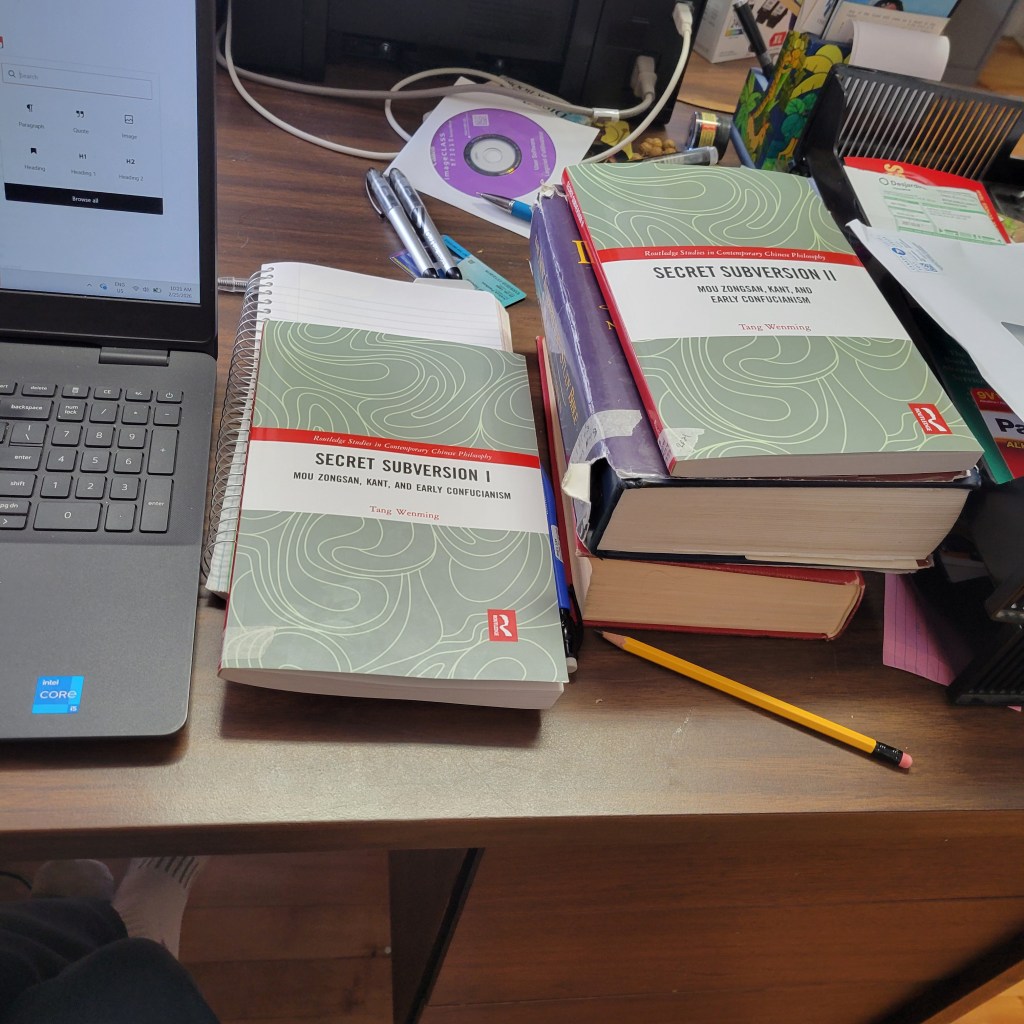


 David Webb said:


 The Mourning Cloak