• Works Reviewed. Webster, Jamieson. Conversion Disorder: Listening to the Body in Psychoanalysis. New York: Columbia University Press, 2019. 303 pages.

    Psychoanalysis, ever since its Freudian genesis, has been plagued by a certain categorical ambiguity; it touches on, and is set against, medicine, philosophy, religion, psychology, psychiatry, self-help, literature and so on. This ambiguity lends, perhaps, an aura of mystique to psychoanalysis, at the same time as it leads to a degree of suspicion being cast in the direction of the practice. Is this not an anachronistic endeavour; a cult leftover from the scientific enthusiasm of the early twentieth century? Even if Freud had witnessed some early successes in his career, the seemingly miraculous potency of the talking cure had faded during his own lifetime; today the task of the analyst promises “the perpetuation of pain more than its alleviation.” (1) The promise of pain, from someone in what purports to be a healing profession, is met with a degree of understandable suspicion. Is this not further evidence that Freud has been definitively proven wrong, and should be abandoned in favour of a more virile and effective approach. Cognitive behaviour therapy, for example.

    Into this scene Jamieson Webster, a practicing analyst, launches her meditation on the possibility of psychoanalytic practice today, in her book Conversion Disorder: Listening to the Body in Psychoanalysis. As the title suggests it is a return to an early problem of psychoanalysis, perhaps the original problem, that of conversion disorder, known to Freud under the name hysteria or conversion hysteria. She frames the discussion in terms of courage and patience. “Who has the courage for psychoanalysis anymore? Or, to put it another way, who has the time and energy in a world where ‘being busy’ is one’s raison d’être?” (1) More pointedly, she asks who has the courage to be an analyst in a world uninterested in the kind of change psychoanalysis has to offer. The implicit answer is, perhaps, that she does, and that in her reader she has found an audience sympathetic to the cause.

    The anachronism of being an analyst holds, for Webster, a singular kind of value for the present time. “We may have lost recognition,” she writes, “but that does not mean we do not have a place, especially in a world that embraces the idea of being “mentally ill,” whatever that might mean.” (5) As a practitioner of an anachronistic vocation myself – an Anglican priest – some of the challenges are ones with which I am intimately familiar. The concern for alleviating suffering, along with the question of how one can possibly do this work with integrity. The conversion of Webster’s title has a definite religious overtone, and this is perhaps part of what drew me to the book. But only part. Religion, in the sociological sense in which it is often understood, is only one aspect of my work. The subtitle – Listening to the body– offered a far more compelling line of inquiry. The work of listening, in the face of terrible anxiety, is what takes courage. Listening to the body, in all of its singularity and suffering, when anxious collective fantasies threaten to overwhelm at every turn, takes singular determination, and it takes time.

    Conversion, in the sense that Webster intends it, has to do with Freud’s discovery that it was possible for nothing more than speaking to alter the body and the psyche. At the heart of this word is, for Webster, the foundation of the psychoanalytic practice. It is a broad term, and pairing the word conversion with disorder denotes the limitation of the body as a medical object. Conversion disorder, according to the Medical Encyclopedia, is “a mental illness in which the patient exhibits symptoms that cannot be explained by medical evaluation.”1 This is, clearly, dangerous territory, we are leaving the arena of medical expertise and entering into territories charted by other disciplines, including philosophy, literature, and religion. It is important, however that this turn, even when it touches upon the religious, resist the path of promise or pity. Webster does not mention conversion therapy, though it would offer an apt example of how the question of the body is cut short by the promise of a conversion from the kind of body that is to be pitied to the kind of body that is collectively accepted. This is not to be the path for the psychoanalyst. The uniqueness of the psychoanalytic cure lies, she writes, in its “courage for conversion without promise or pity.” (10)

    There may be something of the beleaguered practitioner in this profession of courage, and I find the intransigence at once admirable and disconcerting. In my own perspective it is more admirable than disconcerting, since it is precisely the threat of collective anxiety that is resolutely identified, and refused. Perhaps Webster hopes to confront the spectres of psychoanalysis with the manifesto of its unique core; “a courage for conversion without promise or pity.”

    It is a spare manifesto, and one which Webster deploys beautifully across a series of twelve chapters: Daybreak, Music of The Future, Father Can’t You See, Never the Right Man, I am Not A Muse, Coitus Interruptus, Three Visions of Psychoanalysis, How to Splinter/How to Burn, Forged in Stones, The Sliding of the Ring, The Analyst’s Analysis. At the heart of each chapter that manifesto is put into play through the act of listening to the body – the central act of psychoanalytic practice.

    In one of my favourite chapters, Three Visions of Psychoanalysis, she brings the philosophers Gaston Bachelard, Jean-Luc Nancy , and Michel Foucault into conversation with Freud. “The body is the unconscious: seeds of ancestors sequenced in its cells,” writes Nancy, and there is a resonance here with Freud’s enigmatic statement: “The psyche is extended, knows it not.” These three thinkers are resourced, in part, to undo the primacy of meaning and interiority in psychoanalytic practice. Webster is concerned that the themes of identity and interiority are concepts which have led psychoanalysis astray, and she wants to redefine the territory. Knowledge, for Webster, has become a sort of trap effectively reducing the body and its experiences to the realm of metaphorical language. Bachelard resists this reduction through his emphasis on the primacy of fire; a psychoanalysis of fire. Rather than moving from literal fire to the fire of the human heart, Bachelard goes in the opposite direction. The desire for knowledge and control, what might be spoken of as a spark of knowledge, leads back to real fire. “Through fire everything changes, and when we want everything to change we call on fire,” writes Bachelard. This desire for change, for conversion without promise or pity, is what Webster is after as well – to track the insistence of the body in and through language.

    With Jean-Luc Nancy we enter territory with which I am more familiar, for what Webster draws from Nancy is the phrase, “this is my body,” in which she reads the insistent ‘this’ as at once comical and chaotic. “Sensory certitude, as soon as it is touched, turns into chaos, a storm where all sense runs wild. Body is certitude shattered and blown to bits,” writes Nancy. Given this shattering of certitude, how is it possible to say “this?”

    This is where, for me, the psychoanalytic practice comes nearest the; Eucharistic practice of Christianity. “This is my body, broken for you,” says the Christ, and there is something inexplicably weird about it. How can the one whose body is broken say this is my body? It is a paradoxical injunction that the understanding has to wrestle with, and all too often attempts to domesticate by turning it into a simple metaphor. The body offers itself as the place where meaning occurs, and to place veil of knowledge and meaning back here is to make a judgment we are no capable of making. “The body is an urgency without knowledge, without judgment or value.” (191)

    Following Foucault, Webster, takes us next into the madness of language unmoored from sense, wit the unsettling admission that, perhaps, ‘free association was always this mad exteriorization, this flight or fight for freedom as a radical passage to ‘the outside.’ Outside what? Outside the body, outside language. This part of the chapter was, for me, the most difficult to follow. Webster was positing Foucault as a limiting point, or oppositional voice to the psychoanalytic project, and therefore enshrining madness as the lack constitutive of the psychoanalytic project. This, at least, is how I read her. ‘Language is not the space of reflection; it is a mode of action,” she writes, and I am sympathetic to the sentiment. A certain interpretation of the Gospel of John even allows for this interpretation; in principio erat verbum. Those who have read me before, though, will know that my position on action is heavily indebted to the work of Maurice Blondel. Any scaffolding that references action without working clearly through it the way Blondel did is likely to be shaky, and Foucault has not done this work.

    Foucault, through a rather facile opposition of law and sense to play and madness, pretends to a freedom that may be nothing more than the capriciousness of the will. The interplay between action and contemplation – and contemplation as a form of action – is obliterated in an action that seems already to know too much. An action, moreover that is dedicated not to freedom, but to annihilation. “Yes or no, does human life make sense?” This was Blondel’s famous opening line, and it echoes everywhere the project of existence is undertaken. Thought, to be sure, is a strange form of human play with deadly stakes, but a form nonetheless, and it is not entirely about control.

    Throughout my reading, and throughout this meditation I have endeavoured to listen, to listen for the body not only in psychoanalysis, but in my own practice of pastoral ministry which is distinct, and yet somehow analogous. I have endeavoured also to listen as a reader, and whether or not certain prejudices or biases have prevented an accurate audition will be up to my own readers to judge. Or not, for the purpose of reading is perhaps not to judge, but to make space for the body that urgently insists, and that asks for words to do the impossible thing of becoming flesh.

    1“Conversion Disorder” in Medline Plus available online at https://medlineplus.gov/ency/article/000954.htm . Accessed on June 11, 2019.

  • Works Reviewed. Eleana Vaja. Epilepsy Metaphors. Liminal Spaces of Individuation. 

    Front Cover

    There is an image, taken from the life of John Hughlings Jackson, that has somehow impressed itself upon my mind as an emblem of the modern era. Hughlings Jackson, the father of modern neurology, would buy a book from the bookshop, tear it in half, and put one half in his right coat pocket and the other in the left. As he read, each leaf would be discarded, and thus he would while away a journey on the train. (Critchley, Macdonald MD “Hughlings Jackson; the man and the early days of the National Hospital. Proceedings of the Royal Medical Society.)

    It is difficult to pin down exactly why I find this image so captivating; is it a parable of the instrumentalization of reason? A preview of what the French philosopher Jacques Derrida saw as the “end of the book and the beginning of writing?” Or is there something more – can we see in Hughlings Jackson some sort of neurological messiah who had come to tear apart the bindings of a culture that valued the dogma of books over the dynamics of the brain?

    If so, then he is a strange and secular messiah, but perhaps the one needed to begin the work of tearing apart the shrines that at once sacralize and stigmatize, and to inaugurate the process of a more rigorous, more dynamic understanding of neurological stability. And yet, like any messiah, he does not emerge out of the mists of time. There is always a history, and the desacralization of neurological phenomenon can be traced back at least as far as On the Sacred Disease, a work belonging to the Hippocratic Corpus, though of questionable authorship.

    We find ourselves, then, still at the crossroads between humans and the metaphors and images which define them, in need of a richer understanding of the relationship between books and the individuals whose lives intersect with those words, with these metaphors. Eleana Vaja’s Epilepsy Metaphors: Liminal Spaces of Individuation in American Literature 1990-2015 contributes to that conversation through the precise literary lens of contemporary American fiction.

    “(E)pilepsy,” Vaja tells us, “is intrinsically connected to our understanding of life,” and the documentation supporting this hypothesis stretches from the Egyptian Hieroglyphs in 4000 B.C. through the Code of Hammurabi to the The Sacred Disease, and into our own times. The quantity of evidence supporting the theme of epilepsy as an important area of reflection for human mental life is significant, and has, perhaps, begun to undergo something of a renaissance with the increasing cultural importance that neuroscience and related fields have begun to occupy over the last few decades. Among the first of Vaja’s footnotes is Umair J. Chaudhary’s essay “A Dialogue with Historical Concepts of Epilepsy from the Babylonians to Hughlings Jackson: Persistent Beliefs.” One of the claims this reference supports, even in its title, is that epilepsy has been a persistent question or object of reflection across cultures. It is also suggestive of the dominant modes of interpreting or explaining epilepsy. Vaja articulates these modes as biology and medicine on the one hand, and religion and metaphysics on the other. The brain and the book, in a sense, are the two main corpuses to which those who would explain the phenomenon of epilepsy appeal.

    Vaja’s interest, however, is not so much a systematic categorization, or a taxonomy of epilepsy in either the medical or religious register, but a look at how metaphors structure our understanding and experience of the phenomena of epilepsy. Epilepsy metaphors throughout history, she finds, have contributed to a stigmatization. Novel trends in American literature between 1990 and 2015, contends Vaja, have tackled that stigmatization in three key, overlapping, areas – those of society, the body, and language.

    The primary lens through which she will address epilepsy is therefore the metaphorical language of literature. How does literature participate in the tendency to perpetuate stereotypes about individuals with epilepsy, and how, conversely does and might literature work out the process of individuation through the liminal spaces named and occupied by epilepsy? Vaja is interested, particularly, in the trope of metaphor, and in how that trope is used in understandings and prejudices surrounding epilepsy.

    The timeframe for the literary works she looks at is justified in the surge in interest in brain disorders and diseases in the 1990s, but also by the fact that the “American with Disabilities Act of 1990” secured some economic and social equality for people with disabilities. This act occurred at the same time as the American president of the time, George W. Bush, was declaring 90s the “Decade of the Brain,” and using language to define “disorders” as enemies to be conquered. One need hardly mention the echoes of this combative attitude which the past decade has witnessed.

    In effect what was emerging was a consciousness of different ways of being in the world. Ways of being which resisted the highly-militarized us-them paradigm in favour of voices articulating the “multiplicity of bodily and mental varieties.” The literary both reflects, and plays an active role in the changing landscape of understandings around epilepsy.

    Vaja contends that the particular subsection of literature to which she attends – American literature between 1990-2015 sees the emergence of “novel approaches to epilepsy metaphors” which promise a “shift away from this fetishazation of ability and the normal.” (14) Through the works of Lauren Slater, Audrey Niffenegger, Dennis Mahagin, Thom Jones, Rodman Philbrick, Reif Larsen and, especially, Siri Hustvedt, Vaja works to define epilepsy as a process of individuation. Several concepts emerge as significant in the process, perhaps chief among them that of metastability. Epilepsy as metastability is the kind of conceptual metaphor that Vaja sees emerging in the literature she has selected.

    Epilepsy Metaphors is divided into three main sections. In “The Folklore of Epilepsy,” she traces the historical stigmatization of epilepsy through five motifs; sleep, falling, danger, intelligence, and religiousness. These motifs “define the stigmata of epilepsy by disguising the ephemeral character of scientific truth and, likewise, religious belief.” (21) These motifs also allow Vaja to establish a particular lineage of how the stigmatization of epilepsy functions, moving from the level of an “affective” correlation through linguistic discrimination, socio-cultural implementation of that discrimination, and the rational and spiritual codification of the stigma.

    Noting that, whereas psychoanalysis historically focused on hysteria, epilepsy has been the domain of neuroscience. The rise of interest in epilepsy, she writes, “parallels the rise of neuroscience in social popularity.” (40) Historical motifs of epilepsy are, therefore, refracted through a fragmented scientific discourse. To my mind the image of Hughlings Jackson, discarding pages left and right, arises again at this point. Vaja’s work, in a sense, is to regather the scattered pages, but to do so with an eye towards the liminal and towards the process of individuation. Canvassing the American literary corpus, from Thomas Pynchon to Michael Crichton to Lauren Slater, Vaja uncovers a codependent relationship between literature and medicine. The question this poses for representation, says Vaja, is one of breaking this cycle and initiating new metaphors – metaphors capable of sustaining the kind of liminal spaces required for individuation.

    Vaja then pivots to disability studies, outlining the emergence, within medical and literary cultures, of an emergent discourse of individuation which challenges the binaries of healthy/sick, able/disable and normal/abnormal through its metaphorical representation of liminal spaces. Metaphors also have the capacity to represent liminal spaces, and therefore to capture a sense of singular existence.

    The second part of the book “Liminal Spaces of Individuation,” moves us into the territory of theory, as Vaja seeks to account for the “innovative power of epilepsy metaphors. Through the work of Jurgen Link and Michel Foucault she grapples with the question of ‘who is normal?’ Society is in the background, and Vaja distinguishes between two types or usages of metaphor – protometaphors and flexmetaphors – which respectively reinforce rigid stereotypes or allow for flexibility and ambiguity.

    She moves from there to the work of Georges Canguilhem, wherein the focus shifts from social relationship to an understanding of normativity that is understood as the self-regulating process of a singular organism. “For Canguilhem,” she writes, “each living organism has its own norm and acquires norms throughout life though aging, diseases, accidents, social relations, geographical position and psychosomatic effects.” (83) The question, for Canguilhelm is not who can be said to be normal in terms of their relation to a social average, but rather “what is the normal?” In posing this question Canguilhelm abandons an overall notion of health in favour of a radically individual approach focussed on bodily experience.

    The third and final part of this section turns to the area of language and the work of Gilbert Simondon. From Simondon she develops the notion of conceptual metaphors, particularly the metaphor EPILEPSY IS METASTABILITY (all caps in the original). The notion of conceptual metaphors was , for me, one of the most intriguing themes explored in the book. It is through conceptual metaphors, Vaja argues, that we either reinforce or challenge stigmatization at the level of language. “Conceptual metaphors structure daily (normal) language and serve as powerful tools for exposing and reingorcing rigid belief systems as well as for challenging them.” (111)

    Having laid the theoretical groundwork, the next step is to jump into the epileptic text itself, beginning with a reading of Lauren Slater’s Lying. As a reviewer I will have to say that I was not familiar with all of the works Vaja covered, and in addition to the critical tools she has provided have to thank her for introducing me to a wide body of literature. She deploys her conceptual work through this corpus with grace and vigor – I particularly enjoyed her work on Hustvedt’s poetics as displaying and manifesting metastability through her use of conceptual metaphor and the invitation to understand life through shared experiences of “fragility, vulnerability, and endurance.” (238)

    Perhaps, in the end, there is more to learn from the epileptic and the author than from the neurologist who tears at the bindings of book and brain. We share a common humanity that, as part of its singular beauty, is manifested in the process of individuation and constant redefinition. Torn pages, perhaps inscribed with stigmatizing metaphors, may be deployed differently. Eleana Vaja has done a tremendous work in drawing attention to the relational and bodily aspects of metaphor and the use of literature in the process of individuation and de-stigmatization.

  • Secularism is a complex idea, or set of ideas and practices, with a long history. Considerable thought and work has gone into tracing that history and much ink has been spilled. Charles Taylor, a Quebec-based philosopher, in his book A Secular Age outlines a perspectival shift from the Middle Ages in which it was almost impossible not to believe in God to the modern secular age when it becomes one option among many. Talal Assad, an anthropologist, in his Formations of the Secular works to develop an anthropology of the secular through an analysis of agency and pain. John Milbank, a theologian, in his Theology and Social Theory, argues that the secular is not simply the absence of religious thought but a view of the world that is imagined and put into practice as ideas about God, nature, and morality shift. In a similar vein Michael J. Buckley described the origins of modern atheism in the progressive self-alienation of (Christian) religion as thinkers began to rely on philosophical paradigms and Deistic notions of God.

    Suffice to say that secularism has a longer history than can be satisfactorily dealt with in a blog post. The fortunes of secularism, and of atheism more generally, have shifted tremendously since the days of Denis Diderot and Baron D’Holbach, and, as might be expected, the historical situation in which secularism arose as a challenging intellectual movement has largely been forgotten. A recent book review in The New Yorker seeks to animate the secular faithful with the tagline “Can secularists bring religious intensity to redeeming our actual existence?” (James Wood “The Time of Your Life in The New Yorker, May 20,2019 pp. 90-95.

    James Wood reviews Martin Hägglund’s This Life: Secular Faith and Spiritual Freedom. He begins, however, with Marilynne Robinson’s lamentation that, although she has met good people who are atheists she has yet to hear “the good Atheist position articulated.” Wood responds with a paen to the secular saints, beginning with Pliny the Elder. The quarrel is with eternity, not as a reality, but as a concept and a belief. Belief in the afterlife, Pliny held, destroyed “Nature’s particular boon… the great blessing of death, and merely makes dying more anguished by adding anxiety about the future to the familiar grief of departure… How much easier for each person to trust in himself and for us to assume that death will offer that same freedom from care that we experienced before we were born.” This freedom from care is, of course the great oblivion. The fact that Pliny can say, apparently unaware of the contradictions involved, “that we experienced” anything before we were born is a pretty good sign that Wood’s panegyric to this pagan saint does not answer Robinson’s lament. The good Atheist position has not yet been articulated, at least not by Pliny.

    Wood will go on, following Hägglund, to make the case that belief in eternity depreciates temporality, renders our moral engagement with this world suspect. Eternity, he asserts, is at best incoherent and meaningless, and at worst terrifying. Pliny’s belief in the “blessing of death,” he holds to be humane. Pliny’s perspective, of course, is that of a well-established Roman citizen. Pliny is an historian, a naturalist, an army commander, and a friend of the emperor Vespasian. His immortality in the annals of history, at any rate, is secured. It is doubtful that those who stood on the losing side of the First Jewish-Roman war would have agreed with Pliny the Elder’s “humane convictions,” as they watched their beloved Temple razed to the ground by this “humanitarian intervention.”

    Pliny the Elder is an unlikely forefather in a list that goes on to include Montaigne, Chekhov, James Baldwin, and Primo Levi. The idea is that they are all part of some shared ideology which eventually emerges as secularism is a strange argument to make, particularly when that argument eventually pushes towards a democratic socialism as the truest form of secularism. At the end of his book Hägglund will read Martin Luther King Jr.’s religious convictions as disavowed secularist commitment. King’s final speech, with its focus on how God has “commanded us to be concerned about the slums down here, and his children who can’t eat three square meals a day” is read by Hägglund and Wood as a pitch for a revaluation of value that is essentially an anti-capitalist, secularist credo.

    There are some serious problems with this reading. For one thing it gives weight to the fact that King had read Marx and Hegel, but does not attend to the fact that King was steeped in the tradition of African-American preaching. From a theological perspective the dogma of the Incarnation, the Christian belief that the eternal enters into temporality and is only encountered within our bodily existence, is simply ignored. Naturally, there is a theological history here. The doctrines of creation and of cosmic renewal tend to be muted or absent within mainstream American Protestantism. Within this reduced theological landscape, the doctrine of the incarnation makes very little sense. But it is within this same reduced theological landscape that it makes sense to interpret King with an eye to Marx and German Idealism rather than, say, Frederick Douglass and Sojourner Truth.

    King had studied his Marx, and had begun to question the capitalistic economy. That is not in dispute. To claim that this makes him a “closet secularist” is, however, a stretch. It ignores key elements of his rhetorical style; what are we to make of his invocation of God as the one who has commanded us to concern ourselves with the poor? What are we to make of the role that the story of the Exodus and the promised land play in King’s vision of America? What are we to make of King not only as an idealist, but as a man and a leader of his people? A people who have shaped music, rhetoric, and conceptions within spaces we would largely recognize as religious.

    Wood, at one point, does raise the suspicion that Hägglund’s vision of the good life is that of an academic professor whose ethically and intellectually satisfying work is “institutionally dependent on a busy, fertile capitalism.” (95). This is the closest Wood gets to anything approaching criticism of Hägglund’s work, and it is the part of the article that, to me, rings most true. Throughout the article we get nothing more than the assertion that eternity causes us to despise our own lives. Those who find meaning and purpose through religious vocations, or are powerfully shaped by the practices of religious communities, are rather scornfully appropriated. Hägglund the academic, knows better than King himself what King is about. His “religiosity was really a committed secularism.” Despite the brief moment of awareness that Hägglund’s critique is institutionally dependent on capitalism, Wood fails to recognize that a secularist ideology can function just as effectively as a religious one as a tool of oppression.

    In the end, the religious intensity is not brought by the secularists, so much as it is appropriated from the struggles of particular communities. Time is all we have, says Wood, so we should measure its value in units of freedom. “Once this glorious idea has taken hold, it is very hard to dislodge.” (95) Wood sees freedom in terms of a “glorious idea,” and though he does not say it, “a gloriously marketable idea.” The fact that King can be interpreted as an apostle for secularism, in spite of the actual communities of struggle to which he belonged and the biblically rooted language of liberation which he spoke, is a sign that appropriation has taken place. King has been converted into a new currency, and, in keeping with the dictates and direction of global capitalism, its key feature is its fungibility. Translating King into the narrative of bland secularism, we are left with little besides an image with which to associate the “glorious idea of freedom.”

    King becomes, in this story, the material support for an (eternal) idea – the idea of freedom. Hägglund and Wood do not seem particularly interested in King for who he really was, they are interested in him as a cipher for their own ideas. These ideas prove to be somewhat confused since, in rejecting eternity, it is actual existence that becomes unavailable to them. Eternity, or at least the pseudo-eternity of ideas and heroes, seems to be the place they have decided to pitch their tents. Though their ministrations induct King into a hall of fame that includes Pliny the Elder and G.W.F. Hegel, it is not clear that this is the company King himself would choose to keep. Perhaps the Baptist minister would be happier to keep time with Jesus and Rosa Parks.

    The impulse behind the article isn’t entirely wrong. Wood’s thought is based on a secularized version of the ethical injunction to “love thy neighbour as thyself,” which, in one version or another has been a guiding light for religious traditions around the world. Given the tradition of “pie-in-the-sky when you die” Christianity that has so influenced the development of the USA, the rejection of eternity appears to be an attractive solution to the lack of care and attention for real places and people. However, the rejection of eternity does not lead to a renewed care for people and places. Pliny the Elder had articulated his vision of the afterlife as “freedom-from-care.” Pliny, as a worshipper of death, can envision freedom only in terms of an absence of care and affection. The notion that our care and affection are eternally relevant is beyond the scope of his imagination and understanding. Pliny tells his reader to “trust in himself” by which he can only mean to trust in the decay and dissolution of his life. Death, for Pliny, is not only the end, but the very logic and character of life. It isn’t particularly clear why anyone should “trust in himself,” given that the only thing he is really capable of doing is disavowing the meaning and, consequently, the responsibility for his own actions.

    As seductive as Pliny’s little hymn appears, therefore, with its idyllic portrayal of death as the great boon of Nature, and the sweet oblivion of freedom, I think it is nothing more than a mask for guilt and anxiety. Surely Pliny was aware, at some level, that his actions would continue to impact the world after he had shuffled off this mortal coil. Death, perhaps, would end his consioucness and absorb his body, but it would not absolve him of responsibility for what he had done.

    Through the concept of eternity, religious traditions have woven together the notions of responsibility and conscious reflection. It is a daunting concept, to be sure, and one which allows for numerous misunderstandings and misapplications. Simply disavowing the reality of eternity, however, is no solution. We may desire to circumscribe our own scope of responsibility and reflection, in order to make it more manageable. In order to do this, however, we must live with blinders on, equally oblivious to the sorrow and joy and to the extent that our own actions and lives are beyond the scope of our control.

    In the end, I will have to lament with Marilynne Robinson. “I have met good people who are atheists, but I have yet to hear the good Atheist position articulated.”

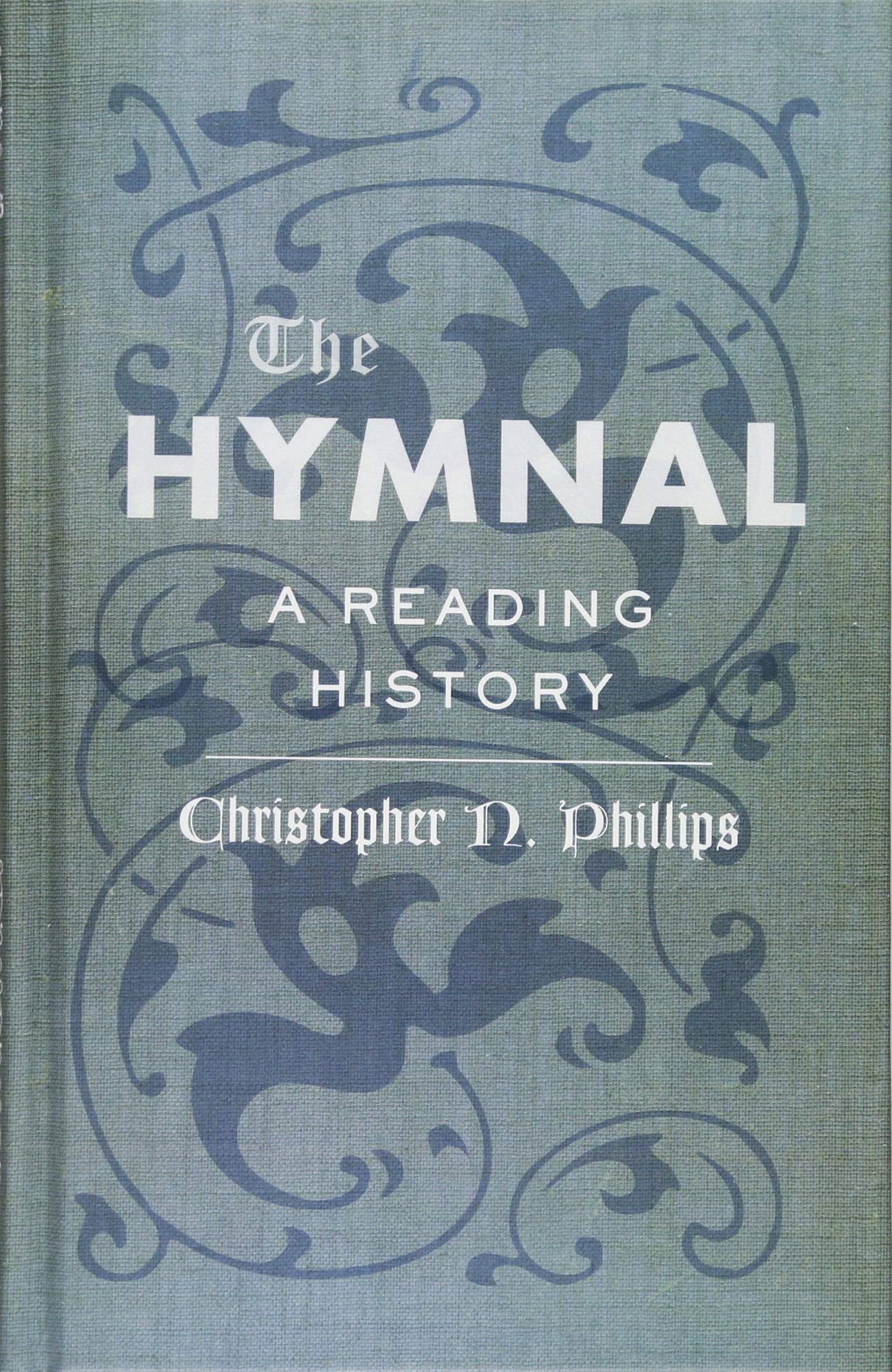
  • Image result for the hymnal a reading history
    Hymns: Not Just for Singing

    Works Reviewed: Christopher N. Phillips The Hymnal: A Reading History. Baltimore: John Hopkins University Press, 2018.

    I remember my father once commenting, in an offhand way, that if you want to know about the theology of a particular church, you can just peruse their hymnals. Hymnals being such an essential part of the fabric of my own church experience, it hardly occurred to me to question why this might be so. Yet, the wooden structures on the back of old church pews that hold the hymnals in place are an architectural curiosity, they tell a story of a particular way of engaging with words and music, and with the story of faith.

    It is, of course, a simplification to say that a theology is simply delivered through the pages of a hymnbook or hymnal, particularly in an age when even liturgical practices are less informed by the bindings of a particular volume. There is, a history here, a history which has shaped reading practices, the organization of communities, and the poetic and religious sensibilities of the western world.

    It is a history which Christopher Phillips has found worth telling in his The Hymnal: A Reading History, and it is a story with implications beyond the confines of church practices. The history that Phillips recounts is the history of reading practices in English-speaking cultures, and the important role that hymnbooks and hymnals played in the development of literacy and poetics across a wide spectrum of English and American culture. The book, in his own words is, “an intervention in the field of historical poetics that seeks to bring together the study of poetry, book history, and lived religion.” (ix) It is also a fascinating account of the “social practices” surrounding the use of hymnbooks and hymnals; practices which include not only singing and reading, but in which the hymnal becomes a vehicle for silent conversations, for carrying things, and for remembering departed loved ones.

    Isaac Watts: Father of English Hymnody

    The book begins with an epitaph from Leah Price: “Any history of reading is also a meditation on the reading of a particular writer.” This comment grants an insight into the reading at hand. The Hymnal will be a meditation on Christopher Phillips’ own reading, and his view that hymnbooks and hymnals have significantly shaped the way we read and interact with texts, and particularly with poetry. At another level, though, it is a meditation on Isaac Watts, and how his creative and involved reading of the Psalms and Scriptures birthed a set of reading, publishing, and teaching practices across church, school, and home life.

    A Story of Three Hymnbooks

    It is, however, not Isaac Watts, but the hymnbook that is the protagonist of the story. Not simply as a general idea, but a real book. The first hymnbook we are introduced to is a well-worn copy of The Psalms of David, Imitated in the Language of the New Testament, with Isaac Watts listed as the author. This ‘small brick of a book,’ provokes a series of questions, says Phillips, not least of which is to whom authorship should be attributed – whether to David, Watts, or even God. But the questions raised are not just of a theological, doctrinal or literary nature. The book bears the inscription of its owner, and Phillips proceeds to craft the details of the inscription into a portrait of its bearer, drawing on his knowledge of religious practices in 1800s America. Phillips will go on to examine two other hymnbooks, each of which is fitted for use in a different setting; the church, the school, and the home. These three spheres delineate, for Phillips, the main areas in which people interacted with hymnbooks as they shaped practices of devotion, literacy, and poetry.

    The Church:

    The church is, in many ways, an obvious place to consider a hymnal or hymnbook. (Phillips generally uses hymnal to describe the later emergence of the larger volumes containing musical notation and hymnbook to reference the volumes which contained only the words, and were generally smaller.) The uses of the hymnbook could, however be surprising. “What if a hymnbook could be an article of attire?” he asks in a chapter on How Hymnbooks Made a People. From very early on hymnbooks, he argues, could signal much about a person’s spiritual allegiance. In the mid-1700s, for example a Methodist or Dissenter might signal their membership in the evangelical movement, while still maintaining a foot in the established church, through the hymnbook they carried into church. Phillips traces the shift from private to public identity as hymnbooks come to be representative of more solidly collective identities in communities such as the African Methodist Episcopal Church, or the Beth Elohim synagogue.

    How to Fight with Hymnbooks begins with an account of a certain M. Bromhead’s scathing marginalia in his copy of A Collection of Hymns for the Use of the Protestant Church of the United Brethren, and goes on to track the way hymnbooks were used and weaponized in various schisms. In 1840, Isaac Watts again emerges as a galvanizing figure for the Old School faction of a split with the General Assembly of Presbyterian Church in the United States of America. The Civil War still further divided, and changed the way hymnbooks were designed.

    In Hymnbooks at Church, Phillips leads his readers through marginalia which reveal the arguments and conversations a family carried on – in the silence of church worship – through their hymnbooks. The theme of how hymnbooks shaped and trace interpersonal memory is further carried on in the subsequent chapter. “The bonds of memory,” he remarks, “could make the hymnbook an instrument of peace even as it participated in ongoing debates about the nature of grace.

    The hymnbook as a path to peace is further explored in Devotion and the Shape of the Hymnbook, where we move again from the public battles over identity and church membership back into the more intimate space of personal devotions seen, for example, in Carrie Chippey’s copy of The African Union First Colored Methodist Protestant Hymn Book, which she received as a gift from her father, the Rev. Edward H. Chippey. Against the backdrop of Watts overwhelming influence, glimpses of personal identity begin to emerge.

    At times, it seems, that Phillips almost assumes the influence of Watts as a natural force. To be sure he gives credit to Watts’ hard work, but I did not often have the sense that an analysis of the colonial and imperialist implications of Watts’ work were being seriously questioned. The theologian Willie Jennings has identified Isaac Watts’ hymnody as complicit in a supercessionist ideology which effaced a sense of place and obscured local knowledge. The hymnbook, as a cultural commodity which traversed the spheres of church, school, and home, was certainly a part in the homogenization of cultural identities. What Phillips’ work does reveal, in a helpful, way, is how the homogenizing force of the hymnbook became a vibrant space for learning, conflict, and reconciliation.

    The School:

    As we shift from the space of the church to the school, the hymnbook takes on new horizons of meaning. Horizons related to literacy and freedom. Here we begin with another Watts hymn: “When I can read my title clear To mansions in the Skies, I bid farewell to every fear, And wipe my weeping eyes.” This line of the hymn would form a moment of comprehension and clarity for the former slave Belle Myers, and eventually become the title of a study of slave literacy. Literacy was a road to freedom, but it was also linked to cultural conquest.

    Hymnbooks changed, it seems, the landscape of children’s literature and schoolbooks. Alice’s Adventures in Wonderland shows that, in the world in which Lewis Carroll wrote, Isaac Watts’ Divine Songs was as much a part of childhood education as multiplication or geography.

    In The Hymnal, Phillips reveals a world in which hymns, and hymnbooks come from the sphere of the private to permeate public life in many ways. Eventually we are led back into the intimacy of the home, and the composition of intensely personal poetry. He concludes with a discussion of Emily Dickenson who uses the imagery, meter, and tone of hymns to craft a a language for her own personal experience.

    The Hymnal is a fascinating exploration of the connections between hymnody, literacy, education, memory, and poetry. They contain echoes of a culture that continues to be present with us in various ways. As Phillips notes, “If we keep the Sabbath with out poetic ancestors, it is only because hymnbooks helped to teach us how to do so.”

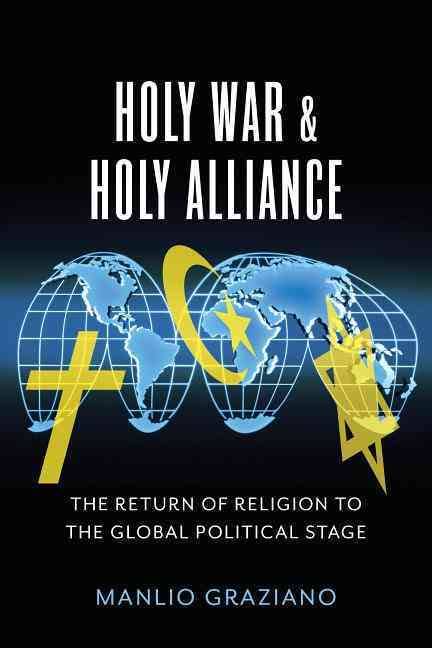
  • Geopolitics of Religion: Manlio Graziano’s Holy Wars & Holy Alliance.

    Works Reviewed. Graziano, Manlio. Holy Wars and Holy Alliance: The Return of Religion to the Global Political Stage. New York: Columbia University Press, 2017.


    The theme of a return of religion, particularly a return of religion to the domain of politics, has been the subject of a great deal of attention over the past sixteen years in both the popular press and the critical attention of political theorists and other academic disciplines. The focus, in both popular and academic press, has been on the trinity of religion, politics, and violence, with an inordinate amount of attention placed on ‘political Islam.’

    Indeed, after the September 11 attacks, it seemed that when one spoke about politics and religion it was more often than not a shorthand for Islam and politics. The phenomenon of the Religious Right in the USA, however, garnered its share of the discussion as well. Invariably discussions around religion and politics adopted a shrill tone,  as if the spectre of religion – long thought banished from the practice of politics had risen like some  ghastly undead creature to haunt the world with its bloody dreams of jihad, apocalypse and theocracy.

    Religions have again, after a period of apparent invisibility and irrelevance, become significant forces in domestic and international politics. This is true, however,  not only of Islam and American Christianity, but of religions in the plural. This has, to some extent been recognized. Mark Juergensmeyer in Terror in the Mind of God – a work which predates September 11, 2001 -examines religiously motivated violence in five of the major religious traditions. Karen Armstrong, in The Battle for God: Fundamentalism in Judaism, Christianity, and Islam contends that a militant piety has emerged in every major world religion. William Cavanaugh, on the other hand, finds the contemporary discourse around religion largely incoherent and declares the religious/secular dichotomy an arbitrary one, which has been instrumental in Western political intervention abroad and in silencing certain voices domestically. (“Does Religion Cause Violence?“) Lurking in the background, for Cavanaugh, is Samuel Huntington’s thesis on the “Clash of Civilizations” which, while providing a wildly distorted view of the world, offers an extremely convenient political narrative. The religious other – in most cases Muslim – is caricatured as an absolutely irrational person and it is this caricature, rather than an actual assessment of historical experience that takes central stage. Declaring the immutable essence of “religions” the purveyors of the “clash of civilisations” thesis abandon acquaintance with  history and tradition in favour of a simplified version of the world in which actual knowledge of other customs,  religions, and people is deemed unnecessary.

    Clearly then, the theme of a return of religion is an area that has great potential for misunderstanding, and requires a careful study with respect to how and in what sense religion has re-emerged as a major player on the global political stage. Manlio Graziano, in his recent book Holy Wars and Holy Alliance: The Return of Religion to the Global Political Stage – published by Columbia University Press – offers what I consider to be an even-handed and clear-sighted, though by no means exhaustive, assessment in the way religious discourse and organizations are involved, and often co-opted in domestic and international politics. The disciplinary field through which he approaches religion is that of their geopolitical impact, apprising what he calls their “uncommon political nature,” that is, the belief that faith carries a supernatural force and thereby provides a confidence that secular political forces are no longer able to muster.

    Graziano begins with an account of the the rise of the secularization theory as an attempt to describe the world after the Treaty of Westphalia, and the increasingly apparent limitations of that theory to describe the actual trajectories of modern societies. While he does not directly address the conceptual difficulties of the religious/secular dichotomy, modernity is acknowledged as a contested space which carries elements of both secularization and desecularization within it.  (26) Perhaps most significantly Graziano draws attention to the capacity religious organizations offer to promote alliance and unification among peoples, rather than focussing strictly on their potential to incite division and sectarian violence.

    Manlio Graziano is an Italian scholar who teaches in the area of geopolitics, particularly the geopolitics of religion. Noting that the events of recent decades have promoted some discussion on the relations between international politics and religion, he maintains that a geopolitics of religion has yet to be developed. Holy Wars and Holy Alliance is his attempt to enter into the work of building a geopolitical approach to analysing political and religious trends. “The aim of geopolitics,” writes Graziano, “is to study the constraints that restrict, condition, and orient the will of political actors.”(3) A geopolitical study of religion, therefore, does need to take into consideration the “superior motivation of religious actors,” given that the belief that their faith carries a supernatural force may grant religiously motivated actors a degree of confidence that secular politics can no longer galvanize or guarantee.

    It should be noted that this claim of a superior motivation based on faith in a supernatural force is the closest Graziano comes to defining what he means by religion. From context one can infer that religions principally describe traditions that are typically regarded as religious, including Christianity, Islam, Judaism, Hinduism and Buddhism, but not necessarily extending to Confucianism and Daoism. Graziano is well aware that the civil religion of states often borrows from or parodies elements of organized religions. Nevertheless, he wants to maintain a distinction between the new religion of the state and religion as it is more traditionally understood. The story Graziano intends to tell begins with a flagging confidence in, or even a metamorphoses of, the forces and political forms to which we have grown accustomed; chief among them the nation-state. His hypothesis is that some of the voids being left in the turmoil are being filled by traditional religion and religious groups. (1)

    At the same time the geopolitical approach must entail a caution around exaggerating that force at the expense of a careful assessment of the institutional and organizational realities of religious bodies. Graziano is well aware that discerning a greater or lesser prominence of religious sentiment in a society is a difficult task. Changes in immaterial factors, like ideology and religion, are difficult to detect and for this reason the return of religion to the public stage in the 1970s went unnoticed until the September 11, 2001 attacks bludgeoned the fact of religiously motivated political action into popular consciousness.

    Holy War and Holy Alliance is organized into four parts. The first, which opens with a provocatively enigmatic epitaph by Joseph Cardinal Ratzinger – The Church can in fact be modern by being anti-modern – traces the rise and fall of the secularization thesis which, in some ways mirrors the rise and fall of the notion of progress. Graziano builds on the work of Peter Berger who, though he had been instrumental in shaping the secularization theory that modernization leads to the decline of religion, had begun to see that modernization had also provoked powerful anti-secular currents. He offers a brief history of the rise of nationalism and capitalism, and the changes this effect with respect to explicitly religious organizations. It is in the nineteenth century that the state began to take on many of the roles traditionally prescribed to religious bodies.

    The state, therefore, finds itself required to provide meaning and social services, and when it fails to do so its credibility is damaged, which may lead to a resurgence in religious bodies occupying important public roles. This phenomenon, argues Graziano, became visible in the 1970s, with the rise of theologies of prosperity which, at least in part, provided a vehicle for uprooted peasants struggling to find meaning and retain a sense of identity within the new contexts of urban society and access to wealth. Civil religions, as seen especially in the cult of Mao in the cultural revolution, failed to replace traditional religions over the long term.

    Graziano then his readers through the resacralization of politics in the 1970s, anticipated by events in Indonesia in 1965, but really entering into center stage with the Islamization of the Iranian revolution, which Graziano points out, caught American foreign specialists almost entirely by surprise. The story here, it is worth noting, has many factors that are not especially religious in character. Graziano, quoting Vali Nasr, notes that ‘During the whirlwind years of 1978 and 1979, the revolution did not take on a particularly Islamic cast,” (71). The decisive factor, for the Islamization of the Iranian revolution lies, for Graziano, in the political capacity of part of the Shiite clergy to mobilize national resentment against foreign intervention precisely at a time of rapid economic development.  After an analysis of this phenomenon Graziano turns his attention to the “geopolitical reinvention of the Holy War” in Afghanistan. The central irony of this war, says Graziano, is that it is proclaimed by a Catholic American of Polish origin – Zbigniew Brzezinski – speaking to a group of mujahidin as they prepare to battle the soviet invaders. “Your cause is right,” said the national security adviser to Jimmy Carter, “God is on your side. The notion of Holy War is thus explicitly tied to a person who is Catholic, though not one who is acting in a Catholic capacity.

    This provides the perfect set-up to introduce another Catholic of Polish origin, and one whose story will become central to second part of Graziano’s title: Holy Alliance. The election of Karol Wojytla is, for Graziano, the most significant religio-political event of the 1970s that contributed to the rise of religion in political life, and far outstrips the geopolitical significance of the Ayatollah Khomeini. Graziano dismisses the view that John Paul II contributed significantly to the fall of communism, a claim which he notes that the pope himself called ‘ridiculous.’ (98) The real strategic power of Wojytla’s election to the papacy lay in the direction he was to lead the church:

    “He was also, above all, the pope who marginalized those in the heart of the church who dreamed of modernizing Catholocism, in order to resolutely follow the path of Catholicizing modernity.” (101)

    This is the story that Graziano really wants to tell, the story of the desecularization of the world, led by the Catholic church, which would see the “future reunification of the Christian world and the establishment of stable, peaceul, and fruitful relations with the world’s other great religions, starting with Judaism and Islam.” (102)

    In order to make that case as strong as possible, Graziano must first address the conventional perspective which tends to view the political agency of religion in terms of its ability to instigate violence, the “Holy Wars” of the book’s title. This section begins with an acknowledgement of the political utility of Samuel Huntington’s Clash of Civilizations theory, which pit the “Christian West” against the forces of ‘Islamic and Sinic’ civilizations. The idea was that the West needed to act against its own “moral decline, cultural suicide and politial disunity,” and assert itself against the claims of moral superiority of Muslim and Asian countries. Huntington provided clear demarcations between ‘civilizations,’ and these assertions found a ready market of people looking for stability, and a clear sense of self-identity. The problem, says Graziano, is that ‘while this representation was neat and clean and easily understandable it had one major flaw: it simply did not exist.” (108)

    Graziano then proceeds to examine the internal inconsistencies with grand civilizational theories, noting that the West has roots not only in Judeo-Christian history but also in Byzantine-Muslim civilization and Judeo-Muslim civilization. Following Niall Ferguson he contends that conflict between powers now considered as Western has always been intracivilizational. Moreover Islam itself has a plural character and there is, within Islam, ‘no central religious authority able to rule decisively on theological or juridical questions.’ (127)

    It is precisely this lack of a central religious authority which is true, not only of Islam, but oorf nearly all the world’s major religions that leave them open to be exploited for political and non-religious purposes. Sacred texts within Islam, Christianity, Buddhism, and Hinduism are commonly used to advocate peace or to justify resort to violence, and Graziano views the attempts to restrain violence on the basis of scriptures alone as inherently doomed since ‘one can find scriptural and theological arguments to refute these same arguments – and vice versa. The only way a religion can escape from this vicious circle is if it has a sole central authority, recognized and respected, which establishes which kind of beliefs can be seen as theologically true by the majority of the faithful at any given moment.” (132) Here, one tcan clearly see the important role that the Catholic Church plays in Graziano’s thought.

    The emergence of religiously motivated political violence, or of political violence that exploits religious justifications arises out of particular historic and economic conditions. The case of the Iranian revolution had much to do with using the language and institutions of Islam to address people’s desires for social justice and economic well-being. However, if the religious institutions lack coherence, clear lines of authority, and the capacity for long-term strategy they are just as likely to be used as Mafia-like groups. This is true, argue Graziano, not only of Islamic terrorism but of any form of ‘religious terrorism.” He provides brief examples of various terrorist acts linked to religious bodies of one kind or another. ‘Christian terrorism,” he notes, “is primarily Protestant.” This is not because their are not self-identified Catholics who commit acts of terror, but because the Catholic church has the institutional authority and ability to distance itself from those actors and decidedly condemn those actions.

    It is the Catholic church’s historical experience and institutional power that make it, argues Graziano in the book’s final section, uniquely situated to lead an alliance of the world’s religions. This he sees taking place through ecumenical and inter-faith relationships. The goal of this holy alliance is one that Graziano sums up in the words of Benedict XVI taken from Caritas in Veritate:

    “The Christian religion and other religions can offer their contribution to development only if God has a place in the public realm, specifically in regard to its cultural, social, economic, and particularly its political dimensions.” (270)

    The author makes a strong case for the way the Catholic Church has, especially since the Second Vatican Council, made alliance among the world’s religions a key part of its strategies, as well as how the historical experience of the Roman Catholic Church allows it to combine strategic rigidity in principles with flexibility in daily practice. (277) The book does not focus so much on the response of the other religious bodies to this outreaching by the Catholic Church, as his main efforts in describing other religious institutions are to point out their lack of central authority and the effects of this lack in the theatre of global politics. The very notion of a holy alliance, however, opens up the space for an important conversation as religious and secular institutions continue to come to terms with the desecularization of the world and the increasing role that religious bodies may come to occupy in the public realm. Graziano has written an important, and fascinating study of the role of religions in the political sphere.

  •  Works Reviewed. Kotowicz, Zbigniew. Gaston Bachelard: A Philosophy of the Surreal. Edinburgh: Edinburgh University Press, 2016. 212 pages.

    It was with some sadness that I recently learned that Zbigniew Kotowicz had died, not long after I had begun reading his book on Gaston Bachelard. Sadness that he would never again put pen to with the warmth and wit  which I had come to appreciate in reading Gaston Bachelard: A Philosophy of the Surreal. Still, the book has within its pages enough to keep my mind occupied for some time, and Kotowicz has also written on Egas Moniz, R.D. Laing, and Fernando Pessoa. Kotowicz was a generalist in the age of specialization, and it is this tendency in his thought that first led him to the  work of Gaston Bachelard, the philosopher who would prove central to his own intellectual journey.

    Fatigued by Hegel: The Poetics of Space 

    At the door of the house who will come knocking?

    An open door, we enter

    A closed door, a den.

    The world pulse beats beyond my door. ~ Pierre Albert Birot


    The story begins, as Kotowicz tells it, in a classically Kierkegaardian fashion when, “fatigued  by Hegel’s text and needing a break he pulls a copy of La Poétique de l’espace off the shelf only to find himself mesmerized by the text. Well,  that isn’t quite the beginning, since the book had first to come upon the shelf. It was, he relates, introduced to him by an artist friend. In his deceptively spare prose, Kotowicz manages to conjure up the image of what Bachelard calls “protected intimacy.” (Poetics of Space,3) The shelf with its volumes holds the tome that beckons from the outside world with the  voice of the artist, the friend. “The house,” writes Bachelard, “quite obviously, is a privileged entity for the phenomenological study of the intimate values of inside space, provided that we take it in both its unity and its complexity.” (Poetics, 3) The intimate value of friendship may not be far off the mark of a philosophy that seeks, first of all, to be at home.

    This introduction, at any rate,  was to prove fatal since, upon that first encounter with Bachelard, Kotowicz would abandon a doctoral thesis that was well underway in order to “explore the world that Bachelard seemed to open up.” It was, he acknowledges, a rash decision, but one that was provoked by that initial encounter, in what reads like a conversion story. He abandoned a project on psychic interiority from St. Augustine’s reflections on memory to the Freudian psyche on the basis of the sense that there was something to Bachelard despite La Poétique de l’espace appearing at first glance as a collection of pleasant but inconsequential meanderings. The joie de vivre of Bachelard’s philosophy, says Kotowicz, “did not agree with my intellectual habits.

    I had been developing a sophisticated (or so I thought) undestanding of madnes, falenness, alienation, ‘bad faith’, the ‘human condition’, the ‘end of man’ etc. ect. (the list is loong) – basically, about all that is wrong and tragic about human existence – while in Bachelard one finds a quest for the knowledge of sanity, creativity, happiness, notions which were, I realised, hidden from me. (2)


    Kotowicz’s reflections on  the lay of the philosophical land are, I suspect, familiar to many with even a passing interest in philosophical reflection. Serious thinking is somehow expected to be ponderous and tragic, where it is not altogether dry.  Bachelard’s simple phrase that “Being starts with well-being,” strikes the mind trained to pay supreme attention to the tragic theatre of history as odd, to say the least. To discern the philosophical consistency of the twenty-seven works that comprise Bachelard’s oeuvre, Kotowicz draws on a musical analogy. Bachelard’s philosophy was akin to music written in an unfamiliar scale. To understand it properly requires changing or adapting one’s thinking habits. Adding to the difficulty is the fact that Bachelard was not overly concerned with a systematic presentation of his own thought and, perhaps consciously, avoided developing a philosophy with an obvious point of departure. (3) Kotowicz offers a series of notes that he has observed emerging from the Bachelardian scale, a  series which well-being, surrealism, naivety, and atomism, and which is by no means meant to be exhaustive. These notes, Kotowicz maintains, can be discerned with consistency across the great span of Bachelard’s works.

    Epistemology, Poetic Imagination, and Temporality

    Bachelard’s body of works, while wide-ranging, is not simply eclectic. Kotowicz divides it into three main groupings; a ‘philosophy of science,’ the poetic imagination, and those of Bachelard’s works with a more ‘metaphysical’ bent which might be categorized under the heading ‘philosophy of time.’ The first two categories are fairly standard divisions of Bachelard’s work which one finds, for example, in the Wikipedia article on Bachelard or in the entry for Bachelard in the Oxford Dictionary of Sociology. The Stanford Encyclopedia of Philosophy has no separate entry for Bachelard at this time, which confirms the hypothesis that Bachelard ‘remains little known in the Anglophone world.’ Kotowicz’s work on Bachelard draws attention to the breadth of this remarkable thinker, through the three categories aforementioned. Like the author of the biblical Proverbs, though, the three things is amended to four since Bachelard’s philosophy of time opens up, for Kotowicz, the rich vein of the atomist tradition of philosophical inquiry. It was in the pairing of Bachelard and atomism that Kotowicz found the most surprise and confusion among his colleagues, which he attributes mostly to the fact that we have been taught the atomist doctrine poorly. The appendix of the book is therefore dedicated to an exploration of the philosophy of atomism as it unfolds from Bachelard’s work. AtomiTsm is of a piece with the portrayal of Bachelard as a philosopher of the surreal, thinking along different and unexpected lines.

    The major entries into Bachelard’s thought, however, are almost certainly those of philosophy of science and the poetic imagination. These two aspects of Bachelard’s work had, in the mind of the philosopher himself, absolutely no relation to one another. “I only knew tranquil work after I had neatly cut my working life into two almost independent parts, one put under the sign of the concept, the other under the sign of the image.” (11) These two signs are inimical to one another, since, for Bachelard, the image presents an obstacle to scientific rationality. The first part of Kotowicz book is dedicated to exploring Bachelard’s quest for a ‘new scientific mind.’ This new scientific mind is marked by rupture and discontinuity, as his argument  is that the “scientific episteme does not develop through a continuos accretion of knowledge,” but through a series of ruptures and discontinuities. The most important of these ruptures is the passage from visual representation to the mathematical thinking, or between common knowledge and scientific thinking. The rationality that Bachelard espouses is a mathematical rationality, and its purpose is not simply to explore the world but to actively create it. “A scientific rationality, he never ceases to argue, is a mind at work.” It is through the concept of the ‘mind at work’ that Kotowicz will manage, to some extent, to reconcile the radical duality of concept and image that Bachelard himself proposes.

    Kotowicz brings into the conversation some of Bachelard’s critics, particularly those who are uncomfortable with the strict divide that he draws between the interests of life and those of reason, and his apparent hostility towards naive thinking or common experience. He also touches on the different forms of rationality that one sees at work in the Vienna Circle, whose form of rationality was based on logic, and Bachelard’s mathematical rationality. This difference meant that Bachelardian rationality has very different aims, it is ‘not seeking knowledge that would be constant and universal.’ What is not directly touched upon is why, at a philosophical level, scientific rationality should be reduced to mathematical rationality. The fruitful exchange between the deductive and experimental sciences, while certainly effective, is not actually justified by science itself. The idea that “following the dictates of contemporary science we quit nature to enter a factory of phenomena,” is not a particularly reflective idea, nor is the axiom of rationality as progressive. There is something violent about this process, and something that seems to be more of an apologetics for technology than a philosophical critique.

    The section ends with Kotowicz’s translation of Bachelard’s article on Surrationalism, which was published in the 1936 review Inquisitions. It reads, at times, like a more philosophically sophisticated version of Marinetti’s Futurist Manifesto. Its most striking line, perhaps: Reason was a tradition. The spiritual voyage, un-anchoring human reason from sensory experience, does not come to pass. Instead, Bachelard turns to the realm of the poetic imagination, and in this way moves beyond the inhuman violence of futurism, although not without toying with the reverie of violence in his commentary on Les Chants de Maldoror. 

    Out of his Pasteurized Universe

     Related image

    Kotowicz locates the turn to the poetic in the pages of La Psychanalyse du Feu. There is a marked difference between the Introduction – which attempts to eradicate the images of fire from the scientific mind – and the conclusion in which fire is praised. La Psychanalyse du Feu begins as a treatise intendedn to ‘cure the mind from its happy illusions,” but ends as a discovery of the importance of admiration and wonder in thought. The discovery of wonder was also, apparently, motivated by a personal critique in which Bachelard overhead a student speak of his “pasteurized universe,” and was struck with the revelation that ‘a man cannot be happy in a sterilized world.” (84)

    Bachelard rushes off to the poet, and in a telling phrase, Kotowicz has him injecting ‘values and aesthetics into his research. (85) The language, at this point, is still quite clinical, though it will become increasingly less so as Kotowicz traces Bachelard’s discovery of the poetic, the elemental, and of the body. Bachelard discovers the four elements, and the power of pain and of death.

    Kotowicz argues that, despite the many changes accompanying the shift from a philosophy of science to ruminations on the poetic imagination, Bachelard remains consistent in his vehement opposition to the concept of substance. ‘The element is always complex and in this sense it satisfied Bachelard’s intellectual temperament.’ (83) There is something not altogether satisfying about this statement, and perhaps it is indicative of a problem that I have with Bachelard’s work overall. The axiomatic decision to cut the nerve between poetic imagination and scientific rationality, between the concept and the sign, while certainly productive, seems at times to be a strategy of avoidance. ‘Bachelardism,” Kotowicz is not alone in observing, “is not a philosophy of Being… but a philosophy of work…as absolute creation.’ (15) Bachelard regarded the concept of substance, and philosophies of Being in general, as intellectually lazy, but is the relentless drive toward perpetual (self)creation really the answer to this laziness? The intimation that “Being starts with well-being,” suggests that Bachelard was on the road to a philosophical understanding which, if not entirely at home with unitary concepts like substance, at least held some view of coherence other than that of violence and destruction.

    Still, it is death and flames that bookend Bachelard’s work on poetics, from La Psychanalyse du Feu to the unfinished Fragments d’une poétique du feu. This last work is was to be his meditations on the (impossible) poetics of the animus, the masculine principle. The death invoked in this last meditation is “death with a masculine prestige,” and we are returned here to the very Hegelian dialectic, which had brought on the earlier fatigue. Bachelard, who had identified the feminine principle with the poetic imagination, and the principle of scientific rationality with the masculine principle, seems almost desperately to be trying to convert the image to the masculine side. The reverie is one brought on by fire, but also, it should be noted, by the desire for immortality.

    “The feminine death is the going out of the flame while falling asleep. Life is this flame, precarious and valiant. The flame is playful and mobile, it is liberated from its own substance. It dies well without knowing that it has to die.” (118)

    The sentiment here, I think, is quite clear. It has to do with freedom, conceived rather broadly as the freedom for self-definition and mobility. It is a heroic, and a violent sentiment. It is akin, but only somewhat,  to Marinetti’s glorification of war in the Futurist Manifesto: “We will glorify war—the world’s only hygiene—militarism, patriotism, the destructive gesture of freedom-bringers, beautiful ideas worth dying for, and scorn for woman.” It is true that the concept, as presented by Bachelard and Kotowicz, is softer and more respectful. They lack Marinetti’s violence and his arrogance, for Bachelard is able to see value in a feminine death – likened to a candle going out – as well as the masculine death. “The candle dies more gently than the star in the sky. The wick bends, the wick grows black. Embraced by shadow, the flame has taken its opium. And the flame dies well: it dies while falling asleep. (116) And yet, it is not clear in either case what it means to die well, and so the celebration ends up simply being a celebration of death, just as Marinetti’s apparent lust for violence was really a simple alliance with death. The flame without substance, which was Bachelard’s original fear, becomes the death that he accepts.

    The Duel with Duration

     Related image

    The first two sections of the book stand on their own. Kotowicz weaves together the story of Bachelard’s thought and its development, and there is a kind of narrative coherence to the piece. Yet, as he had intimated from the beginning, he is not simply providing a narrative, but also a set of notes or themes through which we might conceptualize Bachelard’s entire philosophical output. The philosophy of time is a much neglected, but still substantial, area of Bachelard’s work.

    Central to this part of his philosophy is the concept of the instant. Kotowicz offers a brief history of the philosopy of the instant, before coming to the question of duration. For Bachelard the instant is the only reality of time, and duration is achieved only through the will and through the creation of habits which, quite intriguingly, Bachelard defines as ‘the will to begin oneself.’ (125) However, there seems to be something more to the will than mere force, since the question of rhythm and vibration is central to Bachelard’s view. “Matter is vibration that materializes itself.” The musical analogy with which Kotowicz began his treatise finds a resonance here, and they offer a way to consider thought and action in embodied ways, presumably while avoiding the spectre of substantial entities. Significantly it allows Bachelard to continue his theme of rupture and discontinuity into his understanding of time. Duration, which is achieved through the holding pattern of willed instances, requires a certain kind of rhythm in order to be viable.

    “The most stable patterns owe their stability to rhythmic discord. They are statistical patterns of a temporal disorder, and nothing more than this. Our houses are built with an anarchy of vibrations.” (129)

    Bachelard’s work on time, unlike his other philosophical endeavours, had a named and clearly identified opponent in the person of Henri Bergson. Kotowicz traces this disagreement rather briefly. Bachelard’s objections, succintly, are that Bergson’s concept of duration and élan vital promotes a philosophy of inactivity and laziness and does not allow for the experience of novelty and change.

    Finally, Kotowicz takes us on an exploration of the affinities of Bachelard’s thought on discontinuous time with that of Buddihst philosophers from the schools of Dignaga and Dharmakirti, as read through Lilian Silburn’s Instant et cause: Le discontinu dans la pensée philosophique de l’Inde. This section is also brief, but sees some important ideas developed, including a rejection of the idea that memory constitutes time as lived duration because, according to Bachelard and the Buddhists, this introduces the anxiety of death into the experience of time. (140) This has been Bachelard’s problem with memory all along, that it incites dread and makes possible only reaction, rather than a true action. “The first clear though is the thought of nothingness”, Bachelard will affirm, with the understanding that it is with this thought that the image will finally be undone.

    Concluding Remarks

    After reading Kotowicz’s book, I find that I have become intrigued by Bachelard; as much by the discontinuities and apparent contradictions as by the overall coherence. Kotowicz’s discussion of Bachelard and Atomism I will leave to another time, as this review is already quite full. Gaston Bachelard: A Philosophy of the Surreal is a fascinating book, a pleasure to read, and a work that will provoke thought and, quite likely, disagreement. By the end it does not seem that Bachelard is any easier to pin down, but there are quite a number of moments of compelling clarity.


  • 9783838210926

    Works Reviewed.  Jean Nicolas De Surmont. From Vocal Poetry to Song: Towards a Theory of Song Objects. Translated by Anastasija Ropa . Stuttgart, Germany: ibidem Press, 2017.

    The vocalized song, among the most ubiquitous of cultural objects, is also one whose form remains remarkably undefined and insufficiently researched. Or, perhaps it would be more accurate to say, that the research, spanning a number of different approaches and fields of study, suffers from a lack of lexical unity, as well as the near insurmountable divide between musicological and sociological approaches to studying song.  The song, particularly in its relationship to the ambiguous notion of the popular, is thus often sidelined in the field of musicology, while sociological approaches are little concerned with the musical and lyrical content of song, preferring a contextual to a textual analytical approach. (10)

    The study of song, then, is rife with the potential for debate, but also with possibilities for exploration in a number of fields and from a number of different angles. Jean Nicolas de Surmont, in his book From Vocal Poetry to Song: Towards a Theory of Song Objects” makes significant inroads to highlighting some of the debates current in song research as an interesting and worthy cultural form, as well as laying some tentative groundwork for overcoming research limitations through what he terms a neological solution. De Surmont hopes to pioneer a supradisciplinary approach to the song object through lexical engineering, that is, through providing terminology that is transferrable across different approaches to the study of song. He is concerned with preserving the polysemiotic status of the song object – leaving it open to the concerns and interests of a variety of disciplines – while at the same time sufficiently fixing the terminology so that all those interested in studying song, be it from a principally musicological or sociological bent, are speaking roughly the same language. The “towards” in Towards a Theory of Song Objects is meant to be taken quite literally; De Surmont does not purport to offer a full-fledged metholodogy, but rather aa set of terms available to research communities with quite diverse interests in song phenomena.

    Nevertheless, the elaboration of a new meta-language with respect to song does result in staking some definitive claims into the nature of song and the way it has evolved over time. The lexical approach which De Surmont allows for considerable historical exploration, as he traces the change in the concept of song over time, outlining some of the geographical and linguistic contours of that development. The particular claim at the centre of the book, as Geoff Stahl indicates in the introduction, is that the notion of “vocal poetry” should supersede that of “oral poetry” as a more comprehensive analytical category. The notion of vocal poetry allows a conceptualization of song that includes the literary and learned aspects of song – including song that is often bracketed under the catch-all rubric of “popular.” In addition it has the advantage of considering the performative aspect of song, and the complex ways in which writing and oral tradition interact.

    Whether the book is successful in the claims it makes is, of course, another matter. In my own estimation the ideas present in the book are intriguing and compelling, but the execution of those ideas is poor. This is partly accounted for by the fact that De Surmont has not set out to compose an independent model of song analysis. However, the number of times when I had the impression of reading a series of loosely related notes, rather than a developed line of argument, was excessive even in light of the proposed project of providing a unified lexicon. The criticism, here, relates more to the style of presentation than to the content. In keeping with the desire to preserve the polysemiotic status of the song object De Surmont provides a wealth of information and a heavily peopled bibliography which includes not only researchers in the areas literary theory, ethnomusicology, and cultural studies, but also numerous references to the study of French and Quebec song, De Surmont’s principal area of study. At times, though, this wealth of information seemed displayed to no discernible purpose.

    At other times claims were made which, at least in my reading, were meant to be taken as settled but which, in fact, lacked sufficient development or basis. One key example occurs in a discussion of Theodor Adorno’s analysis of the function of standardization and pseudo-individualisation. De Surmont levies the sheer diversity of song practice as a counterargument o Adorno’s sociological approach, but then goes on to say that

    “it is not the complex relationship between oral traditions or popular culture and the dominant learned culture that shapes aesthetic and cultural  evolution but the mediatisation of mass culture industry, which governs the criteria of song phenomena circulation and facilitates ideological unification around the average of national culture.” (123)

    De Surmont  judges this  statement sufficient to counter what he terms the “Marxist determinism” of Adorno and the Frankfurt School, who fail to see that traditional song and “signed popular song” (meaning song that is identified as popular but also has a known author) can be subject to common rules of a song production according to market demands. This may be the case, but the appeal to an undefined “national culture” is surely not a very strong place from which to make an argument for diversity, particularly as the whole concept of a “national culture” is bound up with the process of standardizing and normalizing cultural diversity. The issue of cultural domination and hegemony, then, is one to which De Surmont alludes but does not appear fully willing to confront. This is rather unfortunate in a book which begins –though  admittedly in the Foreword and not in the central text, with a quote from Raymond Williams, who was quite attentive to the different forces of power at work in cultural production. Still, the suspicion remains that De Surmont may be fully cognizant of the ambiguities involved in the claims he is making and prefers not to delve into them because he is embarking on a lexical rather than a sociological project. As a reader, though, I found this decision profoundly unsatisfying.

    Admittedly some of my frustration in reading the book may have derived from my own limitations in the field of study. The musicological and many of the historical conversations which De Surmont referenced were largely unknown to me, which means that my comprehension of the material could at times be improved by referring to the works referenced in the book. As a reference source From Vocal Poetry to Song is quite valuable, particularly for those interested in the history of the French and Quebec song, but also for those with a more general interest in the history of the concepts of traditional song, learned, song, and popular song and the transitions which those concepts have undergone in the age of mediatisation. However, my frustrations were compounded by some fairly significant editorial oversight and infelicities in translation. From Vocal Poetry to Song is a book that needs to be edited more thoroughly.

    Geoff Stahl in his introduction, implies that Jean Nicolas de Surmont has done a significant service to the Anglophone musical community due to his ability to “translate the work of scholars otherwise unknown to many Anglophones” thereby opening up a new world of francophone musical study. As I read through the book, then, I was surprised at the number of times when not only the translated passages but the book itself struggled with English syntax. Looking more closely at the title page I noticed the inscription “Translated by Anastija Ropa.” The Foreword had offered misleading information with respect to the book’s own origins. This is a fairly sloppy editorial oversight, and it is particularly significant given the lexical concerns of the book.  The French effort at lexical unity and coherence could be successful, without its English translation sufficiently developing and unfolding the nuances and history present in the lexical decisions. As the book itself demonstrates with respect to differences of approach within fields of study, linguistic terminology does not completely overlap even within different scholarly fields in the same language. This is compounded when one has to navigate the complexities of translation. This is not to say that De Surmont’s efforts are not to be appreciated by speakers of English, but the claim the Stahl makes in the introduction is invalidated. Anastija Ropa, not De Surmont, has done the work of translation.

    In conclusion, From Vocal Poetry to Song offers a significant contribution to the study of song, its relation to vocal poetry, and provides a concerted effort to fix the terms of study so that research from communities with a sociological bent will be available to those studying some from a musicological angle and vice versa. It may be of particular value to those with a specific interest in the history of song in France and Quebec. Although the work contains many interesting concepts and opens the reader – particularly if they are able to speak French, to a number of ongoing discussions on the history of song, it is a book that would have benefited from a longer and more thorough editorial process

  • In his Christmas address in 2016 the Ecumenical Patriarch Bartholomew I of Constantinople declared 2017 “The Year of Protection of the Sanctity of Childhood.” This statement was later incorporated, in February of 2017, into the joint declaration “Sins Before our Eyes: A Forum on Modern Slavery” issued in Istanbul by Patriarch Bartholomew and the Archbishop of Canterbury. These two addresses are landmarks which address the poverty of moral imagination in our world, and whose message deserves not to be relegated to the archives of church history, but to be heard as part of a call to re-imagine the world with a degree of sanity and compassion.

    These two declarations have formed a substantial part of my own reflections and meditations throughout the year. It was not an easy year to be a Canadian, as my government decided to take the Human Rights Tribunal to court over the compliance order issued by the Canadian Human Rights Tribunal against the government of Canada over the latter’s failure to observe Jordan’s Principle. (Jordan’s Principle is a child-first principle declaring that where jurisdictional disputes between First Nations and other government departments arise with respect to care of First Nations children the department of first contact should pay for the services and sort out jurisdictional matters afterward. The intention of the principle is that timely and effective care will  be provided to all children. More information can be found here. ) Thankfully the litigation was later withdrawn, but not before we were treated to a display of litigious and bureaucratic behaviour of precisely the sort that Jordan’s Principle was intended to combat in the first place. The Toronto Star reported that $707,000 was spent in legal fees, an amount nearly twice that required by the Wapekeka First Nation for emergency mental health services. (Toronto Star, June 2, 2017)

    This display highlights the very real need for the Patriarch’s moral exhortation to be taken seriously, and not only by people who share his faith. Children are the most vulnerable demographic, and their well-being can be guaranteed only if we are all willing to do some hard work and ask difficult questions. Those who attend church services during the Christmas season are reminded each year that the beautiful and joyous occasion of the birth of the child Jesus is marred by the Massacre of the Holy Innocents, when King Herod murders all the children two years and under in the vicinity of Bethlehem. The intel which leads to this activity is given by the magi, unwitting accomplices in this political conspiracy. There are lessons to be drawn here, one of which is that the Protection of the Sanctity of Childhood demands a certain level of creativity, involvement, and awareness. Bureaucratic structures will not deliver if those involved are conditioned by an atmosphere of paranoia and a spirit of litigation. Turf wars are destructive of those who are most vulnerable. This is true at the level of national and international response, just as it is at the level of family responsibility.

    A renewed moral imagination needs to become central to our actions with and on behalf of children. The phrase “Sanctity of Childhood” may conjure up images of a sentimental scene, a childhood protected from the hard truths of life. The intention of the Ecumenical Patriarch, though, was something quite different. Sanctity refers to the safeguarding of integrity. The sanctity of childhood is important, not because childhood is some special reserve of existence, it is important as a principle consonant with the dignity inherent in every human being. The global refugee crisis affects the rights of children, especially, because they are the most vulnerable demographic in terms  of their physical, experiential, and legal powers. Sanctity, moreover, is not only subject to physical violations and the brutality or indifference of structures of power. There is also the element of seduction, which Bartholomew refers to in a section describing the “altering of children’s souls through the uncontrolled exposure to electronic means of communication and their subjection to consumerism.”

    These, too, are part of an overall machinery leading to blindness and ignorance. Children, but not only children, need to be trained to process the social and moral meanings and relationships inherent in the events and objects they encounter. The access to a plethora of information, whose access is not so much uncontrolled as it is managed by commercial interest (some of it explicitly black-market), is not conducive to the time it takes to develop the capacity of discrimination – the  ability to judge between what is helpful and what is harmful. There are, naturally, some difficult questions here, as there is probably no figure of authority who can claim to have always acted in the best interests of those under their care. Nevertheless, readier access to information (which is never as unmediated as we might claim) does not necessarily translate into more democratic practices and or greater institutional representation.

    As we enter into 2018, then, the exhortation to safeguard the sanctity of childhood, along with the urgent plea for vigilance regarding the ways in which our society neglects or discriminates against vulnerable demographics within our midst needs to continue to be at the forefront. Something like Jordan’s Principle needs to enter into our cultural ethos; otherwise the predatory behaviour and neglect will remain as institutional hallmarks in our society. The principle, moreover, needs to be internalized and made manifest in imaginative and creative ways, which is not at all to say entertaining. The scandals that erupted in the entertainment industry in 2017 serve as a painful reminder that the factories of illusion, too, have a human cost – they take a physical, psychological, sexual, moral, and spiritual toll.

    This toll is not a necessary price; I have never been an advocate of bombing villages in order to save them. The mandate of this website, which takes its cue from Ben Okri’s Mental Fight, is to be constantly vigilant about the dreams and fantasies that shape our engagement with the world. Okri writes that, ” Illusions are useful only if we use them to help us get to our true reality. Initiations and rituals, if they are noble, Have this power, (They magnify the secret hour) They enable us to pass from. The illusion of our lesser selves. To the reality of our greatest selves.” (Ben Okri, Mental Fight). This is a sentiment with which I wholeheartedly concur, even as I express it more prosaically than does Okri. The transformation, even transfiguration, of our society and its expectations is necessary. William Blake, in the poem from which Okri derives the title of his own work, notes that the technological achievements of the modern world have not built Jerusalem – the City of Peace. The mental fight required to acquire justice in the world is a ceaseless requirement and demand placed upon each person, in view of building the city of peace, together.

  • Works Reviewed. Marder, Michael. Energy Dreams: Of Actuality. New York: Columbia University Press. 2017

    .Energy Dreams

    One needs little convincing, these days, that our world is burning. While the concept of hell no longer plays a significant role in religious piety – at least in the North Atlantic world – the daily news tells a different story. From the images of North Korean missiles over Japan to tiki torch wielding protestors in the United States the state of our political realities, at least, seems to be threatened by the blaze of anger and revolt. Is it really the case, though, that the burning fires of hell have merely been transported from the realm of religion to the domain of politics? Michael Marder, in his book Energy Dreams: Of Actuality suggests that the problem is much deeper and comprehensive than a simple analysis of political space allows. His work begins in the sphere of political philosophy,  with a particular focus on the “existential energy boiling under or extinguished in the structures of state,” but quickly moves beyond to take up the task of coming up with a nonviolent and non-destructive way of thinking about and relating to energy. ‘It quickly became apparent that a fiery constitution of reality, rather being limited to a single sphere of human activity,  applied to our epoch as a whole.’ (ix)

    The challenge that Marder offers to his readers – his stated hope that they  will experience a ‘visceral need.. for another energy, irreconcilable with the destructive-extractive procurement of potentiality – is reminiscent of Ivan Illich’s distinction between Promethean and Epimethean man. Prometheus, who introduces the element of fire thereby furnishing the pyrological blueprint for our understanding of power and human develpment, warned his brother Epimetheus to stay away from Pandora. Instead he married her. Illich tells the story of a metal casket that he once saw in New York. Inside was a mechanical hand which would come out of the casket and close the lid. This toy, said Illich, was the exact opposite of Pandora’s box. It represents the Promethean ethos of expectation, of self-mastery and the eclipse of hope. The final overcoming of all that is wild and unexpected. (Ivan Illich, Deschooling Society.)

    The Greek name Epimetheus means hindsight. Like Illich, Marder draws on the valuable wisdom of hindsight and, particularly on the Greek origins of our metaphysical tradition and our conception of energy. He is attentive to the power of myth and dreaming in our thought and in our action. “Myths do not magically melt away immediately after they are spotted and named as what they are. As far as energy is concerned we cannot stop dreaming of it, and it cannot cease dreaming us.” The ambiguity of the phrase energy dreams provides the framework  for Marder’s engagement with energy – an engagement which invites the reader to  think alongside Marder, and to be energized by his consideration of the crisis of energy. This crisis of energy, which he finds to be  a theoretical framework underpinning  our own energy crises, is to be found in the equivocation in the very word energy between its form as a verb and a noun. Our habit, he argues, is to think of energy as a resource, as something to be extracted, to lay claim to, and as a substance to fight over. What this leads us to  ignore, however, is that energy is not merely an object to be appropriated. It alsso energizes us, and activates us. “The crisis of energy is that, though treated as a finite resource to be seized in a made race withh others  who also desire it, it seizes both ‘us’ and ‘them,’ taking, first and foremost, our fantasies and dreams hostage.”

    The fact that we blithely assume energy as a resource to be extracted, and ignore its grammatical and philosophical ambiguities, is at the heart of our present inability to escape the violent and destructive forms of energy procurement. Marder articulates a role that deconstrutive philosophy played in abdicating from energy, noting that Jacques Derrieda identied it as a fundamental  principle akin to God, man, telos, and so forth. In the wake of deconstruction, then, energy became a word that was too metaphysical or economist. “Such stigmatization is inexcusable,” writes Marder. “The desistance from energy at the theoretical level silentlyy sanctions the most ecologically detrimental means of procuring it.” (5) What is needed is to recover the ambiguity of energy, which Marder finds in its very Aristotelian origins of energeia. 

    Energeia, as a philosophical concept, is one that Aristotle purposely leaves with some ambiguity, but still manages to say a great deal about. Perhaps most saliently, for Marder’s purposes, Aristotle writes that energeia “means the presence of a thing, not in the sense which we mean by potentiality.” The Aristotelian definition of energeai, then sides with actuality, where our modern interpretations of energy seem to be almost the inverse – a potentiality waiting to be activated. Far from suggesting a boring, metaphysical presence, argues Marder, Aristotle’s definition allows for a broader consideration of energy which does not limit it to the form of dunamis, the dynamic extraction of energy through force. Marder introduces plants as a significant alternative example of energy engagement. They are an example of beings that do not need to devastate the interiority of another being in order to procure energy.

    Plant life thus become a primary, and fitting metaphor, for the consideration of energy in a way that is non-destructive, and not oriented toward productivist modes of thinking or working. Energeia, which could also mean enworkment, finds itself split between substantive and subjective modes. From Aristotelian energeia Marder moves to consider theological promise of Gregory Palamas’ defence of hesychasm. Hesychasm, a spiritual practice of stillness, is defended by Palamas on the basis of a theological distinction between the essence and energies of God. Palamas is led to defend a notion of uncreated works, and the practice of hesychasm as a way to receive the “energies of the divine surface.” The notion is, to be sure, at odds an understanding of energy in terms of a fuel or exhaustible resource. Marder finds a kinship between the Hesychastic practice of bodily stillness and the traditions of ashtanga yoga. The bodily conception of energy that occurs with Palamas, however, he views as threatened by the allegorical method of Augustine, wherein he perceives the dream of a purely spiritual energy that desires to be shed from its physical body.  (47)

    This dualism of body and mind, or spirit,is at the heart of much of Marder’s discussion as he moves through domains of theology, economics, politics, and physics. This dualism is reflected in the anti-theoretical attitude that Marder perceives as the root of the applied damage that energy extraction is doing to the world. “Scientists” for example, “are discouraged from dreaming, least of all about that which  deviates from the stipulations of ecnomic efficienty and profitability. The wings of their imagination are clipped, on the one hand, by the technocratic procedures that predetermine the outcomes of their research and, on the other , by their own disillusionment wth the distastrous consequences wrought by ‘applied sciences.’ (145) This failure to dream, however, is precisely what condemns us to the old nihilistic, death-ridden dreams of 19th century physics given their most terrifying expression in the nuclear devastation of Hiroshima and Nagasaki.

    We are called, then, to move beyond our hellish fantasies, and not only in the realm of religion or politics. If energy is a subject that dreams, in and through us, and what it dreams about is actuality, then the way we think about energy matters. Thought and dreaming matter, because they are manifested in the world. Michael Marder offers his book as an invitation and encouragement to begin to dream and think about energy differently. In the midst of a world where we have come to expect the sacrificial burning of resources, the stifling politics of oppression or the blazing furnace of revolt, the incessant economic drive to consume and produce without end and without thought, it is a welcome invitation indeed.

  • I think it is a disaster that my students grow up in sheer ignorance of the Bible…  I should have devoted myself to this, but by vanity and fate I became a philosopher. I thought it wasn’t my calling. Today I see that a Bible lesson is more important than a lesson on Hegel. A little late.

    – Jacob Taubes The Political Theology of Paul 

    Works Reviewed: Jacob Taubes To Carl Schmitt: Letters and Reflections. New York: Columbia University Press, 2013.

    As I was attempting to find an image of the cover of this book online I received the following message; “Something went wrong.” Indeed. Something went wrong, so utterly an horribly wrong that we can identify a German jurist – who avowed his sympathies with the Dostoevsky’s Grand Inquisitor and aligned himself with National Socialism – as one of the most significant political thinkers of the last century. The claim made on the back jacket of the book is frightful in its banality:

    “Carl Schmitt is among the most important political thinkers of the century. His work has proven proven influential on the right and, more recently, on the left. His interchange with Jacob Taubes in this volume, another interesting thinker, is remarkably clear and provides a window into their relationship and a framework for broader discussion.”

    There is something altogether sadistic about the reduction of the terrifying enmity and physical and psychological violence which Jacob Taubes, a Jewish scholar, suffered in his exchange with the Nazi jurist into “interesting” fodder for the pastimes of the intellect. Naively one might assume that this “window into their relationship” might offer interesting and pleasurable insights, rather than the painful wrestling with history and hatred that is in fact the substance of the letters. It is, nevertheless, a book that is worth reading not in order to ascertain Schmitt’s influence in the regions of “left” and “right” political abstractions, but because -against the purified positions of either ideological position – we are confronted in Schmitt with someone who recognized the dangers of a pure theory and yet was drawn into its vortex. His friendship with Jacob Taubes justifies nothing, redeems nothing and remains only as a vague intimation of the humanity that had been buried in the excesses of ideological visions – whether fascist, communist, or liberal. The fact that liberalism itself could not offer a space for these two men to meet – that they met rather on grounds of opposition and hatred – is a testament to the weakness of the liberal position. The detente of liberalism promotes the economic uniformity of capitalism and the cultural uniformity promoted by an ever-increasing technological immediacy. It is in their rejection of this vision of one world. Mike Grimshaw, in his introduction to the book writes,

    “We may not necessarily like either Taubes or Schmitt, but in the face of claims of pure apocalypse from economic and technological reason we must continually statee our desire, our need, our willingness, and our necessity to remain impure, a claim that in a world increasingly governed by the instruments of pure apocalypse remains “a very rare thing.”

    The rarity of their relationship, indeed, is the remarkable thing, and to categorize it as impure is fitting. By all accounts they were enemies, and in reading it there is a sense that the friendship they share is illicit and morally wrong. It is impossible to like Schmitt, and it is even difficult to like Taubes, whose very engagement with Schmitt almost seems opposed to any innate sense of justice. Early on, in a preface to the Letters, written by Taubes himself, he relates the experience of drawing on Schmitt’s work in a seminar on Religion and Politics in the Nineteenth Century” only to be told that Carl Schmitt was an “evil man” and the argument that Taubes had been making left in shambles on the basis of his professor’s authoritative statement on Schmitt’s character. This experience left Taubes disillusioned with the state of the university in which the visceral response to a particularly recent figure was enough to shut down intellectual debate and attempts to understand the movement of history.

    History, and the motivation to think historically is at the heart of Taubes’ letter to Carl Schmitt and the letters of both Taubes and Schmitt to Armin Mohler that are collected in this volume. Even more fundamentally, however, at the heart of Taubes’ challenge to Schmitt is his reading of the Apostle Paul and the Epistle to the Romans. This is important, because it allows Taubes’ a reference that is decidedly Christian (as opposed to liberal) and nevertheless articulates a precise though provisional separation of powers: “‘That Jesus is the Christ’ is no cliché but a recurring statement, And that is also why the machinery of state is no perpetuam mobile, a Thousand-Year Reich, without end, but mortal, a fragile equilibrium both within and without, always capable of failure. It was not the ‘first liberal Jew’ who discovered this point of rupture, but the Apostle Paul, to whom I turn in transitional times – he had distinguished inside from outside even for the political.Without such a distinction we  are at the mercy of throne and powers that, in a ‘monistic cosmos’ have no sense of a hereafter. One can argue over the boundary between the spiritual and the worldly, and this boundary will constantly be redrawn, but if this distinction is neglected we breathe our last.(29-30)

    Several themes are present in that highly charged passage. I would like to pick out two, related ones, that will give rise to a third. In the first place is the challenge of the historicism that would put an end to the possibility of failure. This, in Taubes’ estimation, is to read against the view of history presented by Paul. The second theme implicit and made explicit elsewhere is the problem of fascination, particularly fascination with the trappings of power, particularly Schmitt’s own fascination with the Nazi regime and the cult of the Fuhrer. This was incomprehensible to Taubes, who, as a Jew had no possibility of making that choice. “(I)n all the unspeakable horror we were spared one thing. We had no choice: Hitler made us into absolute enemies. And there was no choice in this, nor any judgement, certainly not about others.”(26) It was from this position, of being made into an absolute enemy, that Taubes was drawn to the Apostle Paul and to the pairing of enmity with love. This, says Taubes, is a most promising starting-point and it allows for the possibility of friendship and enmity, and friendship within a situation of enmity, to be practicable. (The wounds of a friend can be trusted).

    Naturally, this is a difficult lesson. It is far easier and, in a sense, more rational, to abdicate the tremendous difficulty – both moral and psychological – demanded in the paradoxical coupling of friend and enemy. The portmanteau frenemy, with characteristic liberal disdain, mocks even the possibility of such a relationship. Far easier, and more responsible, to fall into the lines where the enemy can be regarded strictly as an evil and criminal element. This, in fact, is at the heart of contemporary theories about warfare in which the other side is not simply an enemy in the traditional sense but an absolute and criminal monstrosity. One of the real dangers, not only of Carl Schmitt but of the entire global atmosphere prior to the Second World War, was its combination of “rational incisiveness” with “fevered, apocalyptic” elements. This is how Taubes describes Schmitt’s style, and it is a style that he finds inescapable even though he must draw different conclusions. Always, there is the element of fascination or, we might say, of interest. In a certain sense the entire discourse is entirely too intellectual, except that the intellectual intensity masks a real trauma, one which cannot be overcome merely on the basis of liberal or democratic rhetoric.

    There is more to be said about this short book, which, in many ways is altogether unsatisfying. Its treatment of the problems of liberal democracy is altogether too brief, though it may perhaps be successful in its claims to offer a ‘transformative hermeneutic event,’ in the sense that it allows the reader to see the plane upon which Schmitt and Taubes were able to engage at the same time as it reveals the tension and even revulsion present in such an encounter. It is precisely this, which I must stress does not appear to be a really redemptive encounter, that makes this book a valuable work in our own times. Our own times, which are seeing once again the wide-spread failures of global integration and reaping the harvest of perpetual economic and military intervention. That this unlikely friendship existed is something, though not something that resolves into an image, nor does it provide a clear window into anything. At best we might say that something went wrong, but nevertheless that something has to be remembered as truly and as carefully as possible.