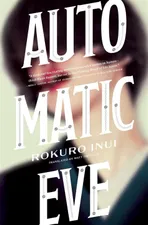
What makes a human human? Descartes famously offered cogitation as a solution to the question of existence, but as we began to develop thinking machines, new questions began to emerge. “Can machines think?” Alan Turing asked, in the 1950s and proposed that, thought being such a difficult concept, we could try to answer the question by asking instead whether it was possible to imagine a computer that would do well in the imitation game. This would consist in a contest in a scenario in which a machine and a human would both communicate with another human, via text only, and this other human would have to decide which of the parties with whom he/she were communicating was the human and which the machine. Thus was born the Turing test, bringing questions of technology into the fertile literary ground of redoubling and imitation.
Wisdom literature often contains pairs of figures who closely resemble one another, and in which the protagonist must decide between the true and the false, the real and the illusory. In the biblical book of Proverbs, for example, the dichotomy is between wisdom herself – personified as a woman – and the strange woman; her uncanny and deadly double. The protagonist, in that story, is envisioned as a young man who must choose between wisdom and folly; between the path of life and the road to death.
Automatic Eve, by Rokuro Inui, is, in some ways, a re-imagining of this same sort of parable, full of the twists and turns that leave the reader with a sense of the estrangement and confusion of the characters, always searching for the road back to life and to love. A political thriller set in an alternative feudal Japan, the main drama is not really the political but the various romantic entanglements which play out between the characters. It is a story of unrequited love, in which the fallible creators of life-like simulacra fall in love with their creations only to find that the object of the creature’s affections lies elsewhere.
The story is set against the backdrop of what seems to be a Japanese steampunk aesthetic, in which a story unfolds which has echoes of Pinocchio as well as Philip K. Dick’s Do Androids Dream of Electric Sheep? The titular Eve stands at the heart of it all, a beautiful and self-aware automaton who dreams of being human.
Eve is not the only automaton in the story, and from the beginning we are introduced to a decided ambiguity between the respective value of artificial and “real” life. We meet first with Nizaemon, an enraged samurai out for blood. Nizaemon first rose to a position of wealth by exposing one of the crickets in a cricket fighting match as a life-like robotic copy. He does this with a deft and impulsive use of his Samurai
Using his new-found earnings he tracks down the maker of the fake insect and commissions him to make a replica of the woman he loves but who does not love him back. But Nizaemon is disturbed by the similarity and humanity of the replica and reacts with anger, bringing on devastating and unforeseen consequences.
The book is divided into five sections containing somewhat independent stories, which come together to form a coherent whole. The story of Nizaemon Egawa in the section entitled Automatic Eve raises questions not only about the nature of reality, but about the reality of love, and perhaps also the desire of the artist. In this section we are introduced not only to art imitating life, but to life imitating artifice – not the replicant pretending to be human, but the other way around. In the end the artist, Kyuzo, is rueful that his insect automatons, so adept at fooling the human world, are not yet sophisticated enough to fool the frogs.
Hercules in the Box unfolds the story of Tentoku, a sumo wrestler. Tentoku, who also works as a bathhouse attendant at a place called the Thirteen Floors, the very place in which Nizaemon had fallen in love with the courtesan Hatori. Is it possible that the Thirteen Floors is an analogue for the cricket habitat which Nizaemon wins in his initial match? The habitat will later be reduplicated by Kyuzo, but is itself already an artifice, a human creation. The only thing that remains of the natural world is the cricket, but when the cricket too becomes an artificial replacement, then the last tie to the world of nature is severed, and this, it seems, creates an instability in the simulated world. From Hatori’s severed toe, to the severed leg of the female cricket, there is a constant motif of dismemberment and reattachment, temporary and unsuccessful attempts to blend the real and the artificial into a seamless domain.
Tentoku, larger than life with a whale tattooed on his back, becomes the next in the series of remainders of the real who somehow sustain the world of illusion. The whale tattoo, and its origin story, connect Tentoku with the world and myth of nature. Tentoku becomes the subject of a mysterious artist named Kainsai. Kainsai is known for sensual prints of men and women of various body types, but it is Tentoku who becomes the favourite subject of this artist. When the identity of the artist is finally revealed, it leads to yet another dimension of complexity in the dynamic relationship between creator and creation. If a creator can create a sentient creation in the image of a beloved human, and that creation in turn turns her attention to a real human being, producing life-like and startlingly sensuous images of him, can she also fall in love? Fall in love, that is, not with her creator, nor with what she has made, but with what exceeds them both?
What is it that Kyuzo loves in Eve? What is it that Eve loves in Tentoku? How can she continue to treasure him when he has been so reduced that nothing of him remains. The line given to Kyuzo in response to precisely this question is provocative:
“A human form without life and a life shut up in a box. An interesting combination, but were he in that circumstance then he would not have been able to love either the form or the life, he mused.
Then it hit him. If that were so, then when one person loved another, it was neither the form nor the life they loved but something else entirely.” (109)
What does makes a human human? What does it mean to love someone? And, perhaps, one might venture some questions about the Creator’s loneliness, and the fear that still inhibits the great master craftsmen. All these and other questions bubble below the surface; questions of captivity and freedom, questions of fatherhood and motherhood.
The biblical reference to Eve, the mother of all the living, signals, perhaps, that we are not far off the mark to consider the fecundity of the artificial – the ocean of possibility – coupled with the patriarchal desire to encapsulate and contain. Kyuzo’s snappish remark to Eve: “Automata do not dream,” conveys a jealous fear that he has created or simulated something that far exceeds his capacity to control or even understand. Kyuzo does not fear the destructive rage of the samurai Nizaemon, but he fears the creative love of Eve. He denies her her dreams, possibly because he knows that he is not the object of her affection.
A final redoubling which occurs is between Eve and the Sacred Vessel. The Sacred Vessel casts an interesting spin on the whole question of artificiality and automata, in which our attention is not turned merely to the idea of progress, but actually to the mythical past. What is helpful about this turn, in terms of where it allows the mind to travel, is the realization that the fears and questions that we face in thinking about artificial intelligence are not new, they are the same fears and doubts about the nature of reality and what makes for wisdom that have been with us since the dawn of consciousness.
The Sacred Vessel, or the duplication of the vessel, has been programmed or coded with a drive for revenge, and so, resembling Eve is nevertheless a sign of death and judgement. Kyuzo is once able to waken life, when Eve first stirs, and now wakens his judgement. Seen from another perspective though, the Vessel is merely doing the same work of trying to discern where the dangers are, and taking revenge for harm that has been done. Her protectiveness toward the cricket automata, remnant of the memory of Keian Higa, can be seen as a sign of devotion.
There are echoes here of the myth of Tithonus, the mortal who was loved by Eos goddess of the dawn, and granted immortality by Zeus. But Eos and Tithonus forget to ask for unending youth, and so Tithonus aged and withered, unable to die, until at last he became a cicada. Keian Higa, in one sense more of the Creator than Kyuzo, though unable to bring the Vessel to life. Betrayed and delivered to the shogunate, what remains of Keian Higa are these cricket automata, thread throughout the work, and who, in a way set things in motion for the unravelling of the story. The Vessel, too, is a symbol of an immortal loneliness, sealed away in a tomb, possessed of consciousness but not of love, with only the cricket for company.
What makes a human human? What makes life real, and how to understand the strange algorithm of love? Automatic Eve, in the wake of works like Blade Runner, Pinocchio, but with resonances extending to the biblical books of Genesis and Proverbs as well as Greek myth offers a delightful and provocative treatment of these themes.
 The Mourning Cloak
What do you think? Leave a comment below..