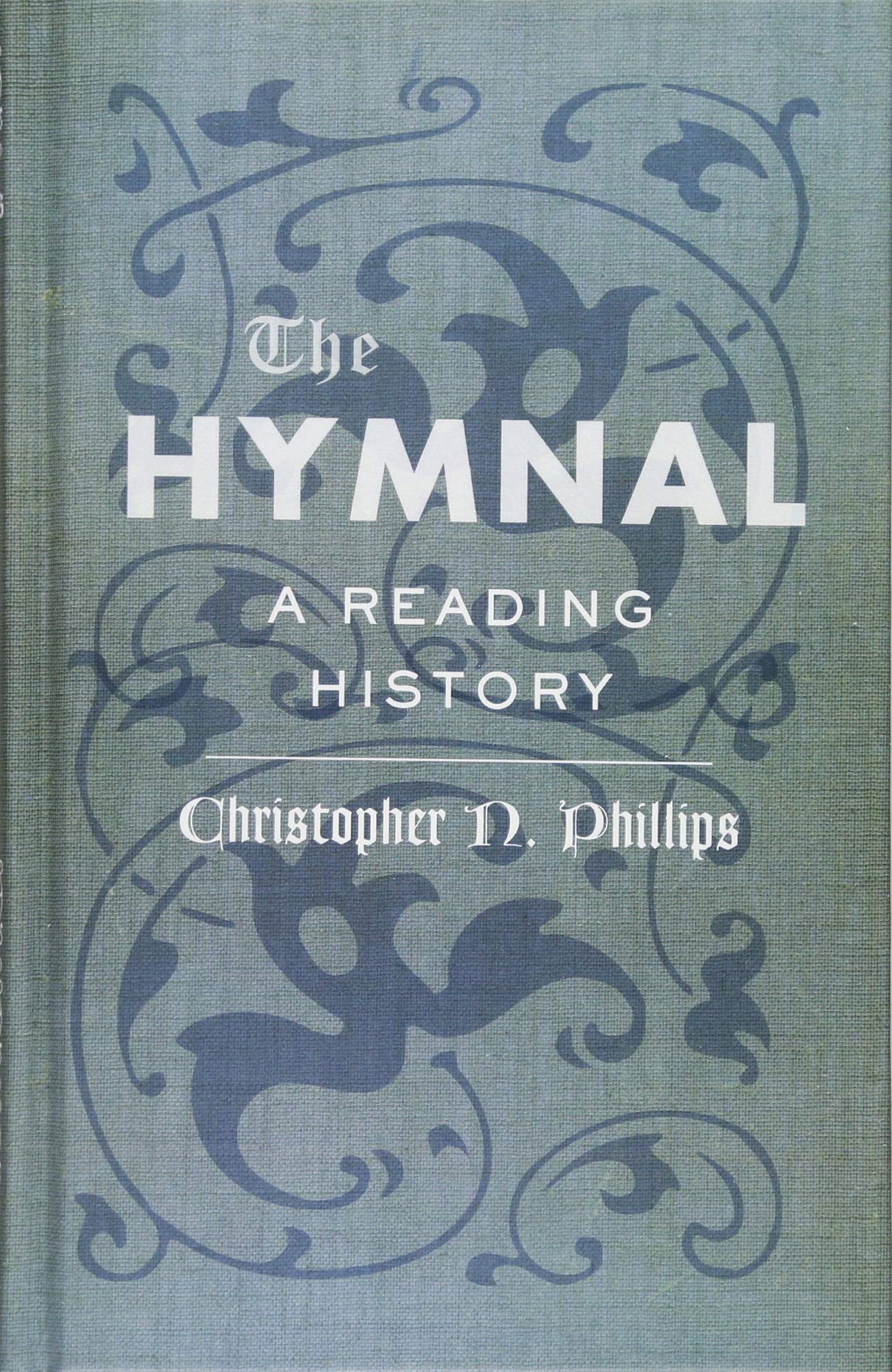
Works Reviewed: Christopher N. Phillips The Hymnal: A Reading History. Baltimore: John Hopkins University Press, 2018.
I remember my father once commenting, in an offhand way, that if you want to know about the theology of a particular church, you can just peruse their hymnals. Hymnals being such an essential part of the fabric of my own church experience, it hardly occurred to me to question why this might be so. Yet, the wooden structures on the back of old church pews that hold the hymnals in place are an architectural curiosity, they tell a story of a particular way of engaging with words and music, and with the story of faith.
It is, of course, a simplification to say that a theology is simply delivered through the pages of a hymnbook or hymnal, particularly in an age when even liturgical practices are less informed by the bindings of a particular volume. There is, a history here, a history which has shaped reading practices, the organization of communities, and the poetic and religious sensibilities of the western world.
It is a history which Christopher Phillips has found worth telling in his The Hymnal: A Reading History, and it is a story with implications beyond the confines of church practices. The history that Phillips recounts is the history of reading practices in English-speaking cultures, and the important role that hymnbooks and hymnals played in the development of literacy and poetics across a wide spectrum of English and American culture. The book, in his own words is, “an intervention in the field of historical poetics that seeks to bring together the study of poetry, book history, and lived religion.” (ix) It is also a fascinating account of the “social practices” surrounding the use of hymnbooks and hymnals; practices which include not only singing and reading, but in which the hymnal becomes a vehicle for silent conversations, for carrying things, and for remembering departed loved ones.
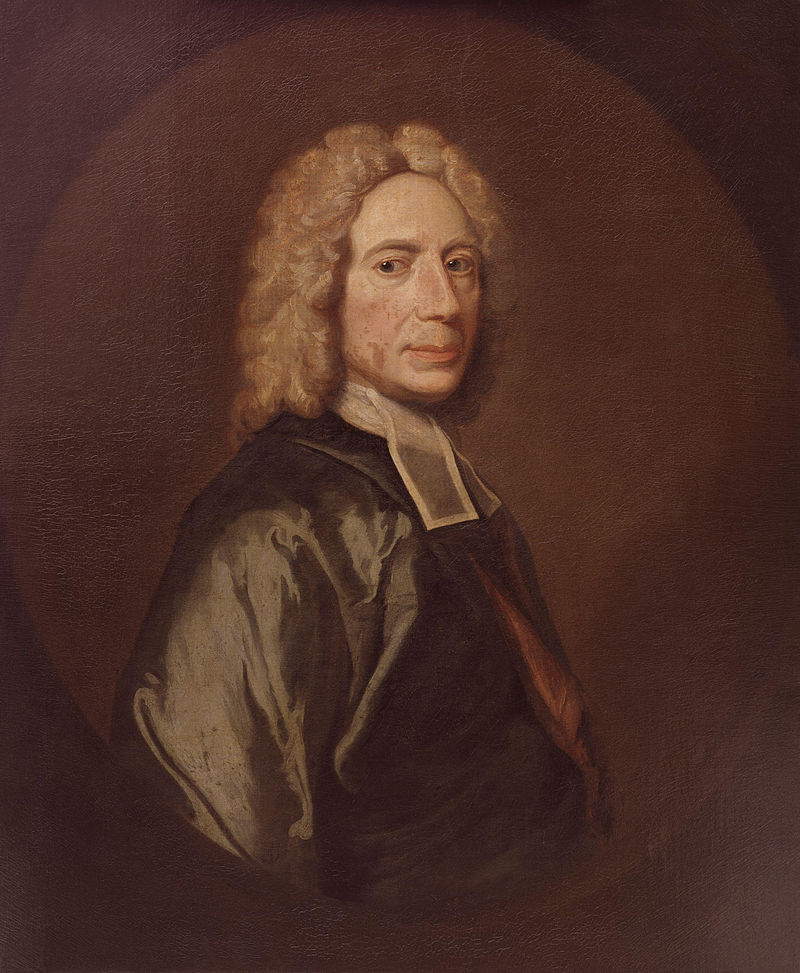
The book begins with an epitaph from Leah Price: “Any history of reading is also a meditation on the reading of a particular writer.” This comment grants an insight into the reading at hand. The Hymnal will be a meditation on Christopher Phillips’ own reading, and his view that hymnbooks and hymnals have significantly shaped the way we read and interact with texts, and particularly with poetry. At another level, though, it is a meditation on Isaac Watts, and how his creative and involved reading of the Psalms and Scriptures birthed a set of reading, publishing, and teaching practices across church, school, and home life.
A Story of Three Hymnbooks
It is, however, not Isaac Watts, but the hymnbook that is the protagonist of the story. Not simply as a general idea, but a real book. The first hymnbook we are introduced to is a well-worn copy of The Psalms of David, Imitated in the Language of the New Testament, with Isaac Watts listed as the author. This ‘small brick of a book,’ provokes a series of questions, says Phillips, not least of which is to whom authorship should be attributed – whether to David, Watts, or even God. But the questions raised are not just of a theological, doctrinal or literary nature. The book bears the inscription of its owner, and Phillips proceeds to craft the details of the inscription into a portrait of its bearer, drawing on his knowledge of religious practices in 1800s America. Phillips will go on to examine two other hymnbooks, each of which is fitted for use in a different setting; the church, the school, and the home. These three spheres delineate, for Phillips, the main areas in which people interacted with hymnbooks as they shaped practices of devotion, literacy, and poetry.
The Church:
The church is, in many ways, an obvious place to consider a hymnal or hymnbook. (Phillips generally uses hymnal to describe the later emergence of the larger volumes containing musical notation and hymnbook to reference the volumes which contained only the words, and were generally smaller.) The uses of the hymnbook could, however be surprising. “What if a hymnbook could be an article of attire?” he asks in a chapter on How Hymnbooks Made a People. From very early on hymnbooks, he argues, could signal much about a person’s spiritual allegiance. In the mid-1700s, for example a Methodist or Dissenter might signal their membership in the evangelical movement, while still maintaining a foot in the established church, through the hymnbook they carried into church. Phillips traces the shift from private to public identity as hymnbooks come to be representative of more solidly collective identities in communities such as the African Methodist Episcopal Church, or the Beth Elohim synagogue.
How to Fight with Hymnbooks begins with an account of a certain M. Bromhead’s scathing marginalia in his copy of A Collection of Hymns for the Use of the Protestant Church of the United Brethren, and goes on to track the way hymnbooks were used and weaponized in various schisms. In 1840, Isaac Watts again emerges as a galvanizing figure for the Old School faction of a split with the General Assembly of Presbyterian Church in the United States of America. The Civil War still further divided, and changed the way hymnbooks were designed.
In Hymnbooks at Church, Phillips leads his readers through marginalia which reveal the arguments and conversations a family carried on – in the silence of church worship – through their hymnbooks. The theme of how hymnbooks shaped and trace interpersonal memory is further carried on in the subsequent chapter. “The bonds of memory,” he remarks, “could make the hymnbook an instrument of peace even as it participated in ongoing debates about the nature of grace.
The hymnbook as a path to peace is further explored in Devotion and the Shape of the Hymnbook, where we move again from the public battles over identity and church membership back into the more intimate space of personal devotions seen, for example, in Carrie Chippey’s copy of The African Union First Colored Methodist Protestant Hymn Book, which she received as a gift from her father, the Rev. Edward H. Chippey. Against the backdrop of Watts overwhelming influence, glimpses of personal identity begin to emerge.
At times, it seems, that Phillips almost assumes the influence of Watts as a natural force. To be sure he gives credit to Watts’ hard work, but I did not often have the sense that an analysis of the colonial and imperialist implications of Watts’ work were being seriously questioned. The theologian Willie Jennings has identified Isaac Watts’ hymnody as complicit in a supercessionist ideology which effaced a sense of place and obscured local knowledge. The hymnbook, as a cultural commodity which traversed the spheres of church, school, and home, was certainly a part in the homogenization of cultural identities. What Phillips’ work does reveal, in a helpful, way, is how the homogenizing force of the hymnbook became a vibrant space for learning, conflict, and reconciliation.
The School:
As we shift from the space of the church to the school, the hymnbook takes on new horizons of meaning. Horizons related to literacy and freedom. Here we begin with another Watts hymn: “When I can read my title clear To mansions in the Skies, I bid farewell to every fear, And wipe my weeping eyes.” This line of the hymn would form a moment of comprehension and clarity for the former slave Belle Myers, and eventually become the title of a study of slave literacy. Literacy was a road to freedom, but it was also linked to cultural conquest.
Hymnbooks changed, it seems, the landscape of children’s literature and schoolbooks. Alice’s Adventures in Wonderland shows that, in the world in which Lewis Carroll wrote, Isaac Watts’ Divine Songs was as much a part of childhood education as multiplication or geography.
In The Hymnal, Phillips reveals a world in which hymns, and hymnbooks come from the sphere of the private to permeate public life in many ways. Eventually we are led back into the intimacy of the home, and the composition of intensely personal poetry. He concludes with a discussion of Emily Dickenson who uses the imagery, meter, and tone of hymns to craft a a language for her own personal experience.
The Hymnal is a fascinating exploration of the connections between hymnody, literacy, education, memory, and poetry. They contain echoes of a culture that continues to be present with us in various ways. As Phillips notes, “If we keep the Sabbath with out poetic ancestors, it is only because hymnbooks helped to teach us how to do so.”
 The Mourning Cloak
What do you think? Leave a comment below..